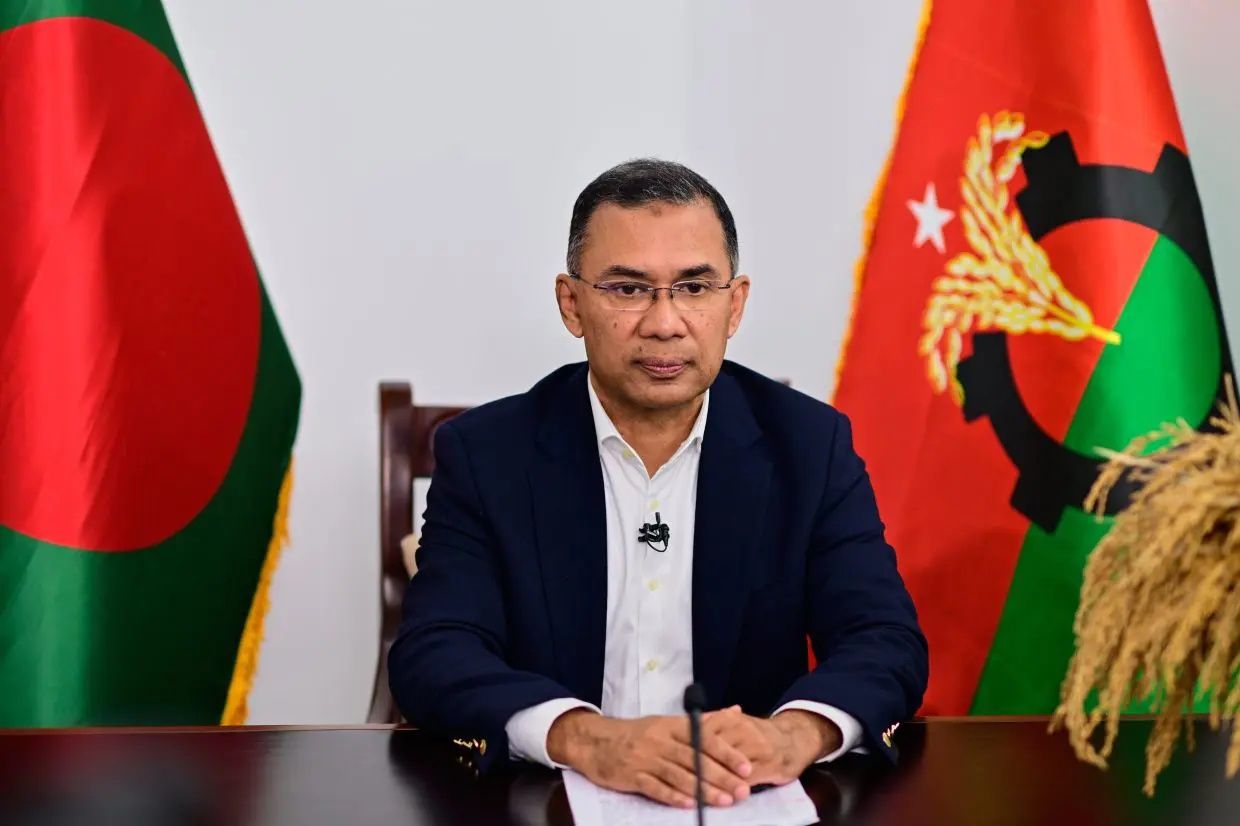
Bangladesh's Prime Minister Tarique Rahman is stepping onto the international stage with a carefully calibrated diplomatic opening that pointedly excludes India, his country's giant neighbour. The three-day tour, beginning this Sunday with a stop in Malaysia followed by a visit to China, marks his first journey abroad since taking office in February and signals a recalibration of Dhaka's foreign policy priorities after months of political turbulence. The foreign ministry confirmed the itinerary on Saturday, underscoring what officials characterise as a major strategic initiative aimed at repositioning Bangladesh within regional economic and geopolitical architecture.
The choice of Malaysia as the first destination holds particular significance for bilateral relations and Bangladesh's economic interests. Approximately 800,000 Bangladeshi nationals currently work in Malaysia, representing more than a third of the country's total foreign workforce. This substantial diaspora forms the backbone of remittance flows that have become increasingly critical to Bangladesh's balance of payments and household incomes across the country. By prioritising engagement with Kuala Lumpur, Rahman underscores Bangladesh's commitment to protecting and expanding opportunities for its citizens abroad while deepening economic cooperation with a Southeast Asian partner whose economy and investment capacity have grown substantially in recent years.
The subsequent leg to Beijing introduces a more complex geopolitical dimension to the tour. Trade discussions will dominate the agenda, but the timing and emphasis on infrastructure projects reveal deeper strategic calculations. Officials have explicitly flagged the Teesta River project as a focal point for negotiations, a long-stalled initiative that envisions comprehensive restoration and management of this critical waterway through an integrated programme of dredging, embankment reinforcement, and irrigation infrastructure. Chinese involvement in such projects typically brings not only technical expertise but also concessional financing arrangements that have become increasingly attractive to developing economies seeking capital for large-scale development initiatives.
The Teesta initiative carries particular resonance for Bangladesh, as the river's management directly affects agricultural productivity, water security, and flood mitigation across northern regions. The project's prolonged delay has frustrated Bangladeshi policymakers, and Beijing's potential backing could unlock resources that have eluded other funding sources. This represents a pragmatic calculation by the Rahman administration to diversify Bangladesh's development partnerships and reduce dependency on traditional sources of infrastructure finance, a pattern increasingly evident across South Asia as countries navigate great power competition.
The deliberate omission of India from this inaugural tour, despite India's geographical proximity and historical economic ties, cannot be overlooked as mere coincidence. Since the dramatic political upheaval of 2024 that toppled Prime Minister Sheikh Hasina, Bangladesh-India relations have deteriorated significantly along multiple dimensions. Hasina, whose government maintained close strategic alignment with New Delhi, fled to India following the uprising and remains in hiding there. Bangladesh has mounted repeated formal requests for her extradition, requests that India has rebuffed, creating a persistent source of diplomatic friction between the two capitals.
Border tensions have further strained the relationship in recent months. Indian authorities have been systematically directing individuals classified as undocumented migrants into Bangladesh territory, a practice that Bangladeshi officials view as a hostile action designed to destabilise border communities and export India's migration challenges. These cross-border pressures, combined with Hasina's asylum in India and the extradition standoff, have created a tense atmosphere that makes a swift rapprochement unlikely in the near term. Rahman's decision to commence his international engagement in Southeast Asia rather than New Delhi suggests a calculated strategy to establish independence from India's sphere of influence while signalling to domestic constituencies that his government will not be subordinate to New Delhi's preferences.
Rahman's ascension to power in February followed his victory in elections held after the interim administration that replaced Hasina completed its transitional mandate. His political coalition benefited from widespread public sentiment that previous governments, particularly Hasina's, had become too accommodating of Indian interests at the expense of Bangladesh's sovereign interests. This domestic political context matters enormously for understanding his foreign policy choices. By opening with Malaysia and China rather than the traditional first stop in Delhi, he satisfies expectations among his political base that his administration will pursue a more balanced and independent regional posture.
The timing of these visits also reflects Rahman's need to establish his international credentials quickly. As a relatively new leader consolidating power domestically, foreign policy successes provide legitimacy and demonstrate competence to both international audiences and domestic stakeholders. Securing Chinese backing for the Teesta project or announcing expanded Malaysia-Bangladesh cooperation mechanisms would furnish the kind of tangible diplomatic wins that strengthen a new administration's standing. Furthermore, these engagements signal to international investors and multilateral institutions that Bangladesh remains engaged with global economic systems and committed to development partnerships despite internal political transitions.
The broader strategic context involves India's long-standing anxieties about Chinese influence in South Asia. New Delhi has consistently viewed China's expanding engagement across the region as a challenge to its traditional sphere of influence, a concern particularly acute when Beijing partners with countries sharing borders with India or positioned along critical sea lanes. Bangladesh's willingness to deepen ties with China, as demonstrated by Rahman's Beijing visit and potential infrastructure cooperation, likely registers as a geopolitical concern in New Delhi, adding another layer to existing bilateral tensions. This dynamic reflects the larger competitive interplay between Asia's two most populous nations as they jostle for regional primacy and influence.
For Malaysian readers and policymakers, Rahman's visit reflects broader trends reshaping South and Southeast Asian engagement. Malaysia's position as host to a massive Bangladeshi workforce, combined with its own experience navigating great power competition and maintaining balanced regional relationships, positions it as a natural partner for a Bangladesh seeking to diversify its international engagement. The visit provides opportunities to discuss labour mobility frameworks, investment coordination, and potentially joint regional initiatives that could benefit both economies and strengthen ASEAN-Bangladesh relationships more broadly.

