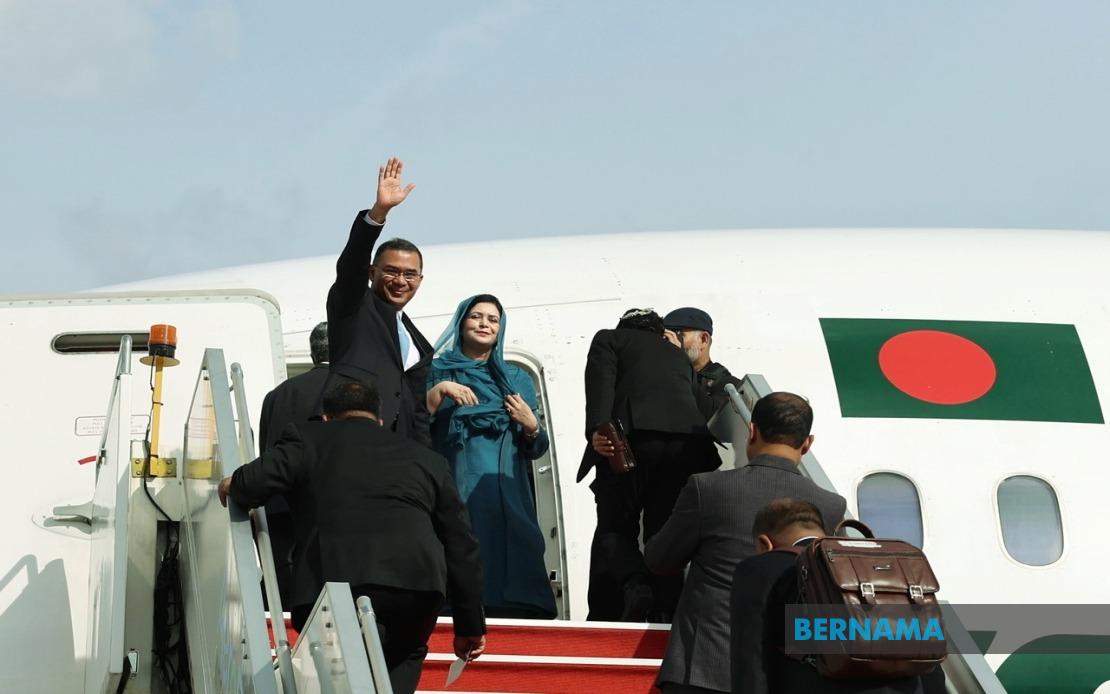
Bangladesh Prime Minister Tarique Rahman departed Malaysia on Saturday afternoon, concluding a two-day official visit that highlighted deepening diplomatic ties between the two nations. His special aircraft lifted off from Kuala Lumpur International Airport at 5 pm, carrying him and his delegation onward to China. The departure was marked by formal ceremony, with a 28-officer guard of honour from the First Battalion of the Royal Ranger Regiment presenting him with a ceremonial send-off. Minister in the Prime Minister's Department (Religious Affairs) Dr Zulkifli Hasan attended the farewell, bidding goodbye to Tarique, his spouse Dr Zubaida Rahman and the Bangladeshi delegation.
The visit represented a significant moment in bilateral relations, marking Tarique's inaugural overseas bilateral trip since assuming office in February 2026. His choice to visit Malaysia first among all nations underscores the strategic importance Kuala Lumpur places in the relationship and signals Bangladesh's intention to strengthen regional partnerships. The timing also reflects broader geopolitical repositioning in South Asia, as Bangladesh seeks to diversify its international engagement beyond traditional partners.
At the heart of the visit was a substantive bilateral meeting between Tarique and Prime Minister Datuk Seri Anwar Ibrahim at the Perdana Putra Complex. The two leaders examined pressing regional and international concerns alongside opportunities for economic collaboration. Their discussions ranged across trade expansion, investment facilitation, human resources development, semiconductor manufacturing, energy security, agricultural cooperation and educational partnerships. This breadth of agenda demonstrates the multifaceted nature of Malaysia-Bangladesh relations and both nations' recognition that cooperation must extend beyond conventional trade channels.
The economic dimension carries particular weight given the substantial trade corridor already established. In 2025, bilateral commerce reached RM12.18 billion, with Malaysian exports dominating at RM10.08 billion, predominantly petroleum products that reflect Bangladesh's energy import needs. Bangladeshi exports, totalling RM2.10 billion, centred on textiles, apparel and footwear—sectors where the country holds competitive advantage. Bangladesh ranked as Malaysia's 28th-largest trading partner globally and second-largest in South Asia after India, highlighting the relationship's significance within Malaysia's regional trade architecture.
Recognising untapped potential, both governments committed to pursuing a fast-track free trade agreement to remove barriers and stimulate commerce. Additionally, they identified energy and the halal industry as priority sectors for enhanced cooperation. For Malaysia, Bangladesh represents a growing market for petroleum exports and a potential partner in renewable energy initiatives. For Bangladesh, this deepening engagement offers access to Malaysian expertise in industrial development and technology transfer.
During the visit, formal diplomatic instruments were exchanged, including a Memorandum of Understanding on Cultural Cooperation and two Exchanges of Notes addressing Counter-Terrorism Research and Investment Promotion and Facilitation. These mechanisms create institutional frameworks for sustained engagement beyond bilateral government channels, encouraging people-to-people contact and private sector participation. The cultural cooperation agreement particularly signals interest in educational and tourism exchanges that can build public understanding between populations.
A significant dimension of Tarique's visit involved Bangladesh's aspirations within ASEAN structures. The nation expressed its ambition to attain ASEAN Sectoral Dialogue Partner status and its keen interest in joining the Regional Comprehensive Economic Partnership. Malaysia's support for these objectives carries weight, as a respected ASEAN member whose endorsement facilitates integration. RCEP membership would grant Bangladesh preferential access to a vast trading bloc encompassing nearly two billion people, substantially benefiting its exporters. This alignment signals Malaysia's role as a bridge for Bangladesh's deeper Asian engagement.
On the international stage, Tarique and Anwar discovered convergence on several critical matters. Both nations reaffirmed support for the Palestinian cause and expressed alarm over the humanitarian toll in Gaza, positioning themselves within a broader coalition of countries prioritising Middle Eastern peace. They discussed strategies for ensuring stability in the Gulf region and Iran, recognising how disruptions to energy supplies and shipping lanes directly impact Southeast and South Asian economies. This shared diplomatic posture reflects how regional stability concerns transcend geographic boundaries in an interconnected world.
The Rohingya refugee situation emerged as another area of mutual concern and collaborative focus. With over 900,000 Rohingya residing in Bangladesh, the burden on host communities remains acute. Malaysia, which hosts approximately 180,000 registered Rohingya refugees, understands the humanitarian and economic pressures involved. Both nations committed to leveraging ASEAN mechanisms to pursue durable solutions, emphasising the necessity of engaging Myanmar authorities in dialogue aimed at creating conditions for voluntary, safe and dignified returns. This approach reflects regional consensus that the crisis demands coordinated diplomatic pressure and development-focused regional responses rather than unilateral actions.
The bilateral partnership also demonstrates how middle-income nations in Asia navigate complex geopolitical environments by maintaining balanced relationships with major powers while deepening regional ties. Tarique's immediate onward journey to China illustrates Bangladesh's strategy of engaging multiple partners rather than aligning exclusively with any single power. For Malaysia, supporting Bangladesh's growth and regional integration strengthens the broader Southeast Asian ecosystem and creates economically vibrant neighbours, reducing long-term security vulnerabilities.
The two-day visit concluded without major surprise announcements, instead establishing foundational frameworks for sustained engagement. This measured approach reflects the diplomatic style of both leaderships, prioritising incremental progress and institutional development over headline-grabbing declarations. For Malaysian observers, the visit reinforces that South Asian relationships warrant serious attention as Bangladesh's economy expands and its regional influence grows.

