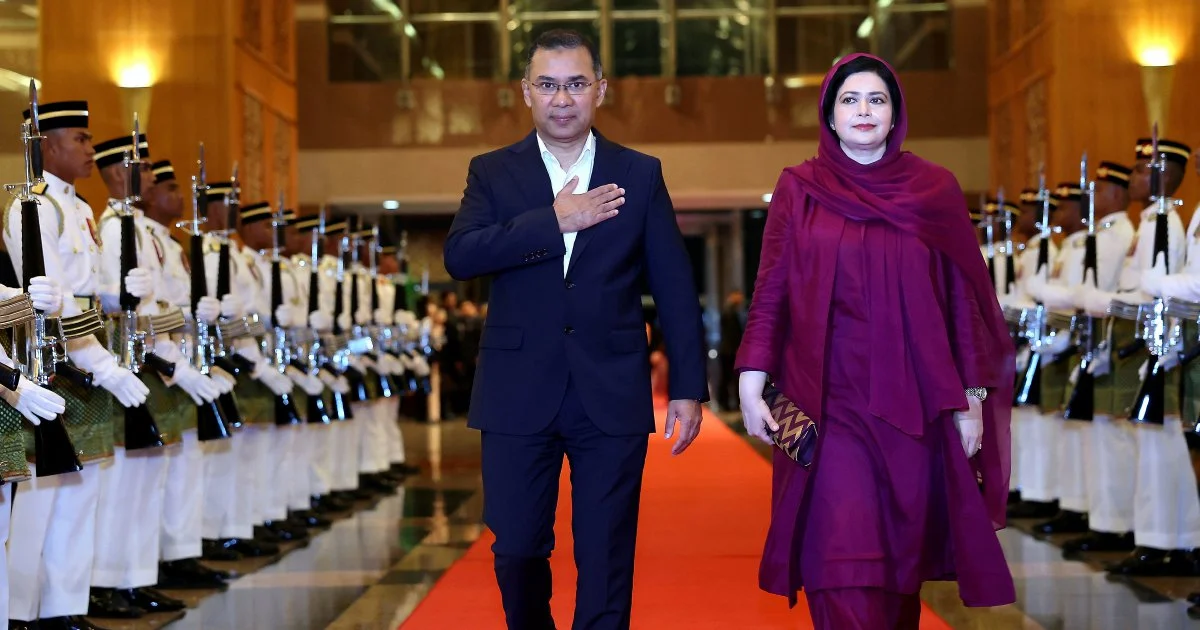
Bangladesh Prime Minister Tarique Rahman is actively courting Malaysian businesses to participate in the country's economic expansion, signalling a strategic push to attract capital and expertise from one of Southeast Asia's more developed markets. His appeal comes at a moment when Bangladesh is working to reshape its investment landscape and attract foreign capital across diverse sectors, presenting a potentially lucrative proposition for Malaysian firms seeking to diversify their regional footprint beyond traditional markets.
The timing of this overture reflects Bangladesh's broader ambitions to position itself as an emerging investment destination in South Asia. With a population exceeding 170 million and a growing middle class, Bangladesh represents a substantial consumer market that has largely escaped the saturated investment environments of more developed Asian economies. For Malaysian companies operating in textiles, light manufacturing, financial services, and technology, the country offers both an accessible entry point and considerable expansion potential within a region increasingly viewed as critical to long-term growth strategies.
The business environment in Bangladesh has undergone significant structural improvements over the past several years, though it continues to present both opportunities and challenges for foreign investors. Recent reforms aimed at streamlining regulatory processes, improving infrastructure, and enhancing port facilities have made it easier for companies to establish operations and conduct trade. These developments create conditions that Malaysian investors, already familiar with navigating developing Asian markets, can leverage effectively. The government's commitment to special economic zones and industrial parks also provides established frameworks for manufacturing and export operations that appeal to investors seeking lower operational costs than Malaysia offers.
For Malaysian businesses, Bangladesh represents an alternative investment destination with particular appeal in labour-intensive industries where cost advantages remain significant. The textile and apparel sector, which has historically dominated Bangladesh's exports, continues to attract investment, though the industry faces mounting pressures regarding labour standards and environmental sustainability. Malaysian companies with expertise in upgrading manufacturing processes and meeting international compliance standards could position themselves advantageously in this space, offering both capital and operational knowledge to local partners.
The financial services sector presents another avenue through which Malaysian firms might engage with Bangladesh. Malaysia's experience in Islamic banking and fintech innovation could find receptive markets in Bangladesh, a nation with a substantial Muslim majority and a rapidly expanding digital economy. Malaysian banks and financial technology companies have demonstrated competitiveness in emerging markets and could introduce products and services that address Bangladesh's underbanked populations and growing entrepreneurial class seeking capital and payment solutions.
Malaysia's geographic position as a bridge between South Asia and Southeast Asia, combined with its established networks and expertise in regional commerce, provides Malaysian investors with distinct competitive advantages. Unlike investors from distant developed economies, Malaysian companies understand regional business cultures, regulatory environments, and consumer preferences. This proximity and familiarity can reduce barriers to entry and operational risks that foreign investors typically face when establishing operations in new markets.
However, Malaysian investors considering Bangladesh must approach with careful assessment of real risks alongside the opportunities. Infrastructure, though improving, remains inconsistent across regions, and corruption concerns continue to feature in governance assessments. Political stability, a longstanding concern for investors in the region, remains an ongoing consideration despite recent developments. Energy security, supply chain vulnerabilities, and labour disputes in manufacturing sectors have all created operational challenges that require thorough due diligence.
The broader context of Bangladesh's development trajectory suggests the country is at an inflection point where timing could prove crucial for early movers. As Bangladesh transitions from being primarily an export-oriented low-cost manufacturing hub toward a more diversified economy, the window for capitalising on labour cost advantages is narrowing. Malaysian investors who move strategically now could establish strong market positions before competition intensifies from other regional and global investors recognising similar opportunities.
Rahman's invitation also signals Bangladesh's desire to strengthen bilateral economic ties with Malaysia, a relationship historically defined more by diplomatic courtesy than deep commercial integration. Encouraging Malaysian investment represents a pragmatic policy choice that could accelerate Bangladesh's development objectives while providing Malaysian companies with access to growing markets. Joint ventures, technology transfers, and knowledge-sharing arrangements could benefit both nations, creating employment in Bangladesh while generating returns for Malaysian shareholders.
For Malaysian policymakers and business chambers, this invitation warrants attention as part of a broader regional strategy. Bangladesh sits within Malaysia's larger Southeast Asian and South Asian strategic interests, and economic engagement represents a softer approach to deepening bilateral relationships. Supporting Malaysian business engagement in Bangladesh aligns with national objectives of expanding regional influence and establishing Malaysian companies as premier investors throughout Asia.

