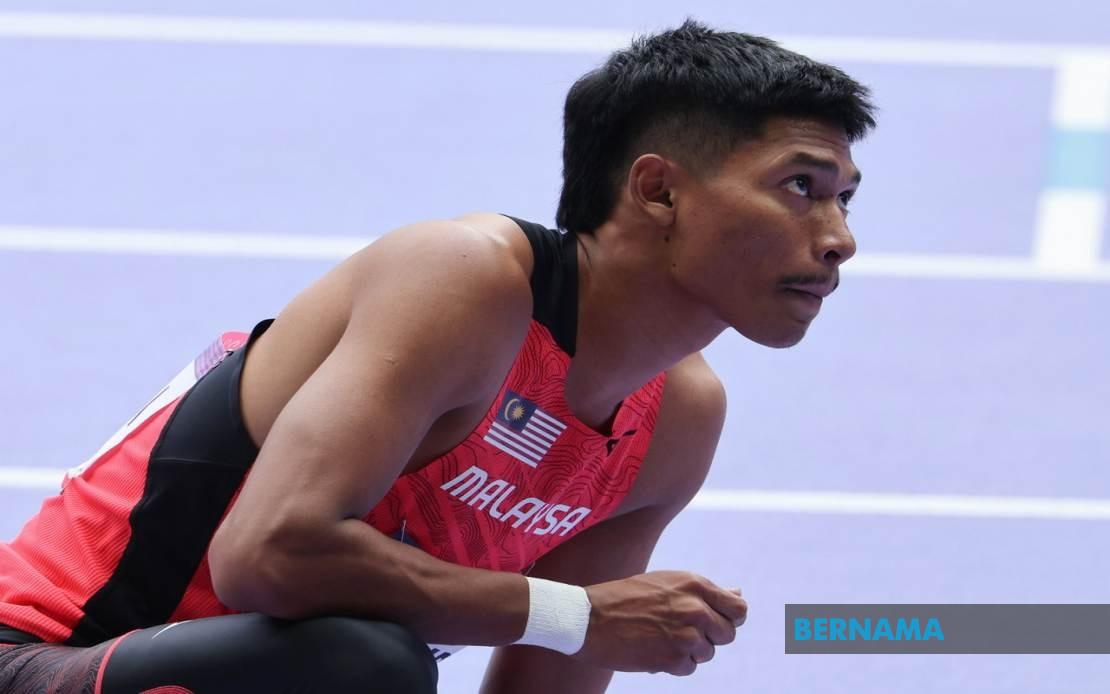
Muhammad Azeem Mohd Fahmi, Malaysia's national 100-metre record holder, has committed to pursuing his athletics career within the country following the completion of his studies at Auburn University in the United States. The 22-year-old sprinter, who recorded the national benchmark time of 10.09 seconds, has signalled his intention to remain based in Malaysia rather than extend his stay abroad, marking a significant decision for one of Southeast Asia's most promising track athletes.
Azeem's choice to return home reflects a deliberate shift in priorities after four years spent pursuing his academic and athletic development in the United States. Having invested substantial time away from his support network, the sprinter now emphasises the importance of reconnecting with those closest to him. He articulated this sentiment clearly when speaking to media, noting that his immediate focus centres on strengthening bonds with family members who remained in Malaysia throughout his university tenure. This decision underscores the personal dimension often overlooked in elite athletics, where the psychological and emotional foundations can be as critical to long-term success as physical conditioning.
The sprinter's return carries particular significance for Malaysian athletics as the nation continues its efforts to develop world-class talent capable of competing at international standards. Azeem's decision to remain domestically rather than join the growing exodus of Southeast Asian athletes to overseas training bases suggests confidence in local coaching infrastructure and support systems. His commitment to Malaysia's sporting ecosystem sends a positive signal to aspiring young athletes that high-performance careers can be sustained within the country, potentially influencing recruitment and retention patterns across the broader athletics fraternity.
Azeem's training structure has been carefully architected to leverage international expertise while maintaining domestic continuity. His American coach, Ken Harnden, who guided him through his Auburn years, will continue designing his training programmes remotely. This arrangement preserves the relationship and methodologies developed during his university years whilst integrating local oversight through Muhammad Amir Izwan Tan Abdullah, a domestic coach who will manage day-to-day supervision and implementation. This hybrid coaching model reflects contemporary practice in elite athletics, where geographical separation no longer precludes coaching relationships, though it does require robust communication frameworks and shared philosophical alignment.
The integration of international coaching oversight with local execution represents a pragmatic approach to maintaining competitive standards. Rather than abandoning the gains made under Harnden's tutelage, Azeem's arrangement ensures continuity in training philosophy whilst grounding his work within Malaysia's athletic ecosystem. This structure potentially positions him to serve as a bridge between international best practices and local coaching development, creating opportunities for knowledge transfer that could benefit the broader community of Malaysian sprinters and middle-distance runners.
Beyond immediate athletics commitments, Azeem has articulated plans to pursue postgraduate education, though he has strategically sequenced his priorities by taking a temporary break from academic pursuits. The sprinter's intention to focus exclusively on athletics for several months before enrolling in a master's programme demonstrates mature decision-making regarding career trajectory. This measured approach acknowledges that peak athletic performance windows require undivided attention, whilst simultaneously preserving educational aspirations. Such planning reflects the increasingly sophisticated approach Malaysian athletes adopt regarding dual pathways that combine sporting excellence with credible academic credentials.
The decision to defer further studies also signals confidence in his athletic potential during what are typically prime competitive years. For sprinters, the late teens and early twenties often represent windows of optimal physical and neurological capacity. By dedicating the next several months exclusively to training under Harnden's oversight and Tan Abdullah's local direction, Azeem positions himself to maximise competitive opportunities in regional and international championships. This temporal investment in athletics could yield substantial dividends for both personal achievement and Malaysian sporting representation.
Azeem's repatriation reflects broader patterns within Southeast Asian athletics where training opportunities have become increasingly distributed globally, yet athletes remain anchored to domestic support systems. His commitment to Malaysia occurs within a landscape where Malaysian sprinters have occasionally trained or competed abroad while maintaining citizenship and representative status. The sprinter's articulation of family influence as the decisive factor in his relocation decision emphasises values that resonate deeply within Malaysian culture, presenting an alternative narrative to purely career-optimising athlete mobility.
The sprinter's acknowledgement of his family's and coaches' contributions to his development suggests a philosophical orientation toward collective achievement rather than individualistic sporting metrics. This perspective, whilst increasingly uncommon in elite athletics contexts dominated by performance maximisation, carries cultural resonance within Malaysia and positions Azeem as potentially influential figure for emerging athletes regarding values integration. His willingness to publicly credit supporters beyond immediate athletic apparatus demonstrates maturity that extends beyond performance statistics.
Looking forward, Azeem's presence and continued development within Malaysia's athletic infrastructure could influence strategic planning within national sports organisations. His proven ability to compete at Auburn's competitive level whilst maintaining Malaysian representation offers evidence that quality athletic development can occur domestically when combined with international coaching expertise. As Malaysia seeks to improve its standing in regional and continental athletics competitions, athletes like Azeem who elect to base themselves locally whilst accessing global coaching resources provide template options for future athlete development programming.
The sprinter's commitment also carries implications for sponsorship and commercial support within Malaysian athletics. Athletes who explicitly prioritise domestic bases often attract different funding sources and promotional opportunities than those pursuing overseas careers. Azeem's decision may thus influence how Malaysian corporate and government entities conceptualise investment in athletic talent development, potentially encouraging greater commitment to locally-based excellence. His choice to remain and continue developing his craft in Malaysia represents both a personal decision and a potential catalyst for systemic evolution within the nation's athletics ecosystem.

