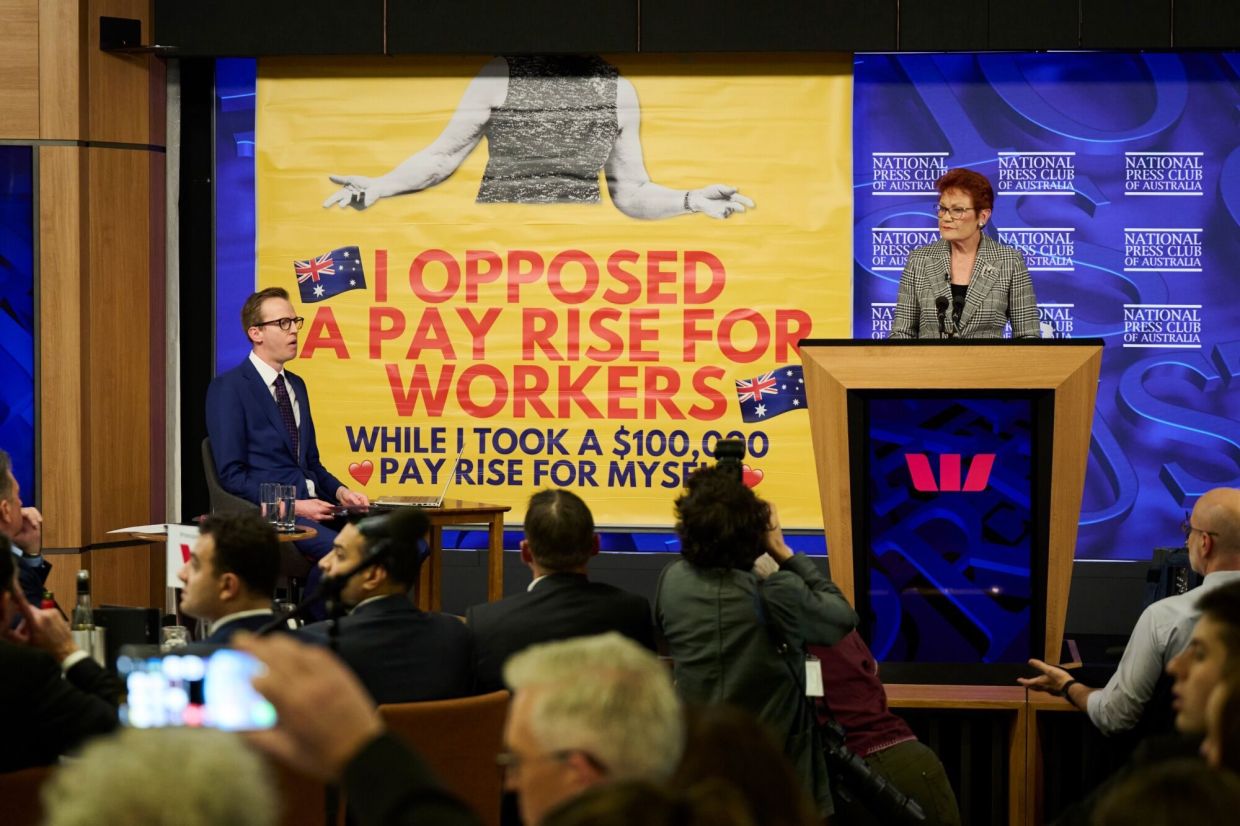
Pauline Hanson, leader of Australia's hard-right One Nation party, has launched a frontal assault on the nation's multicultural framework, declaring that Australia must abandon its commitment to cultural diversity in favour of a monocultural model. Speaking at the National Press Club in Canberra on Wednesday, Hanson presented her most forceful rejection yet of policies that have underpinned Australian social cohesion for decades, framing multiculturalism as fundamentally incompatible with national unity.
The remarks represent a significant political moment, marking Hanson's first appearance at the prestigious National Press Club during her 30-year political career. In her address, she drew a sharp distinction between what she characterised as acceptable racial diversity and what she views as unacceptable cultural pluralism. "We are a multiracial society, but we must be monocultural. Australians must live under the one cultural umbrella," Hanson declared, positioning her argument as one rooted in social cohesion rather than explicit ethnic exclusion, though critics have viewed the framing as a rhetorical sleight that obscures harder positions on cultural assimilation.
Central to Hanson's case against multiculturalism is her diagnosis of Australia's housing affordability crisis. By connecting the shortage of affordable housing directly to high immigration levels, she has offered voters a simple causal narrative for one of the nation's most pressing economic challenges. This approach resonates particularly among Australians struggling with soaring property prices and rental costs, translating broader economic anxiety into a specific policy prescription: dramatically reduce migration flows. The framing appears calculated to tap into public frustration over stagnating real wages and deteriorating housing prospects.
In the same speech, Hanson committed One Nation to slashing migration and signalled that the party would impose restrictions on entry from regions she associates with extremism, explicitly referencing what she termed "places immersed in extremism like radical Islam." This rhetoric conflates immigration policy with national security concerns, a common tactic in populist campaigns across the Western world. The strategy allows proponents to frame restrictionist immigration positions not merely as economic or cultural preferences but as matters of existential security, thereby elevating them beyond the realm of ordinary political debate.
One Nation's ascendancy in recent opinion polling reflects deeper shifts in Australian politics and public sentiment. The party's momentum accelerated notably following the collapse of the centre-right coalition government's electoral standing in May of the previous year, creating space for populist alternatives to capture voter dissatisfaction. Over the past twelve months, One Nation has consolidated gains by offering straightforward explanations for complex economic problems, a political formula that has proven effective in numerous democracies confronting similar challenges.
The timing of Hanson's intervention coincides with a period of acute economic stress for ordinary Australians. Resurgent inflation, climbing interest rates, and elevated fuel costs stemming from geopolitical tensions in the Middle East have combined to squeeze household budgets across the country. These material pressures create fertile ground for populist narratives that attribute economic hardship to immigration, green energy policies, or other conveniently identifiable targets. By connecting immigration to inflation and housing shortages, Hanson has positioned One Nation as offering clarity and solutions to voters experiencing genuine economic distress.
Prime Minister Anthony Albanese's Labor government has pursued a different approach to addressing these challenges, implementing policy interventions designed to provide relief without fundamentally reorienting the nation's social contract. These measures have included a temporary reduction in fuel excise duties to ease immediate pressure on petrol prices, alongside broader tax reforms intended to address housing affordability. Yet these incremental adjustments appear insufficient to counter the narrative offered by One Nation, which attributes Australia's difficulties to systemic policy failures rather than external economic shocks or temporary disruptions.
Albanese himself has diagnosed the surge in support for One Nation and similar movements as symptomatic of deeper public dissatisfaction with an economic system that increasingly fails ordinary workers and young Australians. In commenting on the rise of what he characterises as "simplistic grievance-based politics," he has implicitly acknowledged that technical policy responses alone cannot address the underlying sense that the economy is dysfunctional. This recognition points to a tension at the heart of contemporary democratic politics: when citizens experience genuine economic hardship, they may embrace political movements that offer simple explanations and radical solutions, regardless of whether those explanations withstand rigorous scrutiny.
For Malaysia and the wider Southeast Asian region, Australia's political trajectory carries important implications. The success of explicitly anti-multicultural movements in a nation that has long promoted itself as a model of successful cultural integration suggests that multicultural frameworks, even when enshrined in policy and institutional practice, remain vulnerable to political challenge during periods of economic difficulty. Southeast Asian nations, many of which contain diverse ethnic and religious populations, may find instructive lessons in how immigration and cultural integration become flashpoints for broader economic grievances.
The debate also reflects broader global patterns in which populist movements have capitalised on economic anxiety by redirecting public attention toward immigration and cultural change. Rather than addressing root causes of housing unaffordability or wage stagnation, these movements offer immigration restriction as a catch-all solution. The receptiveness of Australian voters to such messaging suggests that neither prosperity nor institutional stability guarantees immunity from populist challengers who successfully frame complex problems in terms of national identity and cultural threat.