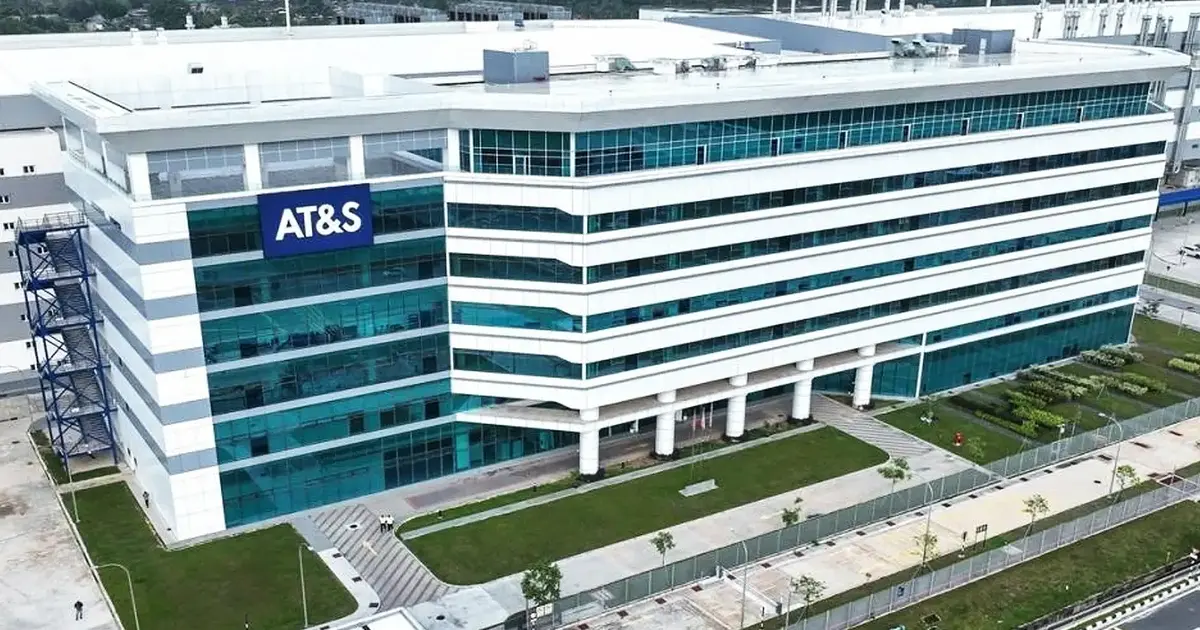
Austria's AT&S has announced a RM9.4 billion investment in a manufacturing facility at Kulim industrial park in Kedah, a move that Prime Minister Anwar Ibrahim has hailed as evidence of strengthening international confidence in Malaysia's business environment and institutional quality. The commitment represents one of the largest recent foreign direct investments in the country's electronics and semiconductor supply chain, underscoring Malaysia's continued appeal to global manufacturers navigating complex geopolitical trade dynamics and supply chain diversification.
For AT&S, a Vienna-headquartered specialist in circuit board technology and electronics manufacturing services, the Kulim project signals a major expansion of its Asian footprint at a time when global semiconductor and electronics firms are seeking to reduce concentration risk and establish production bases outside traditional hubs. The choice of Malaysia reflects the company's confidence in local infrastructure, the availability of skilled technical workforce, and the country's established position within regional electronics clusters that link upstream component makers with downstream assembly and packaging operations.
Prime Minister Anwar Ibrahim framed the investment as validation of Malaysia's governance improvements and institutional credibility. His comments suggest the administration views recent foreign capital inflows as tangible proof that market reforms, efforts to combat corruption, and policy consistency are resonating with multinational corporations during their strategic location decisions. This messaging carries particular weight given Malaysia's historical positioning as a manufacturing hub and its ongoing competition with Vietnam, Thailand, and Indonesia for semiconductor and electronics investment.
The semiconductor and electronics manufacturing sector remains strategically important to Malaysia's economy and exports. The country has long served as a critical node in global supply chains, hosting operations from major processors, assembly specialists, and component makers. Recent geopolitical tensions and Western efforts to restrict advanced semiconductor technology flows to China have created both opportunities and pressures for countries like Malaysia, which must balance trade relationships while positioning itself as a reliable manufacturing alternative for companies seeking geographic diversification.
Kulim industrial park, located in Kedah's northern region, has emerged as a focal point for electronics and manufacturing investments over recent years. Its proximity to regional ports, established utilities infrastructure, and clustering of related industries make it an attractive site for manufacturers requiring integrated supply chain ecosystems. AT&S's decision to establish a significant facility there adds to the park's profile and may catalyse additional investments from supporting suppliers and service providers seeking proximity to major customers.
The timing of this announcement also reflects broader industry trends. Electronics manufacturers face mounting pressure to establish production capacity outside concentrated geographical zones following pandemic-related supply chain disruptions and ongoing tensions affecting semiconductor flows. Malaysia's positioning as a non-aligned player with manufacturing expertise and stable logistics networks makes it attractive compared to locations viewed as higher-risk from geopolitical or regulatory perspectives. The investment underscores Malaysia's ability to compete on fundamentals despite slower growth in neighbouring Vietnam.
From Malaysia's perspective, the RM9.4 billion commitment carries implications for employment, technology transfer, and export earnings. Large foreign manufacturing investments typically generate direct and indirect employment across technical, managerial, and support roles, strengthening local skills bases and human capital development. The presence of advanced electronics manufacturers also tends to attract clustering effects, where component suppliers, logistics operators, and service providers establish local operations to serve anchor tenants, multiplying economic benefits across supply chains.
The investment also carries significance for Malaysia's ongoing efforts to position itself within emerging technology supply chains. As global companies reconfigure production networks around new strategic priorities—including nearshoring initiatives, supply chain resilience, and geopolitical risk management—countries capable of absorbing large capital inflows while maintaining quality and reliability standards gain competitive advantage. AT&S's choice signals Malaysia remains capable of attracting manufacturing activities requiring technical sophistication and operational discipline.
Government reception of major foreign investment announcements typically translates into policy attention and support. Such backing may manifest through infrastructure development prioritisation, skills training programme partnerships, or regulatory streamlining to facilitate operations. The visibility of major investments also influences broader investor sentiment, as successful established manufacturers serve as confidence signals for other multinational corporations evaluating regional expansion.
The AT&S commitment reflects deeper patterns in global electronics manufacturing relocation. Large multinational corporations are systematically expanding beyond traditional Asian manufacturing hubs, seeking locations offering competitive costs, adequate infrastructure, stable governance, and geographic diversification benefits. Malaysia's advantage lies not in being the lowest-cost producer but rather in offering balanced combinations of capability, stability, and integration with established supply networks that multinational corporations increasingly prioritise over pure cost considerations.
Looking forward, the success of major investments like AT&S's Kulim facility depends on continued delivery of reliable infrastructure, steady policy frameworks, and workforce availability. Malaysia's capacity to maintain these conditions while managing integration of new major manufacturers into existing industrial clusters will influence both the sustainability of current momentum and the country's attractiveness for subsequent waves of semiconductor and electronics investment as global supply chain reconfiguration continues.

