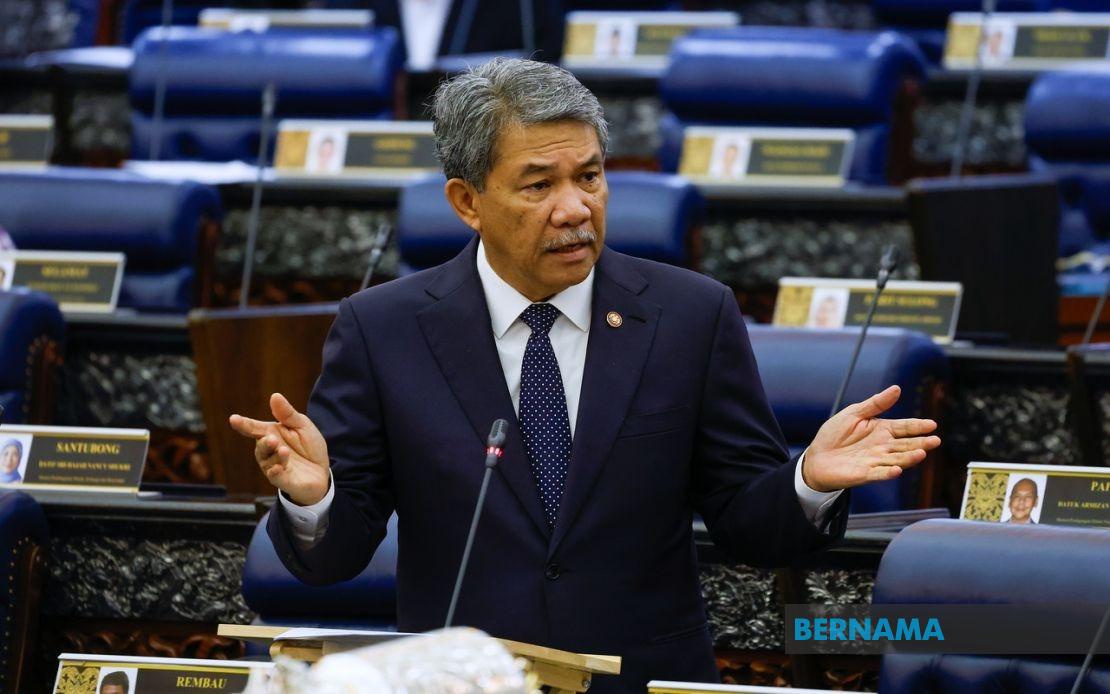
ASEAN member states are crafting fresh approaches to accelerate progress on the Five-Point Consensus (5PC) framework for resolving Myanmar's deepening political crisis, according to Foreign Minister Datuk Seri Mohamad Hasan. Speaking in Parliament, Mohamad acknowledged that while Myanmar has shown some positive signals, the country remains far from achieving the benchmarks that ASEAN leaders collectively established as their peace roadmap. The admission reflects growing frustration within the bloc about the slow pace of implementation and the deteriorating humanitarian situation on the ground since the military coup in February 2021.
The strategic pivot was formally endorsed during the 48th ASEAN Summit held in Cebu on May 8, where regional leaders resolved to intensify diplomatic engagement at the ministerial level. Rather than abandoning the 5PC—which has served as ASEAN's touchstone for dialogue despite widespread criticism of its ineffectiveness—the bloc's heads of state tasked their foreign ministers with exploring how to make the framework more flexible and responsive to ground realities. This recalibration signals recognition that the original consensus, adopted in April 2021, has struggled to produce tangible results in halting violence or advancing political dialogue in Myanmar.
Mohamad's clarification on the 5PC's future status carries significant weight for regional stability. He emphasised that the framework will remain the foundation for ASEAN's Myanmar engagement, but that its implementation will now be managed jointly between ASEAN foreign ministers and Myanmar authorities rather than imposed as a rigid set of conditions. This nuanced shift appears designed to offer Myanmar's military leadership more ownership of the peace process while maintaining ASEAN's collective voice and leverage. The approach acknowledges a fundamental tension: ASEAN's institutional consensus-based decision-making often lacks enforcement mechanisms, yet pushing too hard risks alienating Myanmar and driving it toward closer ties with China or other external actors.
A critical component of Malaysia's evolving strategy involves extending Myanmar's six-month ceasefire, which was scheduled to conclude at the end of July. Mohamad articulated Malaysia's position that this extension should serve as a springboard for a second, more ambitious phase of peacebuilding that goes beyond military de-escalation to encompass political reconciliation and institution-building. This represents a departure from treating ceasefires as standalone achievements, instead positioning them as transitional platforms toward comprehensive conflict resolution. For Malaysian readers, this reflects Kuala Lumpur's diplomatic investment in Myanmar's stability, a nation that shares a lengthy and sometimes volatile border with Malaysia and hosts significant populations of displaced persons and refugees.
Mohamad also underscored Malaysia's insistence that Myanmar provide a transparent roadmap delineating how peace negotiations will proceed. This demand for clarity targets a chronic weakness in ASEAN's Myanmar engagement: the absence of binding timelines or detailed pathways has allowed the situation to drift. By pushing Myanmar to articulate specific steps—including dates for inclusive dialogue—Malaysia is attempting to introduce accountability into a process that has historically lacked it. The proposal reflects diplomatic realism: vague exhortations for dialogue have consistently failed, whereas structured timelines with defined milestones create measurable outcomes and reduce scope for foot-dragging or bad-faith participation.
Crucially, Mohamad identified ASEAN's deeper strategic concern underlying these tactical adjustments: the risk that Myanmar's marginalisation could create a power vacuum exploitable by external powers. This reflects longstanding ASEAN anxieties about geopolitical interference in the region. If Myanmar drifts without resolution, China and other major powers may expand their influence, potentially turning Myanmar into a proxy arena for great-power competition and destabilising the broader Southeast Asian order. By maintaining engagement and offering pathways to re-integration rather than isolation, ASEAN hopes to retain Myanmar within its sphere of influence and preserve regional autonomy from external manipulation. For Malaysia and other ASEAN states, this calculus is fundamental to preserving the region's strategic autonomy.
Malaysia's commitment to multi-stakeholder engagement represents another significant dimension of this recalibrated approach. Mohamad signalled that Kuala Lumpur will continue dialogue with the Myanmar military government, the National Unity Government (the parallel civilian administration recognised by anti-coup forces), the People's Defence Force (armed resistance movement), and various ethnic armed organisations. This comprehensive engagement strategy acknowledges a hard truth: Myanmar's conflict cannot be resolved by negotiating solely with the ruling junta. Any sustainable peace requires buy-in from armed opposition groups and ethnic minorities who have long demanded federalism and greater autonomy. By positioning Malaysia as a bridge between competing factions, Kuala Lumpur aims to play a catalytic role in confidence-building and shuttle diplomacy that formal ASEAN mechanisms have thus far failed to deliver.
The parliamentary exchange that prompted Mohamad's remarks originated from lawmaker William Leong Jee Keen's pointed question about whether ASEAN was fundamentally reconsidering its approach given Myanmar's consistent non-compliance with the 5PC. This query reflects both domestic Malaysian political scrutiny of foreign policy outcomes and broader regional impatience with ASEAN's incremental diplomacy. The question implicitly challenges whether the 5PC retains credibility as a framework or whether it has become diplomatically performative—endorsed by leaders but lacking enforcement capacity. Mohamad's response balances these concerns by confirming strategic flexibility while avoiding the appearance of abandoning core principles, a delicate rhetorical equilibrium necessary in ASEAN's consensus-driven culture.
The distinction Mohamad drew between changes to implementation and substantive changes to the 5PC itself is procedurally important. By specifying that any material modifications require approval from ASEAN heads of state, he preserves the framework's legitimacy and prevents lower-level officials from effectively dismantling it. Simultaneously, he created space for foreign ministers to exercise discretion in day-to-day management, potentially allowing for more pragmatic engagement with Myanmar's authorities. This tiered approach reflects ASEAN's typical operating model, where high-level political ownership ensures unity while operational flexibility is delegated to ministerial and technical levels. For stakeholders monitoring ASEAN's effectiveness, this represents a modest institutional innovation, though whether it will yield better outcomes remains to be seen.
Looking forward, the success of this recalibrated approach will hinge on Myanmar's willingness to reciprocate Malaysia's engagement overtures and provide the transparency and timelines Kuala Lumpur is demanding. The six-month ceasefire extension will serve as an early test: if Myanmar refuses or allows violence to resume, ASEAN's diplomatic capital will have further diminished. Conversely, if Myanmar demonstrates good faith through concrete steps toward inclusive dialogue and institutional reform, ASEAN may gradually regain leverage and credibility as a mediating force. For Malaysia and other ASEAN members, the months ahead will prove whether diplomatic evolution can overcome the structural limitations that have plagued the five-point framework since its inception.

