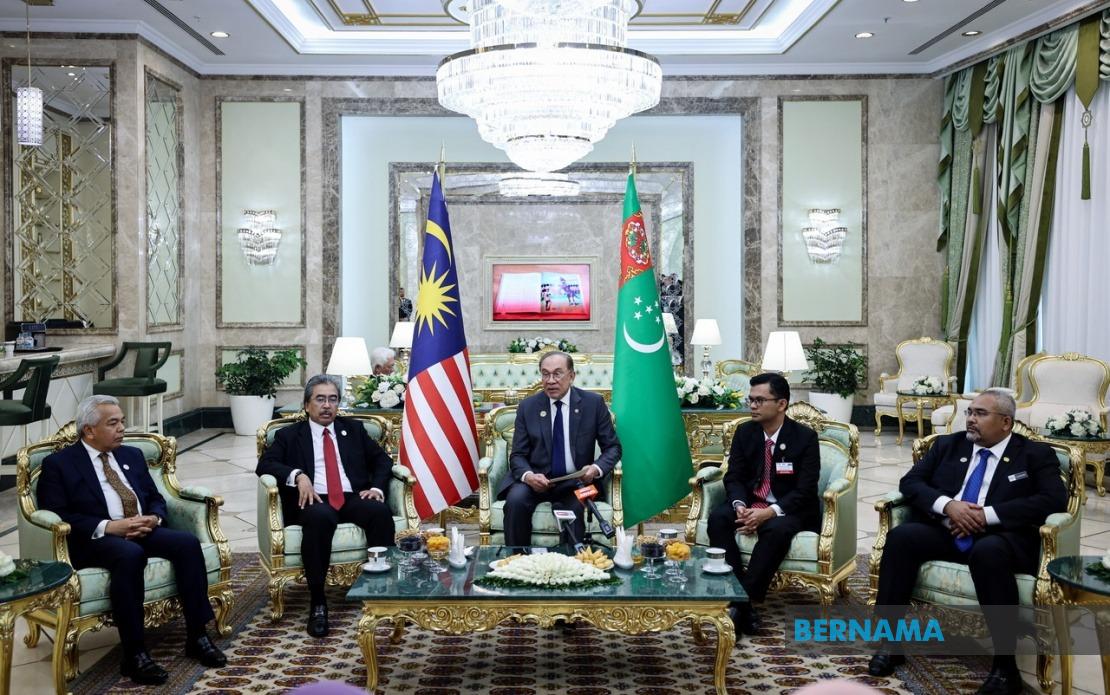
Prime Minister Datuk Seri Anwar Ibrahim has concluded his inaugural official working visit to Turkmenistan on a positive note, characterising the engagement as instrumental in deepening friendly relations and strategic cooperation between Kuala Lumpur and Ashgabat. Speaking through social media on June 19, Anwar reflected on the accomplishments of the two-day mission that commenced on June 18, underscoring how the visit represents a milestone in Malaysia's diplomatic outreach to Central Asia and opens fresh opportunities for collaboration across multiple sectors.
The energy industry emerged as a focal point during discussions, with both nations recognising substantial potential for joint ventures and mutually beneficial arrangements. Malaysia's established expertise in petroleum production and downstream operations, coupled with Turkmenistan's vast hydrocarbon reserves and strategic geographic positioning, creates a compelling foundation for expanded commercial partnerships. The involvement of PETRONAS, Malaysia's national oil company, alongside senior government ministers signals the seriousness with which Kuala Lumpur views this relationship and the priority placed on harnessing the economic benefits that energy cooperation can deliver.
Accompanying the Prime Minister were Minister of Investment, Trade and Industry Datuk Seri Johari Abdul Ghani and Minister of Economy Akmal Nasrullah Mohd Nasir, reflecting the breadth of Malaysia's engagement agenda. This high-level delegation composition indicates that discussions extended beyond energy to encompass investment promotion, trade facilitation, and broader economic development themes. The presence of officials from the Prime Minister's Office and the Foreign Ministry ensured that diplomatic protocols were properly observed while strategic considerations informed every aspect of the bilateral agenda.
Anwar's visit carries particular significance as his first official trip to Turkmenistan since his appointment as Malaysia's 10th Prime Minister in November 2022. The timing underscores Malaysia's intention to recalibrate its foreign policy priorities and strengthen connections with regional partners that had previously received less diplomatic attention. Turkmenistan's location along the historic Silk Road corridors and its status as a substantial energy producer make it a natural partner for Malaysia as both nations seek to diversify their economic partnerships and reduce dependency on traditional trading relationships.
The Prime Minister took care to acknowledge the warm reception extended by President Serdar Berdimuhamedov and the comprehensive support provided by various Malaysian stakeholders. His public gratitude to the ministry teams, the Malaysian Embassy in Ashgabat, PETRONAS representatives, security personnel, and media contingents reflects the coordinated effort required to execute successful high-level diplomatic missions. Such recognition reinforces the importance of institutional support systems in translating political will into concrete outcomes and emphasises the role of multiple actors beyond government in advancing national interests abroad.
For Malaysia's broader regional strategy, this engagement represents an important component of its pivot towards diversifying partnerships across Asia and beyond. As Southeast Asian nations increasingly seek to expand their networks and reduce geopolitical vulnerability, bilateral relationships with energy-rich Central Asian states provide hedging opportunities and alternative pathways for economic development. The visit demonstrates Malaysia's proactive approach to statecraft and its willingness to cultivate relationships with nations that offer complementary economic strengths and strategic advantages.
The focus on the energy sector particularly resonates given Malaysia's evolving energy landscape and growing investments in petrochemicals and downstream industries. Turkmenistan's natural gas reserves, among the world's largest, present opportunities for supply security and long-term commercial arrangements that could stabilise energy costs for Malaysian industries. Furthermore, cooperation in this domain could extend to technology transfer, skills development, and capacity building initiatives that benefit both nations' workforces and technical expertise.
Beyond immediate commercial considerations, the visit symbolises Malaysia's commitment to maintaining robust diplomatic presence across diverse regions and building friendships with nations that share similar developmental aspirations. Central Asia, often overlooked in discussions of Asian geopolitics, represents an emerging arena where Malaysian interests and influence can be meaningfully advanced through sustained engagement and tangible collaborative initiatives. The successful conclusion of this visit sets a precedent for deeper institutional relationships and more frequent high-level exchanges between the two governments.
Looking forward, the groundwork established during this visit should facilitate follow-up mechanisms through which both nations can operationalise the agreements and understandings reached. Establishing working groups, facilitating business-to-business linkages, and creating regular consultation channels will be essential for converting diplomatic goodwill into substantive economic outcomes. The involvement of PETRONAS and other Malaysian enterprises suggests that concrete projects in energy exploration, refining, and related sectors could materialise within a reasonable timeframe, providing employment and revenue opportunities for both countries.

