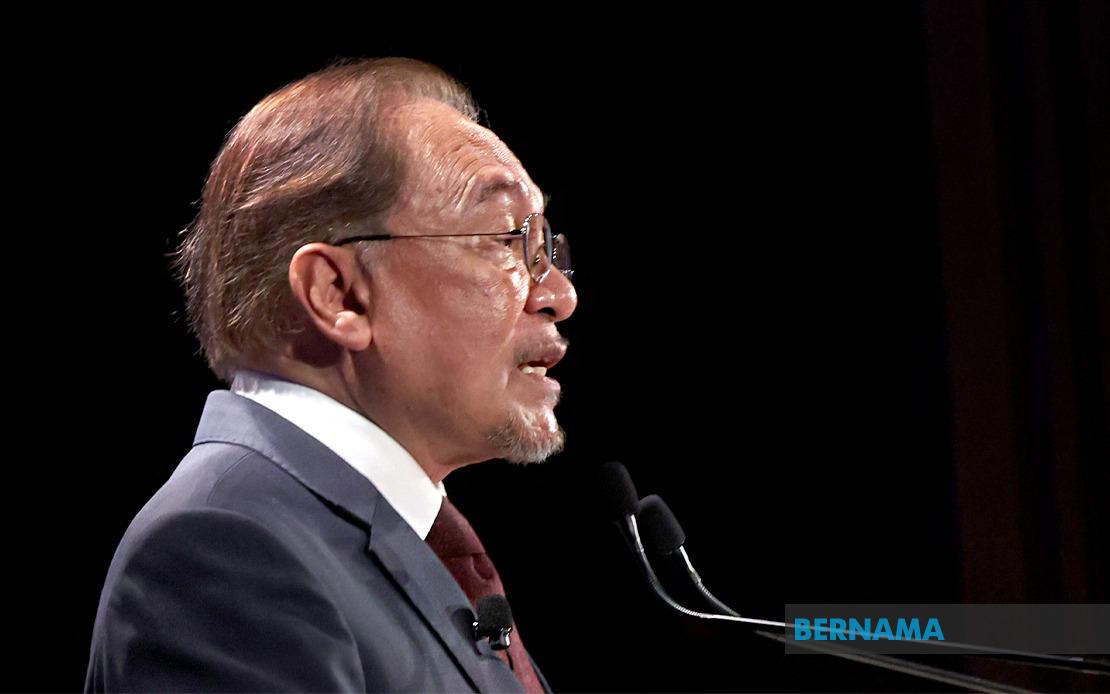
Prime Minister Datuk Seri Anwar Ibrahim will conclude his official visit to Turkmenistan with an intensive schedule of diplomatic engagements and substantive negotiations aimed at deepening Malaysia's strategic ties with the Central Asian nation. The culminating day of his trip to Ashgabat, the capital situated on the eastern shores of the Caspian Sea, underscores Malaysia's commitment to broadening its footprint beyond Southeast Asia and establishing meaningful partnerships in emerging regions.
The prime minister's schedule commences with a formal reception at the Presidential Palace, where he will be greeted by Turkmenistan President Serdar Berdimuhamedov in a ceremony reflecting the ceremonial protocols typically accorded to visiting heads of government. This initial encounter will be followed by a private bilateral discussion between the two leaders, a format designed to allow candid exploration of issues of mutual concern without the constraints of a larger diplomatic setting.
The substantive bilateral meeting between the two delegations will address Malaysia's vision for expanded cooperation across multiple economic and social dimensions. Trade and investment form the cornerstone of these discussions, reflecting Malaysia's interest in accessing Turkmenistan's substantial market opportunities and its investments in the hydrocarbon sector. The agenda also encompasses agriculture and commodities, sectors where Malaysia possesses considerable expertise and competitive advantage, particularly in palm oil production and agricultural technology. Energy cooperation represents another critical dimension, given Turkmenistan's significant oil and gas reserves and Malaysia's experience in energy resource management through Petronas.
Beyond commercial matters, the bilateral engagement will encompass education, digital transformation, and scientific advancement—areas where Malaysia can offer technological solutions and institutional partnerships. Tourism constitutes an additional avenue for cooperation, with Turkmenistan's distinctive cultural heritage and architectural landmarks presenting opportunities for Malaysian tour operators and hospitality enterprises. The exchange of perspectives on regional developments, particularly concerning ASEAN's initiatives and the broader Central Asian strategic landscape, will enable both nations to coordinate positions on matters of shared geopolitical interest.
The formal outcomes of these negotiations will be memorialized through multiple instruments of cooperation. The two governments will jointly issue a comprehensive statement outlining their shared vision and commitments. Among the specific agreements to be signed, an Air Services Agreement will facilitate enhanced connectivity between Malaysia and Turkmenistan, reducing travel friction and supporting business-to-business engagement. The bilateral foreign affairs institutes will establish collaborative frameworks through a dedicated memorandum of understanding. Malaysia's Ministry of Transport will enter into a formal arrangement with Turkmenistan's State Service for Transport cooperation. The Academy of Sciences Malaysia and its Turkmenistan counterpart will forge a partnership advancing scientific research and innovation. Recognizing the pivotal role of hydrocarbons in both economies, the governments will finalize multiple documents specifically addressing oil and gas sector cooperation.
Following the formal negotiations, Anwar will participate in a state luncheon hosted by President Berdimuhamedov at the Presidential Palace, providing an informal setting for continued dialogue and relationship-building. The prime minister will subsequently perform Friday prayers at the Turkmenbashi Ruhy Mosque, a gesture reflecting respect for Turkmenistan's religious and cultural traditions while demonstrating Malaysia's commitment to interfaith dialogue and cultural sensitivity in its diplomatic engagement.
The visit will culminate with a joint economic forum—the Malaysia-Turkmenistan Forum—held at the Chamber of Commerce and Industry of Turkmenistan. This platform will bring together business leaders, investors, and government officials from both nations to explore concrete commercial opportunities, facilitate networking, and establish frameworks for future business partnerships. The forum serves as a bridge between government-level diplomacy and private-sector engagement, translating political commitment into tangible economic outcomes.
Anwar's delegation includes Minister of Investment, Trade and Industry Datuk Seri Johari Abdul Ghani and Minister of Economy Akmal Nasrullah Mohd Nasir, reflecting the economic focus of the visit. The composition of the official party emphasizes Malaysia's intent to leverage government-business partnership models in advancing bilateral relations and attracting Turkmen investments into Malaysia.
Turkmenistan's capital, Ashgabat, earned its distinctive moniker as the 'White Marble City' due to the extraordinary concentration of white marble-clad structures dominating its urban landscape. The city holds the Guinness World Record for possessing the highest density of white marble buildings globally, with over 500 structures featuring this pristine material. The architectural aesthetic extends beyond marble cladding to encompass extensive gold-leaf embellishments and expansive, meticulously maintained thoroughfares, reflecting a vision of civic grandeur and modernity.
Turkmenistan's geopolitical positioning places it at the intersection of Central Asian and regional politics. Bordered by Kazakhstan and Uzbekistan to the north, Afghanistan to the southeast, Iran to the southwest and south, and the Caspian Sea to the west, the nation occupies a strategic corridor connecting diverse regions. The Caspian Sea, the world's largest enclosed inland body of water, has functioned historically as both a barrier and a connector for regional commerce and diplomacy.
Malaysia's economic relationship with Turkmenistan has demonstrated modest but consistent growth. In 2025, Turkmenistan ranked as Malaysia's fourth-largest trading partner within Central Asia, with bilateral commerce valued at RM75.80 million. Malaysian exports to Turkmenistan accounted for RM75.50 million of this total, reflecting a nine percent year-on-year increase. This expansion trajectory indicates growing market receptivity to Malaysian goods and services in the Central Asian market.
Petroliam Nasional Bhd, Malaysia's state-owned petroleum enterprise, maintains a particularly substantial presence in Turkmenistan, underscoring the hydrocarbon sector's centrality to bilateral relations. Petronas has accumulated cumulative investments exceeding RM52.73 billion in Turkmenistan since establishing its operations in 1996. This long-term commitment represents one of the company's most significant international investments and reflects the mutual benefits derived from Malaysia's technical expertise and capital applied to developing Turkmenistan's energy resources. The depth of Petronas's involvement provides an established foundation upon which to build broader economic partnerships and demonstrates the viability of sustained Malaysian engagement in the region.

