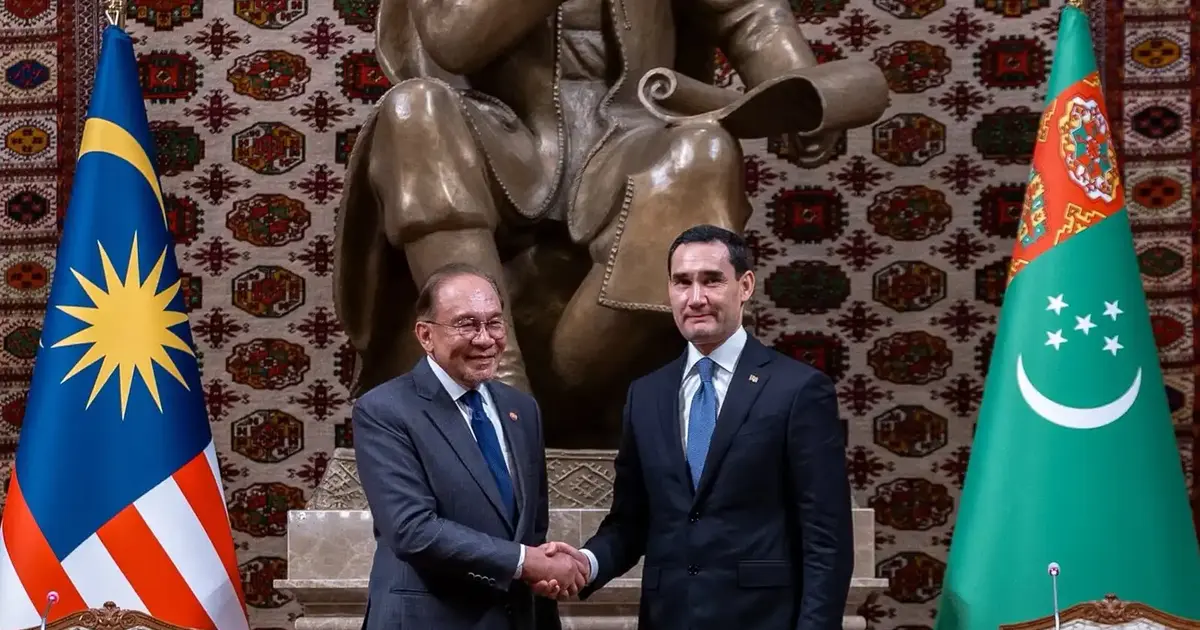
Prime Minister Anwar Ibrahim has engineered a series of bilateral agreements that represent a fundamental shift in Malaysia's approach to energy security, moving away from reliance on a narrow set of suppliers toward a diversified portfolio spanning Europe, Central Asia, and East Asia. These arrangements, which involve partnerships with Russia, Turkmenistan, and Japan, collectively establish mechanisms for guaranteed long-term liquefied natural gas supplies, access to strategic energy reserves, and secured outlets for Malaysian energy products in stable markets. Regional analysts contend that this diplomatic framework addresses vulnerability risks inherent in the country's previous energy acquisition patterns.
The engagement with Turkmenistan introduces Malaysia to one of the world's most substantial untapped natural gas reserves, positioned in the Caspian region and historically underutilized due to geopolitical complications and limited transportation infrastructure. By establishing commercial ties with the Turkmen state, Malaysia gains conditional access to reserves that could support decades of supply continuity, provided regional political conditions remain manageable and pipeline infrastructure connecting Central Asia to downstream Asian markets continues developing. This arrangement proves particularly significant given international forecasts predicting energy demand growth across Southeast Asia over the next two decades, driven by industrial expansion and rising living standards throughout the region.
Simultaneously, the Russian engagement provides Malaysia with alternative supply channels at a moment when global energy markets experience significant realignment following sanctions regimes and shifting geopolitical alignments. Rather than viewing energy commerce exclusively through ideological lenses, Malaysia's approach reflects pragmatic recognition that energy security transcends political categorization and that long-term supply guarantees require relationships built on mutual commercial interest. This stance differentiates Malaysia from some Western-aligned nations that have prioritized political alignment over energy procurement efficiency.
The Japanese component of Anwar's energy architecture serves a distinct but complementary function, securing demand-side stability for Malaysian liquefied natural gas exports and positioning Malaysia within Japan's diversified procurement strategy. Japan, facing structural energy challenges stemming from limited domestic hydrocarbon reserves and post-Fukushima nuclear constraints, maintains substantial LNG demand extending decades into the future. Locking in Malaysian capacity within Japan's import agreements provides revenue predictability for Malaysian energy producers and reduces exposure to volatile spot market fluctuations that characterize shorter-term energy transactions.
Analysts emphasize that this tripartite arrangement produces network effects exceeding the sum of individual bilateral relationships. The Turkmenistan linkage supplies sourcing capacity; the Russian connection provides alternative logistics and transit options; while the Japanese engagement guarantees revenue certainty on the demand side. Together, these elements construct what energy specialists describe as a complete supply ecosystem, insulating Malaysia from supply disruptions affecting individual sources and from demand volatility in spot markets dominated by short-term price swings.
From a Malaysian perspective, these arrangements reinforce the country's positioning as a critical nexus in Asian energy markets. Rather than functioning merely as an importer managing scarcity, Malaysia becomes an intermediary capable of aggregating supplies from multiple sources and directing them toward secured markets, thereby extracting value from its geographic position astride major maritime energy trade routes and its existing liquefied natural gas export infrastructure. This transformation potentially elevates Malaysia's negotiating leverage across multiple energy relationships simultaneously.
The diplomatic architecture also reflects sophisticated understanding of shifting global energy realities. Traditional energy producers, particularly in the Middle East, face mounting pressure to diversify economies away from hydrocarbon dependency, potentially constraining their future export availability. Simultaneously, climate policy discussions, though contested internationally, increasingly influence energy procurement decisions among developed economies seeking to hedge against transition risks. Malaysia's strategy of securing supplies from multiple continental regions insulates the country from over-reliance on any single geopolitical bloc or energy producer, reducing vulnerability to supply weaponization that might characterize future energy disputes.
For Southeast Asia broadly, Malaysia's energy diplomacy initiatives carry implications extending beyond bilateral commerce. The region collectively confronts rising energy demand alongside increasing climate policy pressures, creating genuine tension between development imperatives and environmental commitments. Malaysia's success in securing diverse supply sources and locked-in long-term contracts potentially establishes templates other regional governments might pursue, fragmenting OPEC-style unified producer positioning and creating more competitive energy markets throughout Asia.
However, analysts caution that realizing full benefits from these diplomatic arrangements requires sustained attention to implementation logistics. Pipeline infrastructure connecting Turkmen reserves to Asian markets remains incompletely developed, requiring coordination across multiple intermediate states. Similarly, converting framework agreements into actual commodity flows demands resolution of technical specifications, pricing mechanisms, and dispute resolution procedures that frequently prove more contentious than initial political negotiations. Malaysian policymakers must sustain diplomatic momentum across all three relationships simultaneously, preventing bilateral agreements from deteriorating into ceremonial arrangements lacking substantive commercial consequence.
The energy agreements also position Malaysia advantageously as China and other Asian powers increasingly compete for stable long-term supply access. By securing commitments before global competition for Central Asian resources intensifies further, Malaysia gains first-mover advantages that might prove valuable as regional energy demand pressures accelerate. This forward-looking approach distinguishes Malaysia's energy strategy from reactive postures adopted by nations responding to supply crises after they materialize.
Ultimately, Anwar's energy diplomacy reflects recognition that energy security constitutes fundamental infrastructure underpinning economic stability and geopolitical autonomy. Countries able to assure consistent, affordable energy supplies enjoy competitive advantages in attracting manufacturing investment and maintaining industrial competitiveness. By constructing diversified supply relationships spanning multiple continents and source types, Malaysia enhances its capacity to maintain energy affordability while reducing vulnerability to supply disruptions or price shocks that might devastate manufacturing-dependent economies. These arrangements represent strategic investments in long-term national resilience rather than tactical responses to immediate energy shortages.

