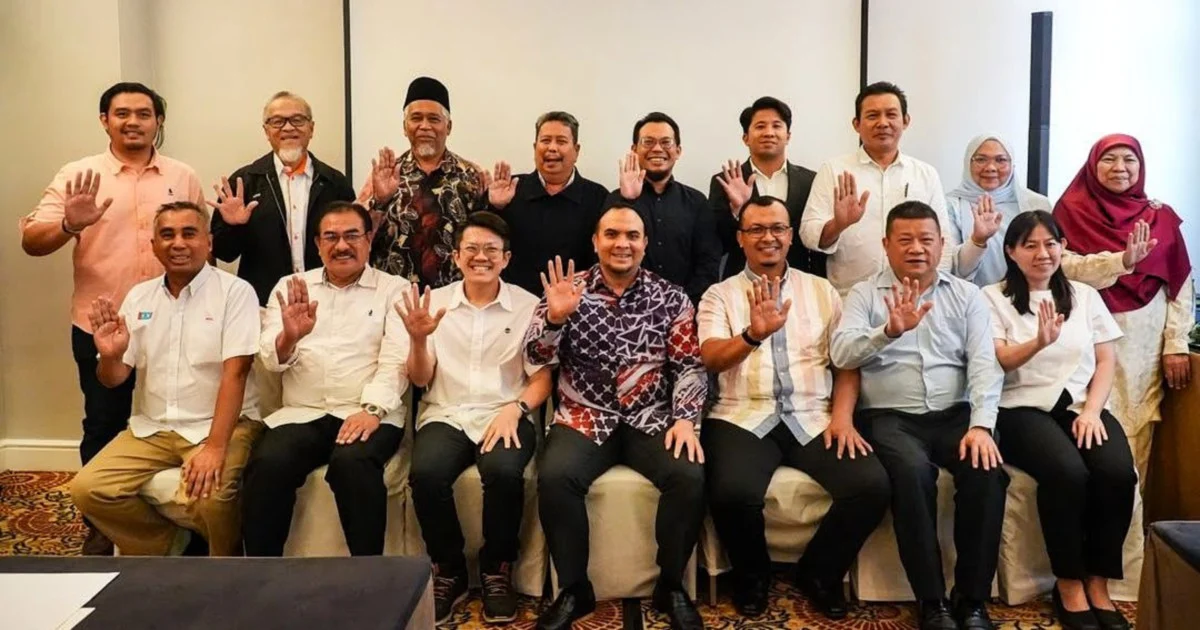
Datuk Ahmad Farhan Fauzi, who serves as Prime Minister Datuk Seri Anwar Ibrahim's political secretary, has assumed the role of chairman for Pakatan Harapan in Pahang. This appointment marks a significant development in the coalition's internal structure and represents an extension of the Prime Minister's organisational reach into one of Malaysia's key eastern states.
The elevation of Ahmad Farhan reflects a broader pattern of leadership appointments within Pakatan Harapan, where trusted officials from the Prime Minister's office transition into positions overseeing state-level operations. His previous role as a political secretary positioned him with intimate knowledge of the government's strategic direction and decision-making processes, experience that may prove valuable as he navigates the complexities of managing Pahang's political landscape. Such moves typically signify the centre's intention to strengthen party discipline and coherence across regional chapters.
Pahang holds considerable significance within Malaysia's political architecture. As one of the nation's largest states by land area and a crucial component of peninsular politics, the state has traditionally been contested ground between ruling and opposition forces. Control of Pahang's administrative machinery and political direction therefore carries implications beyond the state itself, affecting the government's overall parliamentary majority and policy implementation capacity at the federal level.
The appointment comes at a time when Pakatan Harapan continues to consolidate its position following the 2022 general election and subsequent political realignments. The coalition's strength in parliament depends substantially on maintaining cohesion among its component parties and ensuring effective state-level governance. By placing someone with direct access to the Prime Minister's office in such a strategic position, the coalition signals its commitment to active management of its institutional presence across different political tiers.
Ahmad Farhan's background as a political secretary equips him with operational experience in managing relationships between various government bodies, party structures, and stakeholder groups. Political secretaries typically serve as crucial conduits between a prime minister's policy agenda and implementation mechanisms, granting them perspective on legislative priorities, budgetary allocations, and administrative procedures. Translating this experience to state leadership requires navigating different power dynamics, as state-level politics often involve local interests that diverge from federal concerns.
For Pahang specifically, this appointment signals expectations of tighter coordination between state party operations and federal government objectives. The state has faced governance challenges in recent years, and the appointment of someone with close ties to the Prime Minister's office may represent an effort to address organisational shortcomings. Effective state leadership often depends on securing cooperation from local elected representatives, party members, and community leaders—a task that demands both operational skill and political legitimacy.
The timing of this appointment deserves consideration within the broader electoral calendar. With state and local elections potentially on the horizon, having stable, unified party leadership becomes essential for campaign preparation and vote mobilisation. Pahang's voter base includes diverse communities with varying economic interests, from agricultural areas to resource-rich regions, requiring carefully calibrated political messaging. A chairman with direct lines to federal leadership may facilitate more coordinated policy communication across these constituencies.
This move also reflects Anwar Ibrahim's apparent confidence in Ahmad Farhan's capability to manage high-stakes political assignments. Rising through the ranks of political administration to assume state-level party leadership represents a significant career progression. The appointment suggests that Ahmad Farhan has earned the trust necessary to represent the Prime Minister's interests while simultaneously building consensus among Pahang's diverse political stakeholders.
The broader implications extend to Pakatan Harapan's overall governance model. By placing central government officials into state party positions, the coalition creates structural mechanisms for policy alignment and resource distribution. However, such arrangements can also generate tensions if state-level concerns clash with federal priorities, or if local party members perceive reduced autonomy in decision-making. Successful implementation depends on Ahmad Farhan's ability to balance centralised direction with legitimate local input.
For Malaysian observers monitoring political developments, this appointment exemplifies how power structures operate within governing coalitions. It demonstrates that state-level party positions are not purely representative roles but strategic positions within a larger national political framework. The promotion of a Prime Minister's political secretary to such prominence underscores the interconnected nature of Malaysian federalism, where state governance remains substantially influenced by federal political dynamics.
The appointment also carries implications for Pakatan Harapan's component parties operating in Pahang. The coalition comprises multiple political entities, each with distinct histories and support bases. Introducing a figure closely aligned with Anwar Ibrahim's office might reshape internal coalition dynamics, potentially clarifying decision-making authority while possibly affecting internal party negotiations over positions and resource allocation within the state structure.

