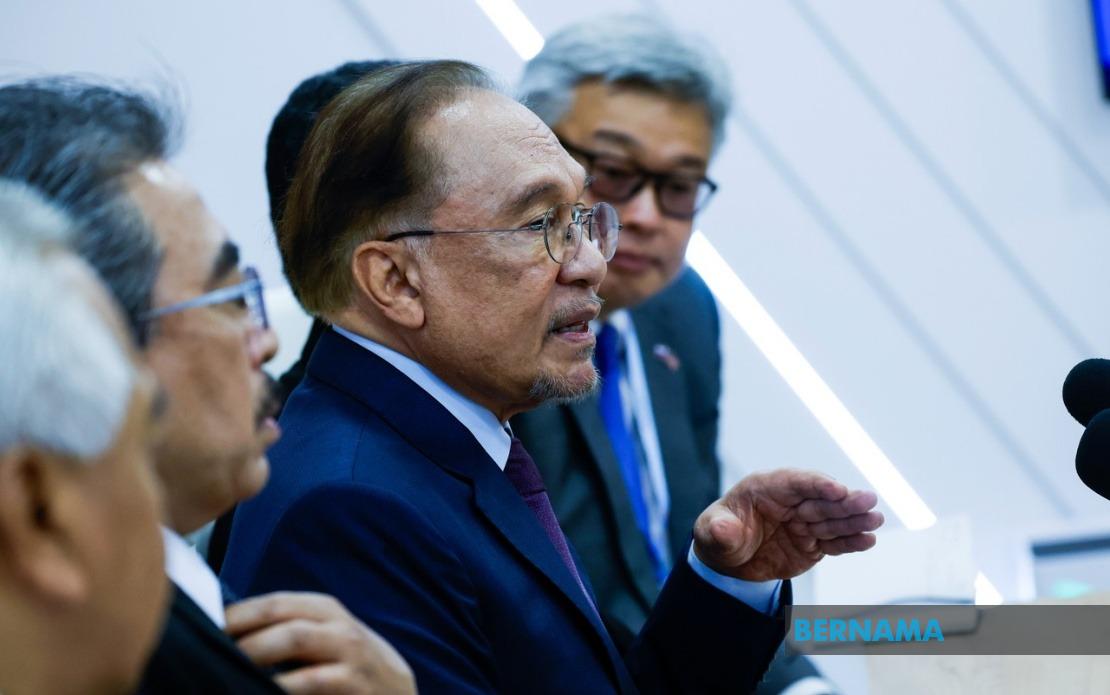
Prime Minister Datuk Seri Anwar Ibrahim has completed a strategically significant working visit to Kazan, during which Malaysia and Russia formalised their commitment to deepening cooperation across energy, trade, investment, tourism and technology sectors. The centrepiece of the mission centred on Russia's willingness to guarantee Malaysia's long-term access to petroleum, oil and gas supplies through multi-year frameworks rather than the conventional short-term agreements that dominate current market practices. This shift addresses a fundamental vulnerability in Malaysia's energy strategy, which has historically relied upon volatile annual or seasonal procurement cycles.
The architectural significance of these agreements lies in their departure from Malaysia's traditional energy procurement model. Rather than negotiating prices and volumes on an annual basis—a structure that exposes the country to sudden price spikes and supply disruptions—the emerging framework establishes predictable, multi-year supply commitments. During the closing press conference, Anwar underscored that Russian officials have not merely pledged supplies but have agreed to anchor those supplies within a formal long-term structure. The procedural stage has advanced considerably, with company representatives already in place and draft agreements circulating among relevant stakeholders. Anwar indicated that the remaining work involves technical review and formal signatures, with Malaysian authorities committed to accelerating this timeline upon their return.
For Malaysia, a nation heavily dependent upon energy imports to fuel its manufacturing and service sectors, this arrangement carries profound implications for macroeconomic stability. Volatile energy costs have historically constrained budgetary predictability and corporate investment planning. By securing stable, contractually-bound supplies from Russia, Malaysia reduces exposure to the geopolitical shocks that periodically roil global energy markets. The move also represents a deliberate diversification strategy, reducing reliance upon conventional suppliers in the Middle East and strengthening ties with alternative producers capable of meeting Malaysia's growing demand.
Beyond the bilateral energy architecture, Anwar emphasised that Malaysia must adopt a more assertive posture in cultivating economic relationships with emerging partners, particularly Russia. He cautioned against what he characterised as excessive caution in international economic engagement, suggesting that historical reticence has constrained Malaysia's ability to capture partnership opportunities. This rhetorical shift signals a deliberate recalibration of Malaysia's foreign economic policy, one that prioritises pragmatic engagement with non-traditional partners over ideological considerations. The framing reflects broader regional trends wherein ASEAN nations increasingly pursue multi-vectored economic strategies rather than remaining within traditional alignments.
Infrastructural connectivity between Malaysia and Russia emerged as a secondary but important agenda item during Anwar's visit. The Prime Minister advocated for visa-free travel arrangements and the establishment of direct flights, viewing these as essential catalysts for tourism growth and deepened people-to-people exchanges. Such practical measures, though seemingly modest, generate momentum for sustained engagement by removing transaction costs associated with travel and visa procedures. Higher tourist flows strengthen commercial networks and cultivate constituencies within both nations with vested interests in maintaining productive bilateral relations.
At the regional level, the finalisation of the ASEAN-Russia Strategic Programme on Trade and Investment Cooperation 2026-2035 provides an institutional framework amplifying bilateral initiatives. This ten-year roadmap signals mutual commitment to sustained economic integration, offering predictability for investors and traders across the region. Current ASEAN-Russia trade volumes substantiate the programme's strategic rationale: 2024 figures registered US$18.1 billion in total trade, with Russian foreign direct investment in ASEAN reaching RM367.90 million. For Malaysia specifically, Russia ranked as the ninth-largest European trading partner in 2025, with bilateral commerce valued at RM8.72 billion.
Malaysia's export profile to Russia reflects the country's manufacturing strengths, with electrical and electronic products, machinery, equipment components and processed foods dominating outbound shipments. Conversely, Malaysian imports consist primarily of petroleum products, minerals and chemical compounds, reinforcing the energy-security rationale underpinning the bilateral engagement. This complementary trade structure suggests ample scope for deepened commercial relationships, particularly as Malaysian manufacturers seek alternative supply chains and Russian suppliers diversify customer bases amid international sanctions regimes.
During bilateral discussions with Rustam Minnikhanov, the Head of the Republic of Tatarstan, Anwar highlighted the regional dimension of energy cooperation. Tatarstan's status as a major Russian oil-producing jurisdiction positions it as a natural counterpart for Malaysian entities exploring downstream opportunities, refining capacity and petrochemical ventures. The discussion extended beyond energy into education, tourism, the halal economy and talent development, illustrating how energy partnerships can catalyse broader institutional and commercial linkages. Such multisectoral cooperation creates resilient relationships less vulnerable to disruption from fluctuations in any single domain.
The broader context framing these agreements involves Malaysia's strategic imperative to fortify energy security amid accelerating global uncertainty. Geopolitical tensions, supply chain vulnerabilities and volatile commodity pricing have compelled energy-importing nations to reassess their sourcing strategies and contractual frameworks. Malaysia's pivot toward long-term Russian agreements reflects rational risk management, transforming potential energy insecurity into contractual certainty. This approach complements ongoing efforts to develop renewable energy capacity and explore alternative suppliers, creating a diversified portfolio resilient to singular supply disruptions.
Anwar's subsequent departure for a two-day official visit to Turkmenistan underscores the depth of Malaysia's energy diplomacy in Central Asia. The Turkmenistan leg of this tour signals intentions to develop similarly structured long-term supply arrangements with additional regional producers, multiplying supply sources and reducing dependency upon any single partner. This sequential engagement across multiple energy-rich nations reflects a sophisticated diplomatic strategy, wherein each bilateral relationship contributes to a broader architecture of energy security.
The visit's success, as characterised by Anwar, reflects favourable reception from Russian leadership. His expression of appreciation to President Vladimir Putin for supporting enhanced energy cooperation, particularly through Petronas involvement, indicates sustained institutional-level commitment. These relationships, cultivated across multiple visits and sustained through regular diplomatic engagement, generate the trust necessary for negotiating complex, long-duration commercial arrangements. For Malaysia, such relationships also project soft power through demonstrated economic pragmatism and commercial acumen.
Looking forward, the implementation timeline for these agreements will merit close monitoring. While draft frameworks and agreed principles represent substantial progress, the transition to signed contracts and operational supply flows requires sustained coordination among multiple stakeholders. Petronas, as Malaysia's national petroleum company, will shoulder primary responsibility for translating political agreements into commercial reality. The success of this energy diplomacy ultimately depends upon translating high-level political commitment into functioning supply chains delivering hydrocarbons to Malaysian refineries and power plants.
The Kazan mission ultimately represents Malaysia's deliberate repositioning within global energy markets and emerging geopolitical configurations. By securing long-term Russian supplies and deepening regional engagement through institutional frameworks, Malaysia strengthens its position as a reliable, pragmatic partner capable of navigating complex international relationships. For Southeast Asian policymakers observing Malaysia's approach, the visit demonstrates how assertive energy diplomacy, divorced from ideological constraints, can advance national interests whilst maintaining regional stability.

