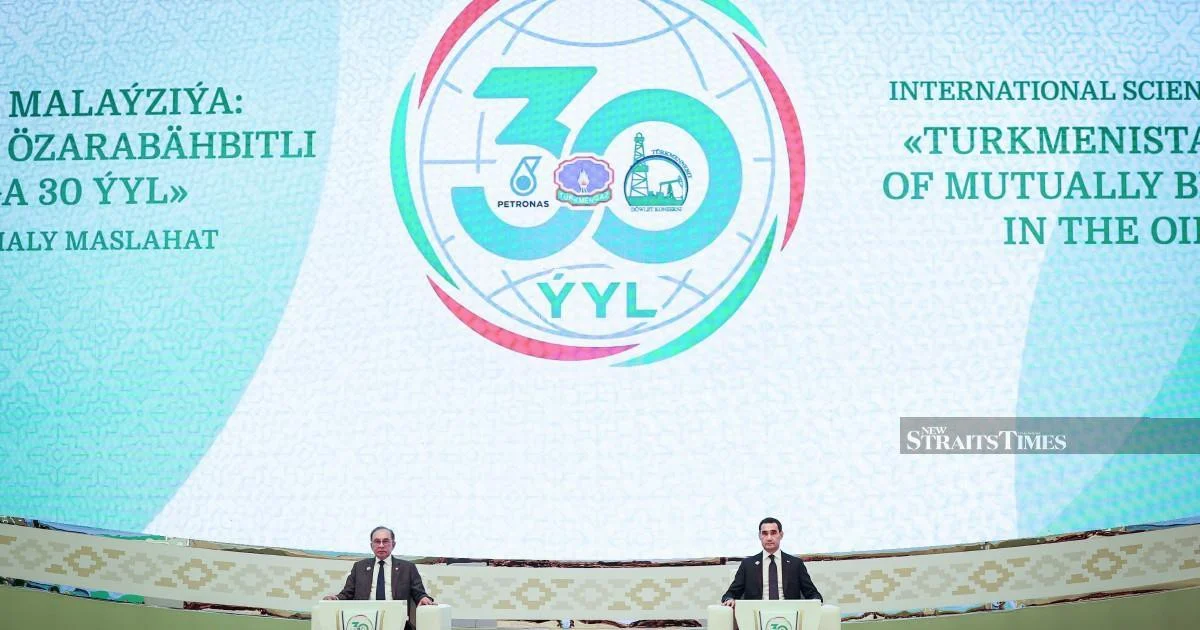
Prime Minister Datuk Seri Anwar Ibrahim's diplomatic tour through Russia and Turkmenistan last week represents a calculated repositioning of Malaysia's energy strategy at a time when global supply chains remain volatile and Southeast Asia grapples with rising demand. The missions underscore Kuala Lumpur's determination to diversify its hydrocarbon sourcing beyond traditional Middle Eastern partnerships, tapping instead into Central Asian reserves and leveraging Malaysia's growing geopolitical relevance as a bridge between Asia's established and emerging economies.
The timing of these engagements carries particular significance for Malaysia's long-term energy independence. With regional demand for liquefied natural gas projected to climb steadily over the coming decade, securing partnerships in gas-rich jurisdictions like Turkmenistan—which sits atop the world's fourth-largest natural gas reserves—addresses both immediate supply concerns and future-proofing strategies. For Petronas, Malaysia's national oil corporation, such inroads provide pathways to diversify its exploration and production portfolios beyond declining domestic reserves in the South China Sea and established upstream interests across the Middle East and Africa.
Russia's role in these discussions extends beyond conventional energy commerce. Despite international sanctions constraining its global market access, Moscow remains a technological powerhouse in deepwater drilling, Arctic exploration, and liquefied natural gas infrastructure—expertise that could benefit Malaysian operators seeking to unlock harder-to-reach deposits. The geopolitical complexities surrounding Russian energy are well understood in Kuala Lumpur, yet pragmatic engagement appears to be the prevailing operational principle, reflecting Malaysia's historical equidistance in Cold War politics and its contemporary preference for non-aligned positioning in great power competition.
Turkmenistan's appeal operates on different terrain. The Central Asian nation has long sought reliable export partners for its vast gas reserves, caught between the gravitational pull of both Russian and Chinese infrastructure corridors. Malaysia's overtures potentially offer an alternative buyer with significant purchasing power and without the political baggage that sometimes complicates Ashkhabad's dealings with Moscow or Beijing. Such bilateral arrangements could also support Turkmenistan's own strategic diversification—a concern that resonates deeply with a country seeking to reduce dependency on any single buyer.
For Malaysian businesses and energy planners, these breakthroughs carry tangible implications. Petronas stands to benefit from expanded partnership opportunities that could translate into production-sharing arrangements, joint ventures, or long-term supply contracts. The private sector—encompassing engineering firms, suppliers, and service providers—may discover new commercial horizons as Malaysian operators move into unfamiliar geological and operational environments. Training and expertise-sharing initiatives often accompany such energy partnerships, potentially elevating domestic technical capabilities in areas where Malaysia still lags behind more developed hydrocarbon economies.
The backdrop of these missions includes Malaysia's evolving energy transition narrative. While the nation pursues renewable energy targets and green hydrogen initiatives, conventional oil and gas revenues remain essential to funding public services and maintaining fiscal stability. Anwar's approach appears to recognize that energy transition is a decades-long process during which strategic hydrocarbon sourcing continues to matter. Securing stable, diversified supplies allows Malaysia to manage its transition trajectory without forcing premature economic disruption or sacrificing development priorities in education, healthcare, and infrastructure.
Regional perspectives deserve consideration as well. Southeast Asian peers including Singapore, Vietnam, and Thailand are themselves competing for energy security and viewing Central Asian partnerships with mounting interest. Malaysia's head start in engaging Moscow and Ashkhabad may confer first-mover advantages in crucial negotiations, from pipeline routing through shared infrastructure to favorable pricing mechanisms. The Association of Southeast Asian Nations as a collective remains energy-vulnerable; strengthened Malaysian ties to Central Asian producers strengthen the region's overall negotiating position.
These diplomatic moves also reflect Anwar's broader foreign policy reorientation since his accession to the premiership. Enhanced engagement with non-traditional partners—whether in Central Asia, the Eurasian sphere, or the Global South—signals a deliberate move away from an overly Atlanticized diplomatic posture. This recalibration aligns with widespread sentiment across Southeast Asia that the region's interests are best served through a genuinely non-aligned foreign policy architecture rather than zero-sum alignment with established blocs.
The institutional mechanics underpinning these breakthroughs warrant attention too. High-level political visits typically precede technical and commercial negotiations managed by energy ministries, regulators, and Petronas executives. The groundwork established during Anwar's tours will now flow through bureaucratic and corporate channels, where details of production arrangements, pricing formulas, and infrastructure investments take shape. Success depends on sustained diplomatic effort and institutional capacity on both sides to move from memoranda of understanding into binding commercial agreements.
Longer-term assessment of these missions will hinge on whether initial understandings crystallize into operational partnerships. The history of international energy engagement contains numerous examples of promising talks that failed to yield tangible outcomes due to geopolitical shifts, regulatory complications, or commercial disagreements. Malaysia's challenge now involves maintaining momentum in these partnerships while managing the expectations of domestic stakeholders who may view such ventures as straightforward commercial transactions without recognizing the complex geopolitical variables at play.
Anwar's initiatives also carry implicit messaging about Malaysia's strategic autonomy at a moment when great power competition intensifies across Asia. By cultivating direct relationships with multiple energy-producing regions and avoiding exclusive alignments, Malaysia positions itself as an independent actor with agency in shaping its economic future. This assertiveness—rooted in pragmatism rather than ideology—reflects the strategic choices available to a middle power determined to retain negotiating leverage in an increasingly multipolar world.

