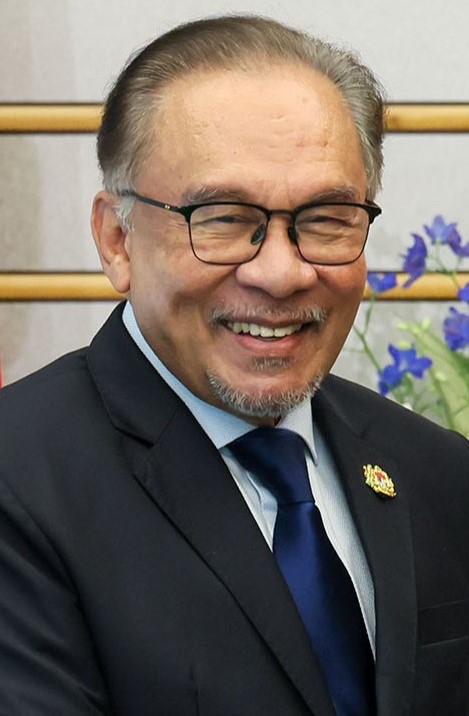
Prime Minister Datuk Seri Anwar Ibrahim has sounded a stark warning about the dangers of allowing race-based political narratives to take hold in Malaysia, urging the public to resist campaigns engineered to drive wedges between communities. Speaking on the issue, Anwar underscored a fundamental truth often overlooked in polarised political discourse: it is ordinary citizens who bear the heaviest burden when politicians deliberately stoke racial tensions, not the architects of such divisive strategies.
The Prime Minister's remarks come at a time when Malaysia's political landscape continues to grapple with periodic eruptions of communal friction. Such tensions, whether triggered by legislative proposals, cultural incidents, or electoral campaigns, have historically posed risks to the nation's stability and development trajectory. Anwar's intervention signals the federal government's concern that certain actors remain willing to exploit identity politics as a tool for political mobilisation, despite the demonstrated costs to the nation's social fabric.
The underlying dynamic that Anwar appears to be addressing is well understood among political analysts: when politicians weaponise racial or religious grievances, they create conditions where moderate voices are drowned out by increasingly extreme rhetoric. This escalation tends to marginalise pragmatists within all communities and empower those advocating for confrontation. The resulting environment makes it substantially harder for governments to implement policies centred on economic development, infrastructure investment, or institutional reform—the practical concerns that affect voter welfare most directly.
Malaysia's diversity presents both opportunity and challenge. The nation's competitive advantage historically rested on its ability to accommodate different communities within a shared economic and political framework. When that framework comes under strain due to manufactured communal tensions, Malaysia's appeal to foreign investors and skilled professionals diminishes noticeably. Regional competitors watching developments have noted that periods of high racial polarisation coincide with reduced economic growth and less efficient governance.
Anwar's framing of the issue—centring the suffering of the people rather than the perpetrators of division—reflects a strategic communication approach. By emphasising that ordinary Malaysians lose out, he positions resistance to divisive politics not as a matter of political correctness but as enlightened self-interest. Workers in factories, traders in markets, and families managing household budgets have genuine stakes in political stability and social peace, a reality that transcends the partisan advantages any group might seek through polarisation.
The challenge for the federal administration is that such warnings, while important, have limited effect without accompanying structural interventions. Civil society organisations, educational institutions, and media outlets all play roles in either amplifying or dampening communal tensions. The government's capacity to shape these incentive structures—through policy, resource allocation, and regulation—remains a key variable in determining whether such appeals translate into behavioural change among both political actors and the public.
Historically, Singapore's experience offers instructive lessons for Malaysia's leadership. During critical junctures in the 1950s and 1960s, that nation's political class made deliberate choices to subordinate racial mobilisation to nation-building imperatives. The results, while imperfect and subject to ongoing debate, included decades of relative communal peace and rapid economic development. Whether Malaysia can replicate aspects of that model remains uncertain, given the country's distinct constitutional framework and the different political incentive structures that have evolved.
Anwar's warning also reflects awareness that digital platforms have amplified the reach and speed of divisive messaging. Coordinated campaigns leveraging social media can reach millions within hours, creating pressure on traditional politicians to respond in kind. This technological shift has compressed the reaction time available to responsible leaders seeking to counter dangerous narratives before they metastasise into broader public sentiment. The Prime Minister's proactive statement may be understood partly as an attempt to pre-empt escalatory dynamics before they gain momentum.
The opposition to Anwar's framing, if any, typically emerges from actors who benefit electorally from communal polarisation. For such actors, the promise of delivering heightened communal consciousness and grievance to their base constituencies constitutes a viable electoral strategy. Countering this dynamic requires not only rhetorical appeals from national leadership but also the development of alternative bases for political competition grounded in competing visions of economic management, service delivery, and institutional reform.
Looking forward, the effectiveness of Anwar's intervention will be measured against concrete outcomes: whether politicians moderate their racial rhetoric, whether public discourse shifts toward less divisive terrain, and whether the government follows through with policies that demonstrably improve material conditions across all communities. Warnings alone seldom change entrenched behaviour. Results do. The Prime Minister's challenge is to translate his caution about the costs of division into a governing agenda that delivers sufficient prosperity and competence to make cross-communal cooperation the rational political choice for both leaders and citizens.