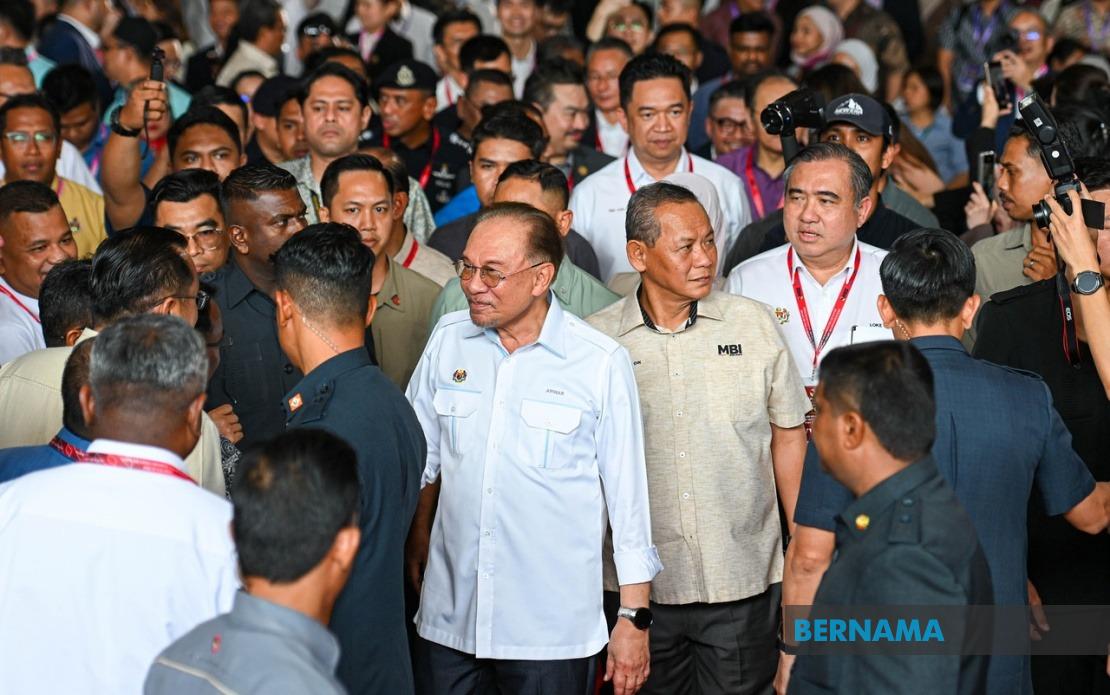
Prime Minister Datuk Seri Anwar Ibrahim has intervened in an escalating political crisis in Melaka, appealing to the Democratic Action Party (DAP) to reconsider its abrupt decision to quit the state government. Speaking at the Port Dickson AI-powered Midport Smart Container Terminal project on July 14, Anwar framed the request as necessary to maintain administrative stability and protect development programmes that benefit ordinary Malaysians, signalling his determination to hold together the fragile Pakatan Harapan (PH) coalition ahead of the next general election.
The crisis erupted after the Melaka State Legislative Assembly passed constitutional amendments permitting the appointment of nominated assemblymen—a move that triggered Melaka DAP's immediate withdrawal announcement. Party chairman Khoo Poay Tiong condemned the amendments as fundamentally undemocratic, arguing they circumvent the legitimate electoral process and violate core democratic principles. This constitutional engineering has exposed deep fissures within the ruling coalition at state level, threatening the coherence of PH's administration and raising broader questions about the coalition's ability to govern effectively when member parties clash over institutional procedures.
As PH chairman, Anwar acknowledged that internal disagreements among coalition partners are inevitable and, to some extent, healthy within any multi-party governing arrangement. However, he drew a distinction between debating specific policies and allowing such disputes to undermine the government's fundamental capacity to deliver services and pursue economic development. His message to DAP was blunt but measured: shelve the ideological confrontation temporarily, maintain operational continuity with the Melaka state government, and allow negotiators to explore compromises before positions harden further. This calculated approach reflects Anwar's broader strategy of managing coalition tensions through dialogue rather than institutional confrontation.
Anwar revealed that he had already engaged directly with DAP secretary-general Anthony Loke and Melaka Chief Minister Datuk Seri Ab Rauf Yusoh, indicating the issue had risen to the highest levels of the federal coalition leadership. The reference to ongoing negotiations suggests that behind-the-scenes discussions are exploring possible accommodations or clarifications regarding the constitutional amendments that might satisfy DAP's democratic concerns while retaining the party's participation in state government. Such compromises could involve limiting the scope of nominated appointments, introducing transparency mechanisms, or securing DAP's right to vote against the amendments in future legislative proceedings.
The timing of this crisis carries strategic significance for Anwar's political position. With elections approaching, any visible fracturing of the PH coalition provides ammunition to opposition parties, particularly the Perikatan Nasional alliance, which has been consolidating support in several states. A Melaka government collapse or forced dissolution triggered by PH infighting would damage the coalition's credibility as a unified governing force, especially damaging in a state where PH hopes to strengthen its electoral position. Anwar's push for postponement thus serves both immediate coalition management and longer-term electoral strategy.
The specific content of the constitutional amendments reflects deeper anxieties within Malaysia's political system about representation, legitimacy, and the balance between democratic principles and executive stability. Nominated assemblymen—typically appointed by the ruling coalition to fill vacancies or strengthen majorities—have become increasingly controversial as state governments have expanded their numbers. Critics argue that such appointments lack the democratic legitimacy conferred by electoral victory and can be used to entrench ruling coalitions against genuine political competition. DAP's principled opposition, however inconvenient for coalition partners, articulates genuine concerns about democratic degradation that resonate with civil society organisations and reform advocates throughout Southeast Asia.
Anwar's framing of the dispute emphasised that policy differences need not preclude operational cooperation on matters of broad public interest. He suggested that while PH members might disagree on constitutional procedures or selected policy questions, they share common ground on economic growth strategies and welfare initiatives affecting ordinary citizens. This pragmatic logic—that operational coalition unity around substantive governance outcomes can coexist with principled disagreement over procedural matters—may persuade DAP to accept a temporary compromise. However, such reasoning risks appearing to subordinate democratic principles to electoral convenience, a perception that could alienate DAP's activist base and reform-minded supporters.
For Malaysian readers, this episode illustrates the genuine tensions that emerge when ideologically diverse parties attempt to govern together without clear protocols for managing internal conflict. Unlike systems with longer traditions of coalition governance, Malaysia's ruling coalitions often lack institutionalised mechanisms for resolving member-party disputes, leaving prime ministers reliant on personal negotiation and informal pressure. Anwar's intervention, while appropriate for his role as PH chairman and federal PM, cannot permanently resolve the underlying institutional questions about nomination systems, constitutional amendment procedures, and the balance of power within coalition governments.
The stakes extend beyond Melaka itself. If DAP's withdrawal proceeds despite Anwar's appeal, it would signal that even the prime minister's direct intervention cannot prevent coalition partners from pursuing autonomous political positions. Conversely, if DAP agrees to postpone withdrawal, it may face criticism from its own members and supporters as having compromised democratic principles for coalition convenience. Either outcome carries implications for future coalition stability, particularly if similar constitutional amendments are pursued in other state governments controlled by PH or other coalitions.
The unfolding situation also reflects Malaysia's ongoing evolution toward more institutionalised coalition politics. As electoral competition intensifies and coalition governments become more common, mechanisms for managing internal disputes will likely become critical to political stability. Anwar's current approach—emphasising dialogue, seeking postponement, and attempting to separate procedural disagreements from substantive policy cooperation—represents one model. Whether this pragmatic, delay-focused strategy will ultimately resolve the Melaka crisis or merely defer a more fundamental reckoning about democratic procedures remains to be seen in coming weeks.

