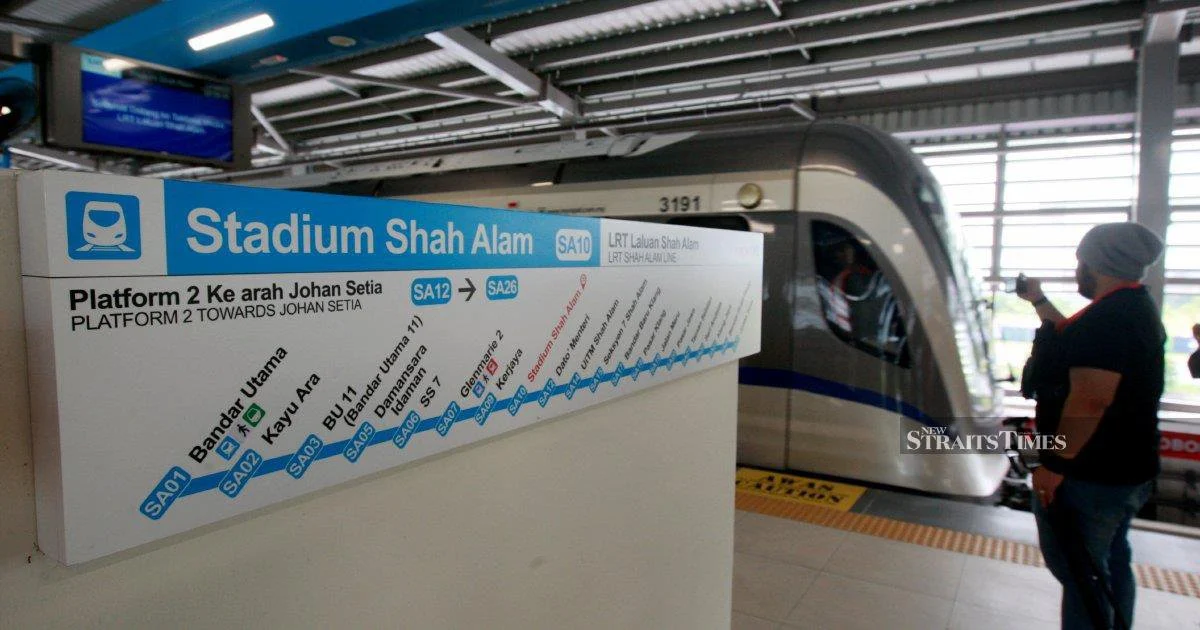
Prime Minister Datuk Seri Anwar Ibrahim is set to formally open the Light Rail Transit Line 3 (LRT3) Shah Alam extension on Sunday, marking a significant milestone in the Klang Valley's public transport infrastructure expansion. The ceremonial launch will precede the commercial launch of the route, which is scheduled to begin accepting regular passengers from Monday onwards.
The LRT3 Shah Alam line represents an important addition to the regional rapid transit network, extending connectivity to one of Selangor's key commercial and industrial hubs. The route has been developed to alleviate traffic congestion and provide commuters with a modern, efficient alternative to road travel, particularly for those working in or travelling to the Shah Alam industrial zone and surrounding areas.
Malaysia's push to expand and modernise its public transport system has been a cornerstone of the government's urban development agenda. The LRT3 Shah Alam extension forms part of broader efforts to create a comprehensive, integrated transit ecosystem across the Klang Valley, reducing dependence on private vehicles and supporting environmental sustainability objectives. The timing of the launch underscores the administration's commitment to delivering major infrastructure projects that directly benefit urban populations.
The Shah Alam line joins an existing network of rapid transit corridors serving the Greater Kuala Lumpur area. By extending LRT3 into Shah Alam, the project enhances accessibility to the municipal centre, manufacturing facilities, and residential neighbourhoods that have experienced substantial growth over recent years. This connectivity improvement is expected to streamline commute times for thousands of daily travellers and support economic activity in the region.
From a commuter perspective, the new line introduces a convenient transport option for residents of Shah Alam and neighbouring communities seeking to reach central business districts or employment centres across the Klang Valley. The integration with existing LRT, monorail, and bus networks creates a more seamless journey experience, potentially reducing overall travel times and costs for regular users.
The inauguration ceremony carries symbolic importance for the government's infrastructure agenda. High-profile project launches serve to highlight progress on long-term planning initiatives and demonstrate tangible results of administrative efforts to improve public services. For the Prime Minister, the event provides an opportunity to underscore the government's responsiveness to transportation challenges facing the nation's most densely populated corridor.
Operationally, the transition from official launch to commercial service beginning Monday suggests the line has completed its preparatory phases, including testing, safety certification, and staff training. The brief window between inauguration and commencement of passenger services is typical for major transit projects, allowing for final preparations and system verification.
The expansion of rapid transit infrastructure in the Klang Valley reflects broader regional trends across Southeast Asia, where major urban centres are investing heavily in rail-based public transport to manage growing congestion and air quality concerns. Malaysia's LRT network development parallels similar initiatives in Singapore, Bangkok, and Jakarta, positioning the country as part of regional efforts to modernise urban mobility.
For property developers and investors in Shah Alam, the new rail connection is likely to enhance the appeal of residential and commercial projects near designated stations, potentially driving property value appreciation and accelerating urban development around transit nodes. This transit-oriented development phenomenon is increasingly visible across Southeast Asian cities where public transport expansion generates secondary economic benefits.
Looking forward, the successful launch of the Shah Alam line may pave the way for further extensions of the LRT3 network or other rapid transit corridors serving emerging urban areas. Government planners view such projects as foundational elements of sustainable urban development, integral to managing the anticipated population growth and economic expansion expected across the region over coming decades.
The Monday commencement of passenger services will provide immediate feedback on system performance, passenger demand, and operational effectiveness. This data will inform future transit planning decisions and potentially shape the trajectory of subsequent infrastructure investments. For regular commuters, the new line offers practical relief from congested arterial roads and represents tangible progress in public transport provision.

