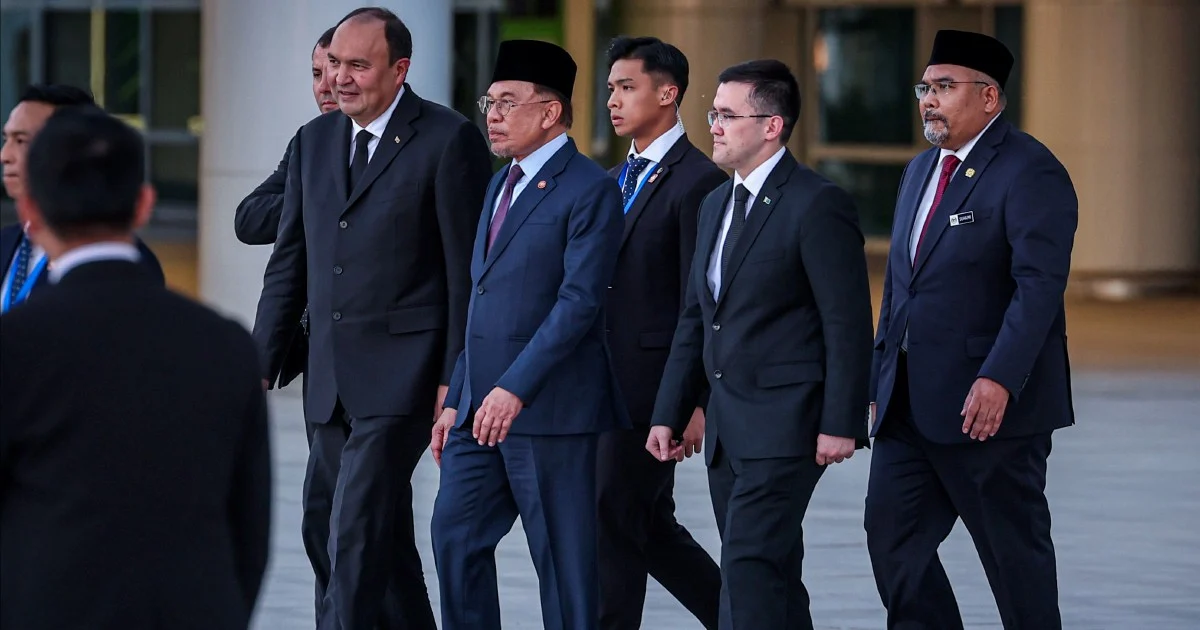
Prime Minister Datuk Seri Anwar Ibrahim is wrapping up his official state visit to Turkmenistan with a packed schedule of strategic engagements designed to strengthen economic and diplomatic ties between Malaysia and this strategically positioned Central Asian nation. The closing day of his two-day mission in the capital Ashgabat will feature substantive discussions with senior Turkmen officials, underscoring Kuala Lumpur's commitment to broadening its footprint in Central Asia's energy-rich markets.
Turkmenistan's geographic positioning along the Caspian Sea's eastern shoreline makes it a crucial gateway for regional commerce and energy cooperation. The country sits at an intersection of transcontinental trade routes linking Asia with Europe and the Middle East, offering Malaysia considerable opportunities to diversify its international business relationships beyond traditional trading partners. For a nation increasingly seeking to expand its global commercial reach, Turkmenistan represents an underdeveloped but promising market with significant untapped potential.
The centrepiece of Anwar's visit is expected to be his meeting with Turkmenistan's president, where both sides will explore concrete measures to elevate bilateral relations from their current modest levels. Such high-level engagement signals Malaysia's desire to move beyond ceremonial diplomacy and establish substantive economic partnerships. The discussions will likely encompass sectors where Malaysia possesses competitive advantages, including petroleum products, palm oil derivatives, manufacturing, and financial services, areas where Malaysian companies have demonstrated excellence in other markets.
Turkmenistan's economy remains heavily dependent on energy exports, particularly natural gas and oil, which generate the bulk of the country's export revenues. For Malaysian businesses, this presents opportunities to supply specialised equipment, technical expertise, and services to Turkmenistan's energy sector. Additionally, Malaysia's established expertise in Islamic finance could resonate with Turkmenistan, which has been gradually developing its own Shariah-compliant banking infrastructure. Such cooperation could benefit both nations while positioning Malaysian financial institutions as regional specialists.
The timing of this diplomatic mission reflects Malaysia's broader strategic recalibration in Central Asia. As regional powers compete for influence and commercial advantage, Malaysia's engagement demonstrates that Southeast Asian nations are not content to remain peripheral players in Central Asian affairs. By cultivating relationships with countries like Turkmenistan, Malaysia diversifies its geopolitical and economic partnerships, reducing over-reliance on traditional markets and creating new avenues for Malaysian entrepreneurs and investors.
Investment flows between Malaysia and Turkmenistan remain relatively minimal, suggesting significant room for growth once structural barriers are addressed. Government-to-government dialogue can facilitate the removal of trade obstacles, establish clear investment frameworks, and build mutual confidence between business communities. Such foundational work often precedes substantial commercial expansion, making Anwar's visit an important step in a longer-term relationship-building process.
The discussions during this visit will presumably address practical matters including visa facilitation, dispute resolution mechanisms, and the establishment of bilateral chambers of commerce. These institutional frameworks prove essential for supporting private sector activity and enabling Malaysian firms to navigate Turkmenistan's regulatory environment with greater confidence. Without such structures, even well-intentioned business ventures struggle to gain traction in unfamiliar markets.
Anwar's personal engagement in these talks underscores the priority Malaysia's government attaches to Central Asian diplomacy. Prime ministerial visits typically focus on issues of strategic national importance, signalling to both Malaysian stakeholders and the Turkmen leadership that this relationship warrants sustained attention at the highest levels. This commitment can encourage Malaysian companies to undertake the research and investment necessary to establish genuine market presence in Turkmenistan, rather than viewing it merely as a passing trade opportunity.
The energy sector will likely feature prominently in bilateral discussions, given Turkmenistan's hydrocarbon wealth and Malaysia's experience in downstream petroleum operations and petrochemical manufacturing. Malaysian firms operating in these domains could potentially establish joint ventures or supply arrangements that leverage Turkmenistan's resources while benefiting from Malaysian technological capabilities and management expertise. Such partnerships would create mutually reinforcing economic benefits.
Beyond immediate commercial considerations, strengthening ties with Turkmenistan serves Malaysia's broader strategic interests in cultivating relationships across the Islamic world. With a Muslim-majority population, Turkmenistan represents part of the extended Islamic community, and deepening connections reinforces Malaysia's role as a bridge between different regions and civilisations. This positioning carries soft power benefits that transcend purely economic metrics.
The visit also highlights Malaysia's pragmatic foreign policy approach under Anwar's leadership, which emphasises economic statecraft and pragmatic engagement regardless of a country's governance characteristics or cultural differences. By building relationships with diverse nations at different stages of development, Malaysia creates optionality for its businesses and maintains diplomatic flexibility that serves national interests across multiple domains.
Successfully concluding this visit with concrete outcomes—whether agreements on trade promotion, investment facilitation, or sectoral cooperation—would establish momentum for future engagement. Malaysian officials will likely announce specific initiatives or cooperation frameworks that signal genuine commitment rather than rhetorical flourish, providing Malaysian businesses with concrete entry points for Turkmenistan market exploration.
Looking forward, this visit represents an opening chapter in what Malaysian policymakers hope becomes a sustained and deepening relationship. The groundwork established during high-level government engagement must be followed by consistent private sector follow-up, promotional activities, and sustained diplomatic attention to transform political commitment into durable commercial relationships that generate tangible benefits for Malaysian companies and workers.

