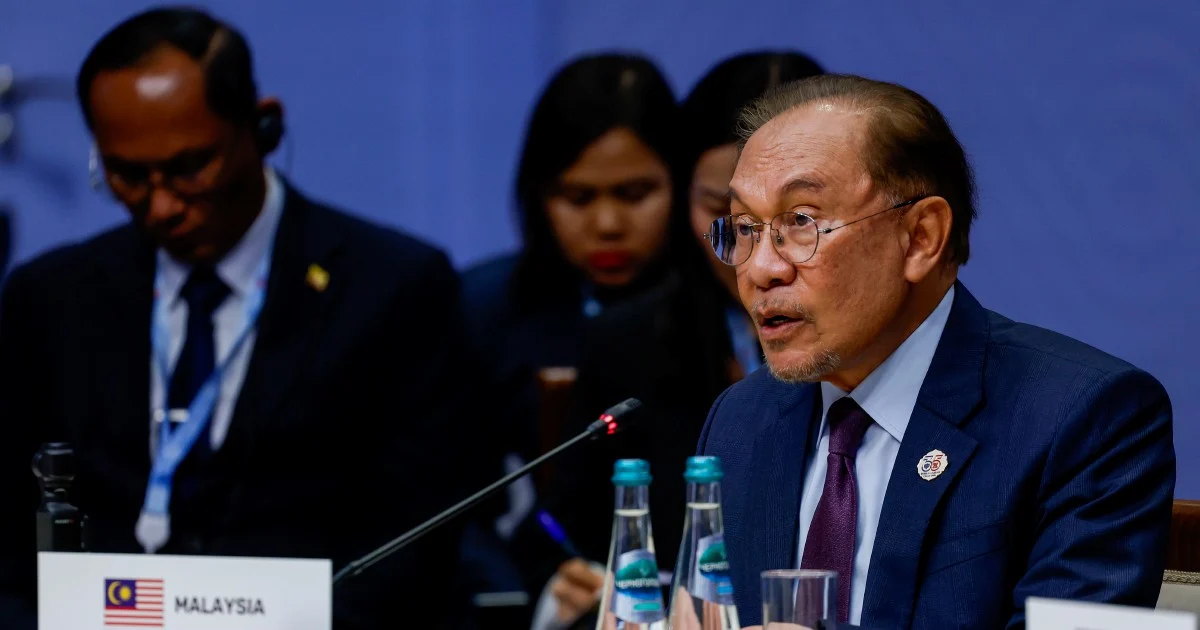
Prime Minister Anwar Ibrahim has doubled down on his conviction that constructive dialogue and sustained diplomatic engagement represent the most viable pathways toward achieving durable peace amid an increasingly fractious international environment. Speaking from Kazan, the Russian city hosting major diplomatic gatherings, Anwar underscored the necessity of moving beyond confrontational postures that characterise many contemporary geopolitical disputes.
The Malaysian premier's emphasis on dialogue reflects a consistent diplomatic philosophy that has guided his government's foreign policy since taking office. Rather than aligning Malaysia exclusively with any single power bloc, his administration has attempted to position the nation as a neutral ground where dialogue can flourish. This approach resonates particularly in Southeast Asia, where ASEAN nations have historically prioritised consensus-building and non-confrontational diplomacy through their established institutional mechanisms.
Anwar's statements come at a moment when global tensions appear notably elevated across multiple fronts. From regional conflicts in the Middle East to broader strategic competition between major powers, the international system faces unprecedented strain. For a mid-sized nation like Malaysia, which depends heavily on stable global trade flows and peaceful maritime passages, these tensions pose tangible risks to economic prosperity and regional security. The prime minister's advocacy for dialogue thus carries implications far beyond rhetorical positioning.
The timing of Anwar's remarks in Kazan holds particular significance given Russia's current international status and the city's role as a diplomatic hub. Malaysia maintains formal diplomatic relations with Russia while continuing to engage with Western nations, allowing it to occupy what might be termed a strategic middle ground. This positioning enables Malaysian leadership to credibly champion dialogue without appearing to endorse any particular side in major global disputes.
For Malaysia specifically, the promotion of diplomatic solutions aligns with the country's strategic interests in preserving the rules-based international order that has enabled its development. Southeast Asia's prosperity has been built substantially on open sea lanes, predictable trade relationships, and the absence of major-power military confrontations within the region. Any escalation of global tensions threatens this foundation, making Malaysia's advocacy for dialogue something more than idealistic rhetoric—it reflects calculated national interest.
Anwar's diplomatic philosophy also connects to Malaysia's role within ASEAN and its relationship with the broader Indo-Pacific region. Southeast Asian nations have consistently advocated for peaceful resolution of disputes through established mechanisms, and Malaysia's premier is articulating a vision consistent with these regional preferences. His emphasis on dialogue provides intellectual and political cover for ASEAN's traditional reluctance to take sides in major-power disputes.
The emphasis on diplomacy requires examining what mechanisms actually facilitate productive dialogue in contemporary geopolitics. Bilateral channels, multilateral forums, Track Two diplomacy, and back-channel communications all represent different approaches to dialogue, each with distinct advantages and limitations. Anwar's call for dialogue without specifying particular mechanisms suggests a broader philosophical commitment to engagement rather than a detailed policy prescription.
Globally, the appeal to dialogue faces practical obstacles. When fundamental interests conflict sharply or when domestic political pressures push leaders toward confrontation, diplomacy struggles to gain traction. The current international environment includes several such impasses, suggesting that while dialogue remains essential, it alone cannot resolve all tensions. This reality underscores why Malaysian and other nations' commitment to diplomatic channels matters—maintaining the possibility of dialogue preserves options even when immediate resolution seems unlikely.
For Southeast Asian policymakers and businesses, Anwar's positioning carries both reassuring and cautionary implications. The reassurance comes from Malaysia's clear preference for maintaining stable international conditions. The caution lies in recognising that external forces may override even the most eloquent appeals for dialogue. Malaysia's exposure to global tensions through its trade dependence and strategic geography means that isolating itself through neutrality carries limits.
The prime minister's statements also reflect Malaysia's diplomatic identity as a nation that has historically punched above its weight through institutional participation and coalition-building rather than military or economic dominance. From ASEAN chairmanships to participation in multilateral forums, Malaysia has developed influence through engagement. Anwar's advocacy for dialogue extends this tradition into the current crisis environment.
Moving forward, the efficacy of Malaysia's diplomatic emphasis will depend partly on whether major powers genuinely seek dialogue and partly on whether Malaysia can translate its rhetoric into concrete diplomatic initiatives. The challenge lies in converting philosophical commitment to dialogue into mechanisms that produce substantive progress on actual disputes. This requires not merely stating the importance of dialogue but actively facilitating conversations and proposing frameworks that make resolution possible.
Ultimately, Anwar's insistence on dialogue and diplomacy represents both a statement of principle and a reflection of Malaysia's strategic positioning. In an era where global tensions threaten prosperity and stability, the consistent articulation of commitment to peaceful resolution offers value even when immediate breakthrough seems unlikely. For Malaysia and its Southeast Asian neighbours, maintaining space for dialogue and refusing to accelerate toward conflict remains essential to protecting their own interests and those of the broader region.

