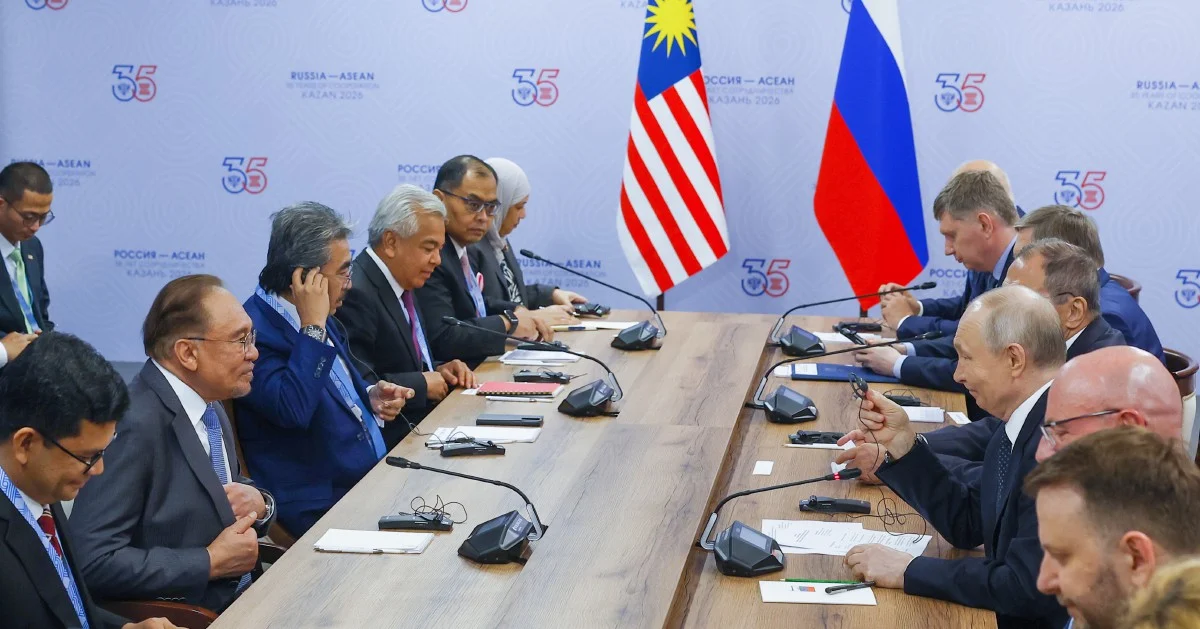
Prime Minister Datuk Seri Anwar Ibrahim has thanked Russian President Vladimir Putin for backing closer cooperation on energy matters between Malaysia and Russia, signalling the country's commitment to expanding bilateral ties in this critical sector. The exchange, which took place in Kazan, reflects Malaysia's broader strategy to strengthen partnerships across multiple continents and reduce dependency on any single trade partner for crucial resources.
The acknowledgement of Putin's support carries particular significance given the evolving geopolitical landscape in Southeast Asia. Malaysia, as a net energy exporter with substantial oil and natural gas reserves, occupies a strategically valuable position in global energy markets. By formalising dialogue with major energy-producing nations like Russia, Kuala Lumpur demonstrates its intent to maintain flexibility in international relations while simultaneously opening doors for Malaysian companies like Petroliam Nasional Bhd (Petronas) to explore new commercial opportunities abroad.
Petronas, Malaysia's state-owned oil and gas giant, stands to benefit substantially from expanded Russian cooperation. The company has historically operated across multiple continents, and deepened ties with Russian counterparts could unlock joint ventures, technology sharing, and collaborative exploration projects. Such arrangements typically allow Malaysian entities to access new markets, acquire technical expertise, and share commercial risks through partnership models rather than pursuing independent operations in unfamiliar territories.
The timing of this diplomatic engagement reflects Malaysia's calculated positioning between major global powers. As Western nations intensify sanctions against Russia over geopolitical disputes, Southeast Asian countries like Malaysia have maintained pragmatic economic relationships while advancing their own national interests. This balanced approach allows Malaysia to pursue energy partnerships that serve its development objectives without compromising its broader diplomatic relationships with other trading partners.
Energy security remains a paramount concern for Malaysia's economic planners. Although the country possesses significant hydrocarbon reserves, demand from a growing manufacturing sector and expanding population necessitates reliable partnerships with established energy producers. Russian expertise in deepwater drilling, liquefied natural gas technologies, and pipeline infrastructure could enhance Malaysia's operational capabilities and reduce long-term production costs, making Malaysian energy resources more competitive in international markets.
The bilateral dialogue also opens possibilities for Malaysian companies to participate in Russian energy projects. Petronas has demonstrated capacity to operate in complex environments globally, and involvement in Russian ventures could diversify the company's asset portfolio while generating substantial revenues. Such partnerships often extend beyond simple resource extraction, encompassing downstream activities including refining, distribution, and petrochemical production that create additional value and employment.
Regionally, Malaysia's engagement with Russia on energy matters sends signals to other ASEAN members about the importance of maintaining comprehensive foreign policy approaches. Nations like Indonesia and Vietnam, which also possess significant energy reserves, observe how Malaysia navigates relationships with distant powers while maintaining stability in Southeast Asia. This demonstration of balanced diplomacy reinforces ASEAN's fundamental principle of non-alignment and equidistant relations with global powers, a cornerstone principle that remains relevant despite changing international circumstances.
From a strategic standpoint, energy cooperation agreements typically establish institutional frameworks and regular dialogue mechanisms between governments and companies. These channels facilitate knowledge transfer, regulatory alignment, and long-term planning that extends beyond individual transactions. When Malaysia and Russia formalise energy partnerships through high-level political engagement, they create durable foundations for sustained commercial relationships that can weather short-term political fluctuations or market volatility.
The acknowledgement of Putin's support also underscores Russia's interest in maintaining presence in Asian markets. As Western nations attempt to isolate Russia economically, engagement with dynamic Asian economies provides alternative outlets for Russian energy exports and technological expertise. Malaysia's willingness to pursue such cooperation signals to Moscow that traditional partnerships remain viable, encouraging continued dialogue and potentially supporting Moscow's strategic objectives in the Indo-Pacific region.
For Malaysia's energy sector workforce and domestic economy, expanded cooperation with Russia brings training and employment opportunities. Joint ventures and partnership arrangements typically involve knowledge transfer programs, technical training, and capacity-building initiatives that strengthen Malaysia's domestic energy industry. These benefits extend to supply chain companies, service providers, and related industries that support major energy operations.
Moving forward, the specific mechanisms for Malaysia-Russia energy cooperation will likely include exploration partnerships, technology exchanges, and potentially investment arrangements that remain to be negotiated through established diplomatic and commercial channels. Such arrangements require careful structuring to ensure they align with Malaysia's existing commitments to other partners, environmental standards, and domestic energy policies.
The broader context of this engagement reflects Malaysia's pragmatic approach to international relations, where economic interests and strategic partnerships are pursued through multiple channels simultaneously. By securing Russian support for energy cooperation, Malaysia reinforces its position as a serious participant in global energy markets while maintaining the diplomatic flexibility essential for a mid-sized nation navigating great power competition.

