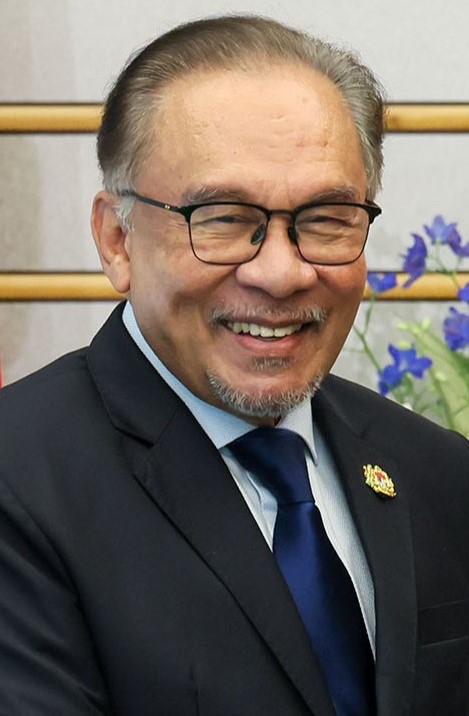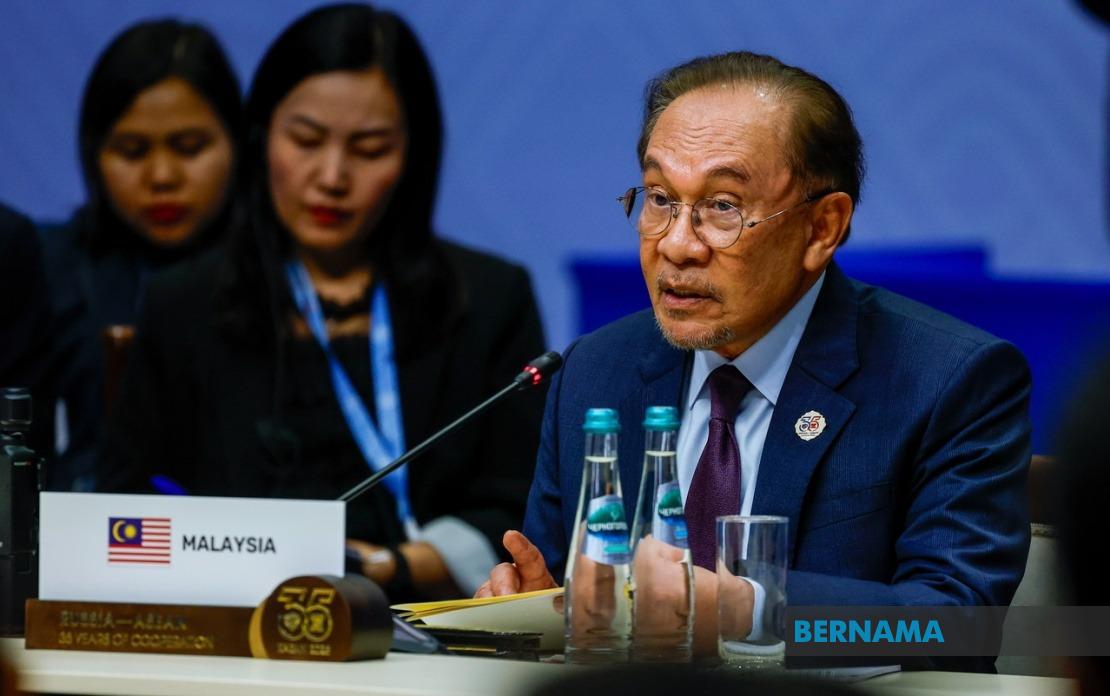
Prime Minister Datuk Seri Anwar Ibrahim has made a forceful case for ASEAN and Russia to substantially expand their strategic partnership, addressing leaders gathered in Kazan for a commemorative summit that marks three and a half decades of diplomatic ties between the regional bloc and Moscow. Speaking during a plenary session of the ASEAN-Russia Commemorative Summit, Anwar articulated a vision of intensified cooperation that extends across multiple strategic domains, positioning closer engagement as essential for both parties to navigate an increasingly volatile global landscape.
The timing of Malaysia's emphasis on dialogue and multilateralism carries particular significance given current geopolitical fractures. Anwar stressed that lasting peace remains achievable only through sustained conversation, mutual comprehension, and adherence to international legal frameworks. This message reflects growing anxiety across Southeast Asia about the erosion of rules-based international order and the risks posed by great power competition in the region's neighbourhood. For Malaysia specifically, the rhetoric underscores a consistent foreign policy orientation toward maintaining equidistance between major powers while advocating for peaceful resolution of disputes.
Anwar outlined an expansive agenda for ASEAN-Russia cooperation spanning economic, technological, and social domains. The Prime Minister identified trade and investment as foundational pillars, while also emphasising emerging sectors where the bloc and Russia could build complementary capabilities. Digital infrastructure, scientific advancement, and artificial intelligence represented areas where partnership could generate mutual benefit. Energy cooperation featured prominently given Russia's hydrocarbon resources and ASEAN's significant energy demand. Food security and the halal industry rounded out the economic dimensions, reflecting both practical development concerns and Malaysia's particular strengths in the global halal marketplace.
The ASEAN-Russia Commemorative Summit itself represents a milestone moment in bilateral relations. The gathering in Kazan marks the 35th anniversary of formal engagement between the bloc and Russia, a relationship that commenced in Kuala Lumpur in 1991 following the end of the Cold War. This temporal arc is instructive: the partnership emerged precisely when Russia was repositioning itself as a post-Soviet actor seeking engagement with Asia-Pacific, while ASEAN consolidated its role as the region's primary diplomatic mechanism. Three and a half decades later, renewed emphasis on this relationship reflects recognition that broader geopolitical shifts require reaffirmed commitment to dialogue channels.
The gathering brought together substantial diplomatic representation from across Southeast Asia. Philippines President Ferdinand Marcos Jr, serving as ASEAN Chair for 2024, attended alongside leaders and representatives from other member states. The two-day format enabled substantive discussion of regional and international matters of shared interest, allowing the bloc to present a unified perspective to Moscow while exploring areas of convergence and potential friction. This highest-level engagement format distinguishes the Kazan summit from routine working-level meetings, signalling political prioritisation on both sides.
Anwar's statements on Palestine and the Middle East demonstrated how ASEAN, with Malaysia as a vocal member, continues projecting positions on global crises beyond the region. The Prime Minister reiterated demands for immediate cessation of violence in Gaza, unimpeded delivery of humanitarian assistance, and protection of Palestinian self-determination rights. Malaysia additionally condemned expansion of Israeli military operations into Lebanon and rejected attacks against United Nations forces deployed there. These positions reflect longstanding ASEAN concern about destabilisation in the Middle East and its potential ripple effects on global stability and maritime security.
The summit's expected outcomes encapsulate the scope of intended partnership architecture. Four key documents were to be adopted: the Kazan Declaration commemorating 35 years of relations, joint statements on energy and cultural cooperation, and a comprehensive action plan for implementing the ASEAN-Russia Strategic Partnership spanning 2026 through 2030. These instruments provide structured frameworks for translating political commitment into concrete cooperation mechanisms across the identified priority areas. The five-year action plan particularly signals intention to build substantive, lasting engagement rather than episodic diplomatic exercises.
The strategic partnership framework itself reflects evolving ASEAN calculations about Russia's role in regional order. Southeast Asia has long balanced relationships with major powers, and Russia's position differs fundamentally from China, the United States, Japan, or India given its geographic distance and more limited economic integration with ASEAN. This creates particular diplomatic space for Russia to engage without triggering the zero-sum competitive dynamics that characterise ASEAN's relationships with near neighbours or great powers with direct interests in South China Sea disputes. For Russia, ASEAN engagement offers legitimacy and economic opportunity at a time when relations with Western powers remain strained.
Energy cooperation deserves particular attention given its centrality to both parties' interests and to Southeast Asia's development trajectory. ASEAN nations collectively represent one of the world's fastest-growing energy consumers, with demand projected to expand substantially through mid-century. Russia possesses vast hydrocarbon reserves and expertise in extraction, liquefaction, and transport. Enhanced cooperation in this sector could diversify ASEAN's energy sourcing while providing Russia alternative markets amid Western sanctions. However, such cooperation must navigate complexities including existing investments by Western companies, environmental concerns, and the region's gradual energy transition toward renewables.
The emphasis on people-to-people exchanges acknowledges that durable international relationships require foundations beyond government-to-government ties. Educational partnerships, cultural programmes, and business networking create constituencies within each society with stakes in maintaining positive relations. For ASEAN nations with significant Russian diaspora communities and academic traditions with Russian educational connections, such exchanges carry particular resonance. Conversely, growing Southeast Asian student and business communities in Russian cities have potential to deepen mutual understanding.
Malaysia's role in hosting this initiative and articulating the vision reflects its continuing influence within ASEAN despite not holding the 2024 Chair. As a founding ASEAN member and frequent voice on international law and multilateralism, Malaysia carries particular credibility in advocating for rules-based approaches. Anwar's emphasis on dialogue and international law resonates with Malaysia's own regional interests, particularly regarding maritime security and dispute resolution mechanisms. The Prime Minister's framing of ASEAN-Russia cooperation as contributing to broader peace and stability provides cover for deepening engagement while maintaining consistency with ASEAN's non-aligned tradition.
The summit outcomes will likely receive limited international media attention despite their significance for regional order. Western commentary has tended to characterise Russia's ASEAN engagement as opportunistic outreach to constituencies resistant to Western pressure, while ASEAN itself views the partnership through a more pragmatic lens of mutual benefit. This gap in perception reflects deeper questions about whether ASEAN can maintain its own agency in a world increasingly organised around great power competition. The Kazan gathering suggests ASEAN leadership believes it can, pursuing cooperation with Russia while maintaining ties elsewhere and advocating for principles that transcend particular relationships.