%22%2F%3E%3C%2Fpattern%3E%3C%2Fdefs%3E%3Crect%20width%3D%22100%25%22%20height%3D%22100%25%22%20fill%3D%22url(%23ph5izfdg)%22%2F%3E%3Crect%20width%3D%22100%25%22%20height%3D%22100%25%22%20fill%3D%22url(%23ph5izfdp)%22%2F%3E%3Ctext%20x%3D%2250%25%22%20y%3D%2250%25%22%20text-anchor%3D%22middle%22%20dominant-baseline%3D%22central%22%20fill%3D%22rgba(255%2C255%2C255%2C0.95)%22%20font-family%3D%22Georgia%2C%20'Times%20New%20Roman'%2C%20serif%22%20font-weight%3D%22700%22%20font-size%3D%22272%22%20letter-spacing%3D%22-0.02em%22%3EAnwar%3C%2Ftext%3E%3C%2Fsvg%3E)
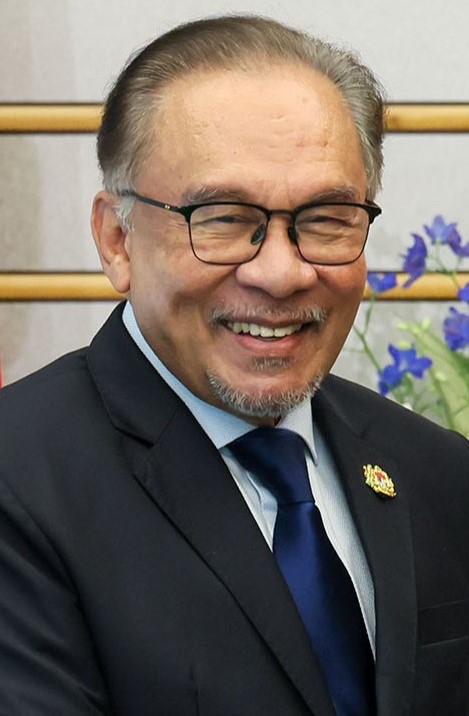
Prime Minister Datuk Seri Anwar Ibrahim left Subang Air Base on June 16 bound for Kazan, Russia, where he will spearhead Malaysia's participation in the ASEAN-Russia Commemorative Summit. The two-day gathering from June 17 to 18 represents a milestone moment for regional diplomacy, commemorating three and a half decades of formal ties between Southeast Asia's premier bloc and Moscow, a relationship that took root in Kuala Lumpur during 1991.
The Prime Minister's delegation carries considerable economic and policy heft. He will be accompanied by Minister of Investment, Trade and Industry Datuk Seri Johari Abdul Ghani and Minister of Economy Akmal Nasrullah Mohd Nasir, signalling Malaysia's intent to push forward substantive discussions on commerce and development partnerships. Officials from the Prime Minister's Office and the Foreign Ministry round out the contingent, ensuring institutional depth for what promises to be intricate negotiations.
A defining feature of Anwar's itinerary will be his bilateral meeting with Russian President Vladimir Putin, offering a direct channel for Malaysia to articulate its strategic interests amid broader geopolitical shifts affecting the Indo-Pacific. Such engagements carry weight beyond ceremonial exchange, particularly given Russia's ongoing efforts to deepen engagement with Southeast Asia in the face of Western sanctions and strategic isolation elsewhere.
Beyond the official summit programme, Anwar is scheduled to participate in the Russia-ASEAN Business Forum, a venue where private sector leaders and government representatives converge to identify investment corridors and commercial opportunities. These forums often catalyse tangible deals and partnerships that extend long after delegations return home, making them critical forums for countries seeking to expand economic footholds.
The summit's agenda reflects contemporary challenges facing the region and the world. Trade and investment cooperation will likely dominate discussions, with both sides keen to explore deeper commercial integration. Energy cooperation stands out as particularly significant given Malaysia's established petrochemical and liquefied natural gas sectors, and Russia's position as a major global energy supplier. Food security, an increasingly urgent concern across Southeast Asia amid climate volatility and supply chain disruptions, will feature prominently in conversations.
Digital economy and science and technology partnerships represent emerging frontiers where ASEAN nations hope to benefit from Russian expertise and capabilities. Cultural exchanges, educational programmes, and tourism initiatives complete the framework, acknowledging that sustained diplomatic relations require people-to-people connectivity. These softer dimensions of statecraft often prove enduring, building constituencies within both societies that support closer governmental ties.
The strategic partnership framework underpinning these discussions has evolved considerably over 35 years. What began as rudimentary diplomatic recognition has matured into multifaceted engagement spanning defence dialogues, academic collaborations, and investment flows. The commemorative summit provides an opportunity to take stock of this trajectory while recalibrating priorities for the next phase of cooperation.
For Malaysia specifically, the summit carries particular significance. As a regional economic powerhouse and long-standing ASEAN stalwart, Malaysia's positioning at such gatherings influences how the broader bloc negotiates with major powers. Anwar's diplomatic activism—evidenced by his willingness to undertake extended foreign tours—reflects his administration's commitment to maintaining Malaysia's relevance in an increasingly multipolar international order where traditional alignments are being tested.
Following the Kazan engagement, Anwar will proceed to Ashgabat, Turkmenistan, for an official visit at the invitation of President Serdar Berdimuhamedow. This Central Asian leg extends Malaysia's diplomatic reach into landlocked regions where Southeast Asian presence remains less pronounced than in maritime corridors. The Turkmenistan visit underscores Malaysia's broader strategy of engaging multiple regions and power centres, rather than concentrating diplomatic efforts narrowly.
Turkmenistan, sitting astride significant natural gas reserves and serving as a transit node between Europe, Russia, and Asia, presents its own strategic value. For Malaysian companies interested in Central Asian markets or infrastructure projects spanning Eurasia, governmental relationships prove foundational. Anwar's visit signals Malaysia's readiness to deepen bilateral relations with nations beyond ASEAN's immediate periphery.
The juxtaposition of the Russian and Turkmenistan visits reveals a sophisticated diplomatic posture. By combining engagement with Moscow through ASEAN's collective voice and separate bilateral engagement with Turkmenistan, Malaysia balances institutional obligations with bilateral relationship-building. This approach allows Anwar to address multiple constituencies—ASEAN partners who value collective positioning, and bilateral partners seeking direct high-level attention.
Anwar's invocation of prayer in his public statement, asking that the delegations' work be facilitated and that visits yield maximum benefit for Malaysia, reflects the cultural and religious dimensions of his public communication. It signals to domestic audiences that foreign engagement serves national interests and that diplomatic efforts are undertaken with sincere commitment to the country's welfare.
The ASEAN-Russia summit ultimately reflects a region determined to maintain equidistant relations among major powers while pursuing practical cooperation benefits. Malaysia, through Anwar's leadership, continues positioning itself as a bridge-builder and pragmatic player in regional geopolitics, neither entirely aligned with Western blocs nor abandoning traditional relationships in pursuit of alternatives.