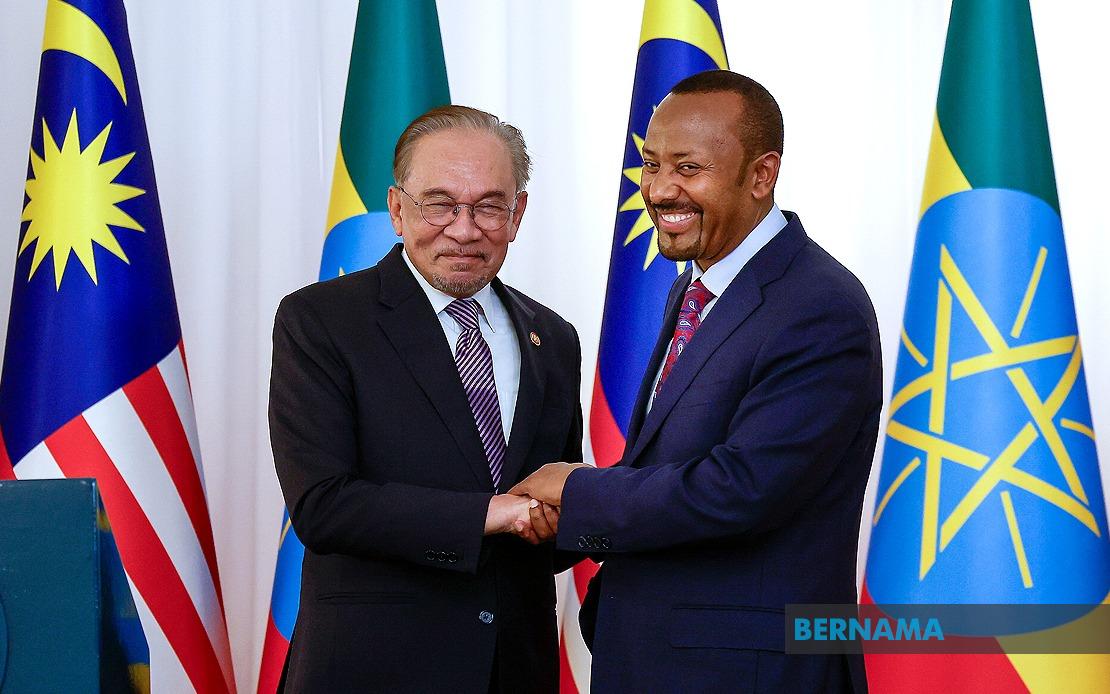
Prime Minister Datuk Seri Anwar Ibrahim has sent formal congratulations to Ethiopian Prime Minister Abiy Ahmed Ali and the Prosperity Party following their successful outcome in Ethiopia's general election. The Malaysian leader used social media to acknowledge the electoral victory, signalling Kuala Lumpur's interest in maintaining momentum with one of Africa's most strategically positioned nations.
Anwar's message carried particular weight given his historic visit to Addis Ababa in 2023, which marked the first time a sitting Malaysian prime minister had travelled to Ethiopia in an official capacity. The visit represented a deliberate effort to elevate bilateral relations beyond ceremonial exchanges and to establish substantive engagement channels with a nation that serves as headquarters for the African Union. During that journey, Anwar experienced what he characterised as a warm reception, with his government emphasising the productive nature of discussions held with Abiy's administration.
In his Facebook commentary, Anwar drew attention to a perceived convergence of worldviews between himself and Abiy, suggesting both leaders share similar assessments of global trends and regional dynamics. This alignment extends to their vision of how developing economies should interact, with both apparently embracing the principle that nations within the Global South should operate as partners of equal standing rather than within hierarchical structures that might favour wealthier nations. This framing reflects a broader shift in how Malaysia approaches international relations, particularly with African counterparts who have increasingly gained prominence on the world stage.
The Malaysian prime minister's emphasis on mutual benefit and equal partnership carries significance beyond diplomatic pleasantries. Ethiopia under Abiy's leadership has pursued ambitious modernisation programmes and sought to expand its economic footprint across Africa and beyond. For Malaysia, engagement with Ethiopia opens pathways to broader African markets and influence within continental institutions, a strategic consideration that becomes more important as Asian economies compete for resources and influence on the continent. Ethiopia's dual role as a major African population centre and an international diplomatic hub makes it an attractive anchor for Malaysian interests.
Anwar's reference to the foundation laid during his 2023 visit suggests a structured approach to bilateral development rather than episodic interactions. The prime minister indicated that various initiatives were set in motion during that trip, with expectations that these programmes would continue expanding under Abiy's government following the election. This implies concrete agreements likely exist across sectors such as trade, investment, technological cooperation, or development assistance, though specific details remain undisclosed in the congratulatory statement.
The timing of Anwar's public congratulation also reflects Malaysia's diplomatic strategy in positioning itself as a credible partner for African nations. By promptly acknowledging electoral outcomes and expressing support for sitting governments, Malaysia signals stability and consistency in its foreign relations. This approach contrasts with selective engagement patterns some nations adopt and helps Malaysia build reputation as a reliable counterpart during both transitions and periods of governance continuity.
Ethiopia's electoral process has been significant in establishing the Prosperity Party's continued political dominance under Abiy's direction. The international dimension of such elections cannot be overlooked, particularly given ongoing concerns about governance, conflict, and social cohesion within Ethiopia. Abiy's government has faced various international scrutiny regarding its handling of internal conflicts and humanitarian matters. By extending congratulations, Anwar positioned Malaysia within a network of nations recognising the electoral results, though such acknowledgment remains distinct from endorsing particular policies or practices.
Malaysia's engagement with Africa has progressively deepened over the past decade, though it remains comparatively modest against the backdrop of Asian economic and diplomatic competition on the continent. China, India, and increasingly nations like Japan and South Korea have established significant footprints across African markets and institutions. Malaysia's approach emphasises its own position as a developing economy and Muslim-majority nation with substantial diaspora communities across Africa, leveraging these characteristics to build distinct partnership frameworks.
The emphasis on the Global South partnership narrative reflects broader ideological positioning within Malaysia's current government. This framing aligns with Anwar's stated commitment to championing the interests of developing and middle-income nations within international forums and trade negotiations. Ethiopia, as Africa's second-most populous nation and a centre of continental governance, represents a strategic location for advancing such agendas, whether within African Union structures or broader multilateral platforms where developing economies seek greater voice and influence.
Looking forward, the maintenance of bilateral momentum between Malaysia and Ethiopia following the latter's election outcome creates opportunities for expansion across multiple domains. Economic cooperation, particularly in areas where Malaysian expertise exists such as Islamic finance, telecommunications, and palm oil processing, could deepen. Educational exchanges, cultural programmes, and people-to-people connectivity initiatives also offer avenues for solidifying ties beyond government-to-government interaction.
Anwar's public recognition of the Prosperity Party's election success serves as a diplomatic gesture that, while routine on the surface, carries implications for how Malaysia positions itself within evolving African geopolitical landscapes. By cultivating relationships with major African players and demonstrating consistent engagement, Malaysia enhances its capacity to influence outcomes on issues ranging from trade arrangements to positions within international forums where African nations hold collective voting power. The foundation Anwar described setting during his 2023 visit now has electoral affirmation from Ethiopia's voters, providing a fresh platform for these bilateral aspirations to be realised.

