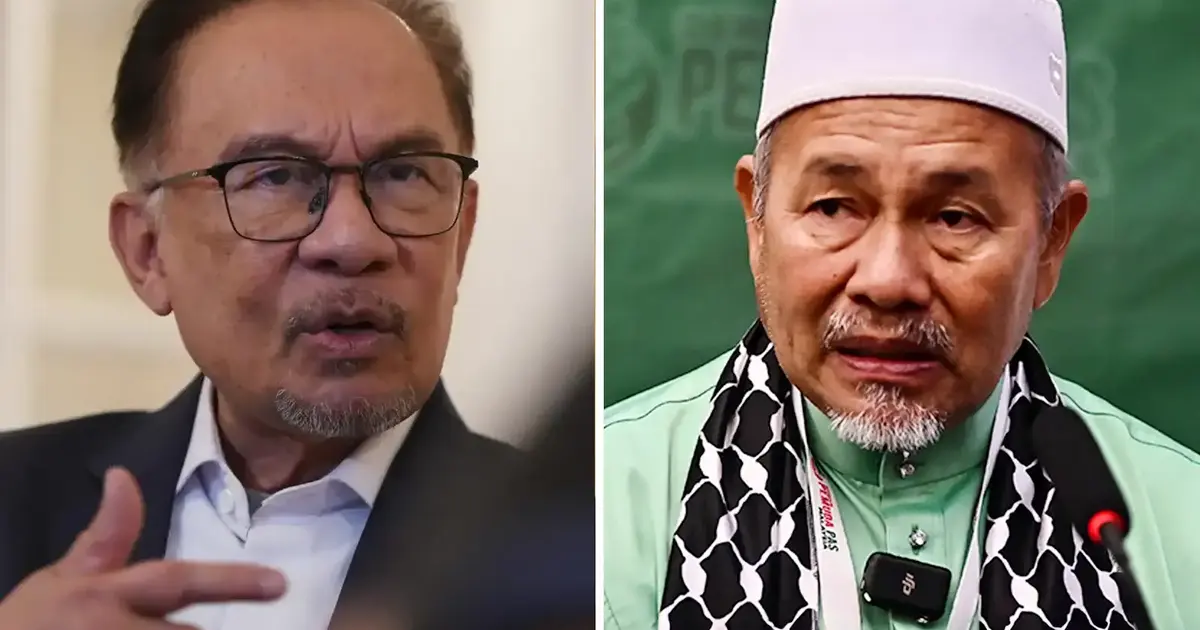
Prime Minister Anwar Ibrahim has escalated tensions within Malaysia's ruling coalition by issuing a formal 48-hour ultimatum to PAS deputy president Tuan Ibrahim Tuan Man, demanding a public apology and retraction of what he characterises as defamatory accusations. The confrontation centres on allegations that Anwar interfered improperly in police investigations and manipulated the process for selecting Negeri Sembilan's ruler—claims the prime minister views as serious enough to warrant legal action should they remain unaddressed.
This latest flare-up underscores the persistent fragility of the unity government coalition formed in November 2022, which binds together disparate political forces including the governing Pakatan Harapan alliance and the Islamist PAS party. While the partnership has provided stability after years of political turmoil, deep ideological differences and competing interests continue to generate friction at senior levels. The public nature of Anwar's ultimatum signals that disagreements are moving beyond backroom discussions into the open domain, potentially damaging the coalition's public credibility.
Tuan Ibrahim's allegations touch on two particularly sensitive areas for any sitting administration: the independence of law enforcement and the royal selection process. Claims of prime ministerial interference in police investigations carry constitutional implications, as Malaysia's system theoretically protects police autonomy from political manipulation. Similarly, the appointment of state rulers represents one of the most delicate constitutional matters, with intricate protocols designed to preserve royal prerogatives and maintain the dignity of these institutions. By raising these accusations publicly, Tuan Ibrahim has effectively questioned the integrity of both institutional pillars.
The timing of this confrontation is noteworthy given Malaysia's ongoing governance challenges. The administration faces mounting pressure on multiple fronts: managing an increasingly complex geopolitical environment in Southeast Asia, addressing economic headwinds including inflation and currency volatility, and navigating high debt levels. Coalition discord, particularly when played out in the media, distracts from the government's policy agenda and potentially undermines investor confidence in political stability. This is precisely the kind of internal drama that destabilises perceived governance capacity.
For Malaysian observers, the incident reveals how fragile consensus remains even among purported allies. PAS, despite joining the federal coalition, maintains its distinct political identity and frequently criticises government decisions from a position that appears sympathetic to opposition voices. Tuan Ibrahim's choice to air grievances publicly rather than through coalition channels suggests either a deliberate strategy to pressure the government or a breakdown in the conflict-resolution mechanisms that should theoretically exist within any functioning ruling alliance.
The legal threat accompanying Anwar's ultimatum introduces another dimension. Malaysian defamation law provides remedies for public figures when false statements cause reputational harm, though courts must balance these protections against freedom of expression and political speech rights. A legal contest between the prime minister and a senior coalition partner would be extraordinarily damaging—regardless of outcome, it would symbolise complete breakdown of internal party discipline and coalition cohesion. Both sides likely recognise this, which may explain why Anwar chose to issue a time-bound demand rather than immediately initiating proceedings.
For the broader Southeast Asian region, Malaysian political stability matters disproportionately. As the region's third-largest economy and a key player in regional organisations like ASEAN, persistent governance uncertainty in Kuala Lumpur sends negative signals to international investors and trading partners. Neighbouring countries monitoring the situation will be assessing whether the coalition can maintain functional coherence or whether further deterioration seems likely. Some regional analysts have already expressed concern about the coalition's ability to advance complex policy initiatives when senior members are engaged in public disputes.
Within PAS itself, the allegations and Anwar's response will likely reverberate through party structures. Some PAS members view the coalition partnership pragmatically as a path to government influence and development projects for constituencies, while others remain ideologically uncomfortable with closer alignment with secular-leaning partners like DAP. Tuan Ibrahim's public challenge to Anwar may resonate with the latter constituency, potentially strengthening his position within party hierarchies. This internal PAS dynamic could influence whether the party chooses to withdraw the allegations or escalate the confrontation.
The police and institution-related accusations deserve particular scrutiny. Malaysian law enforcement has long faced criticism regarding independence and perceived political alignment, making this a subject where public credibility is especially valuable. Any perception that police investigations can be influenced by political pressure—whether the accusation is true or not—damages public confidence in the institution's integrity. Similarly, the ruler selection allegation touches on constitutional processes that are meant to operate above partisan politics, and questioning their independence threatens long-established conventions.
Anwar's decision to publicly set a deadline suggests he believes the accusations require prompt refutation rather than patient negotiation. This approach prioritises speed over coalition harmony, indicating either high confidence in his position or genuine concern that delayed response might allow the allegations to gain traction. The prime minister's calculation appears to be that demonstrating swift, forceful rejection of the claims is strategically superior to managing the situation quietly within coalition forums.
Looking forward, the resolution of this 48-hour standoff will signal important information about coalition dynamics. A retraction would indicate PAS deference to the prime minister and coalition discipline. Doubling down on allegations would suggest either genuine conviction about the accusations or willingness to risk coalition stability for political positioning. Whatever emerges will likely influence whether similar tensions surface in other coalition partnerships, and whether Malaysia's governing arrangement can sustain itself through to the next general election cycle. The episode highlights that while formal coalitions can be constructed around shared electoral interests, maintaining coherence requires managing personality-driven conflicts and institutional disputes effectively—a challenge that Malaysian politics has historically struggled to meet.

