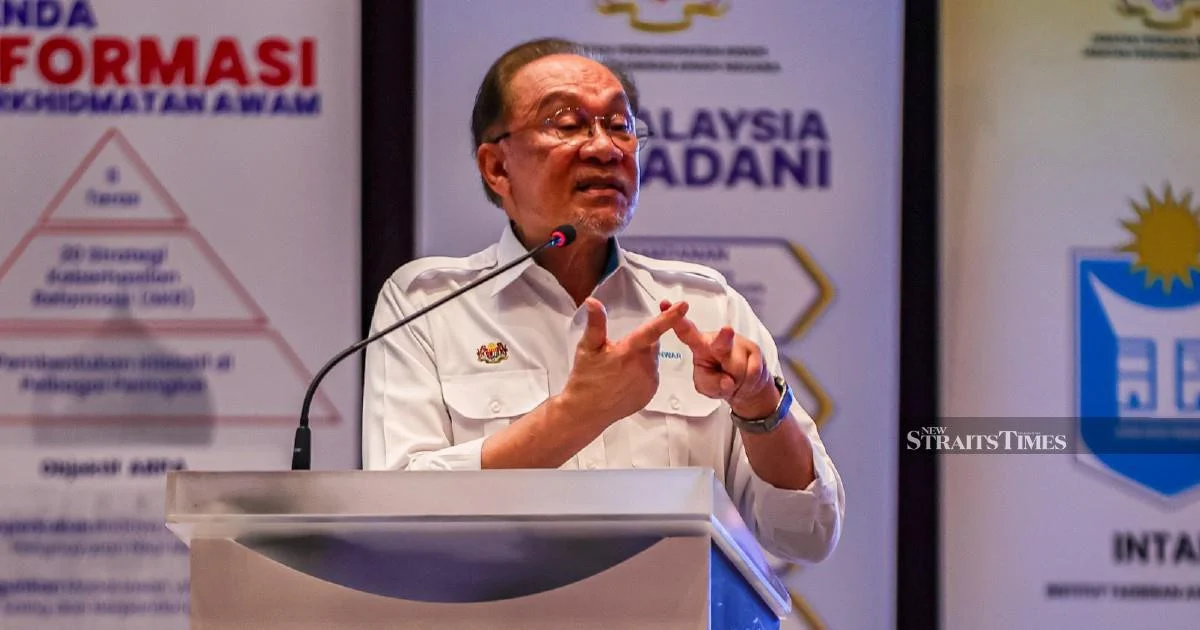
Prime Minister Datuk Seri Anwar Ibrahim moved to defuse political tensions on Friday by clarifying that Parti Amanah Negara president Datuk Seri Mohamad Sabu had not intended to ridicule any party during his address at the Pakatan Harapan candidate announcement held in Tangkak. The intervention came after remarks made by the Amanah leader during the event sparked debate among coalition partners and opposition figures, prompting the premier to intervene personally.
Anwar's statement represents a deliberate attempt to maintain cohesion within the ruling Pakatan Harapan alliance at a sensitive moment when internal rifts could undermine the government's messaging ahead of key electoral battles. The timing of such clarifications underscores the delicate balancing act required to manage a diverse coalition that combines parties with different ideological orientations and competing interests. By stepping in to reframe Mat Sabu's comments, Anwar sought to prevent a minor incident from escalating into a broader factional dispute that could weaken the coalition's public standing.
The incident highlights an ongoing challenge within Malaysian coalition politics, where public statements by leaders are frequently scrutinized for hidden meanings or coded criticisms of allied partners. In a multiparty alliance environment, where members operate with varying degrees of autonomy, such sensitivities become magnified as each party seeks to maintain its distinct identity and voter base. What one party leader intends as lighthearted campaign rhetoric can be interpreted differently by coalition partners or rivals, creating potential friction that requires careful management from the top.
Mat Sabu's presence at the Tangkak candidate announcement reflected Amanah's continued commitment to supporting Pakatan Harapan's electoral campaign across multiple constituencies. As a coalition member, the Amanah president regularly participates in joint campaign events, where he is expected to energize supporters while avoiding statements that could be construed as dismissive of other PH members. The Tangkak event drew attention because such candidate announcements serve as important platforms for coalition messaging and demonstrate unity to the electorate.
Anwar's intervention reflects his established pattern of acting as a consensus-builder within the coalition structure. Throughout his tenure as prime minister, he has repeatedly mediated disagreements between coalition partners, emphasizing unity and shared objectives over individual party concerns. This leadership approach has become increasingly important as the coalition faces electoral pressures and internal leadership transitions. By publicly defending Mat Sabu, Anwar signaled that he views the Amanah president's remarks as innocent and that coalition partners should not read hostile intent into routine campaign speeches.
The controversy also raises broader questions about the role of political rhetoric in Malaysia's increasingly polarized environment. Campaign events often feature strong language and competitive positioning, yet such statements must be calibrated carefully in coalition settings where multiple parties share governance responsibilities. The need for Anwar to issue clarifications suggests that political actors across the coalition remain alert to potential slights, reflecting the underlying competition for influence and credit within the government structure.
For Malaysian voters and political observers, the episode demonstrates the complexity of managing coalition governments where parties must cooperate while maintaining distinct identities. This tension between unity and differentiation characterizes the Pakatan Harapan experience since 2018, and continues to shape how the alliance approaches campaign activities and policy implementation. The coalition's success depends partly on leaders' ability to manage such moments without allowing minor controversies to metastasize into serious divisions.
The Amanah president's role within the coalition remains significant, particularly given the party's positioning as a Malay-Muslim alternative within the broader PH framework. Mat Sabu's appearances at campaign events carry symbolic weight, signaling Amanah's presence and relevance within coalition structures. This visibility makes his public statements subject to heightened interpretation, as other parties and observers attempt to discern whether his comments reflect coalition consensus or represent independent positioning.
Anwar's call for calm represents a deliberate de-escalation strategy that aims to prevent the incident from gaining traction in the media or becoming fodder for opposition attacks. By framing Mat Sabu's remarks as non-controversial, the prime minister sought to establish the official coalition narrative and encourage other party leaders to refrain from amplifying concerns. This approach reflects political maturity and an understanding that coalition durability depends on not allowing minor disputes to dominate public discourse.
Looking forward, the incident serves as a reminder of the communication challenges inherent in managing diverse political coalitions. As the Pakatan Harapan alliance continues its electoral campaign, such moments may recur, requiring sustained attention from coalition leadership to maintain cohesion. Anwar's response establishes a precedent for handling similar situations by quickly clarifying intentions and redirecting focus to shared objectives rather than allowing interpretive disputes to fester.

