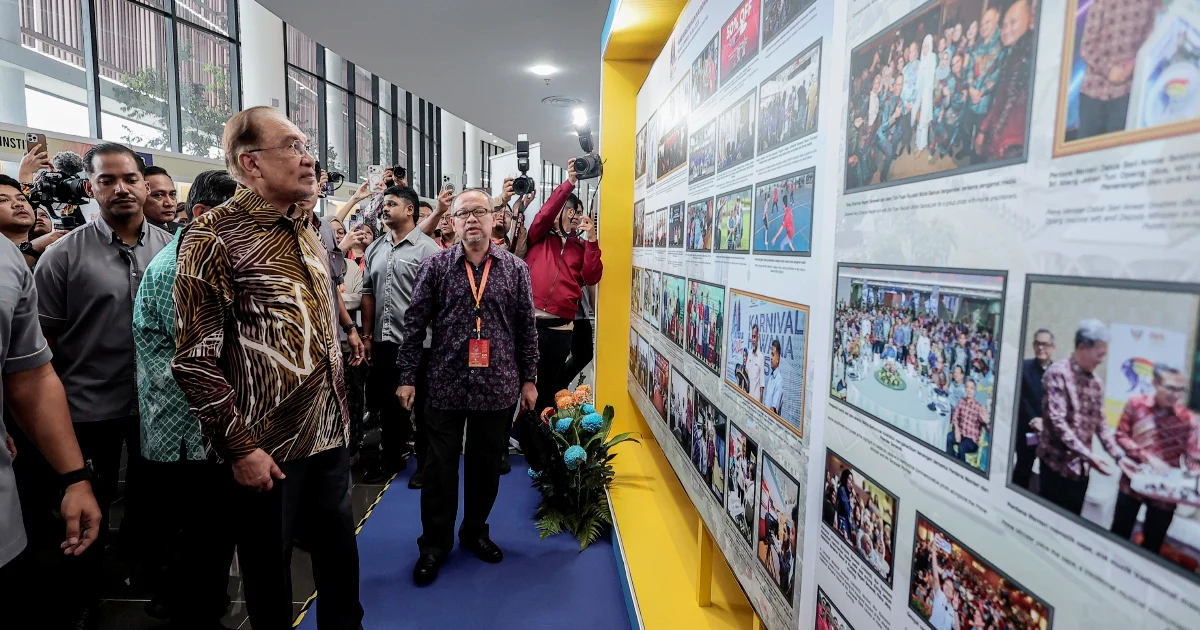
Prime Minister Datuk Seri Anwar Ibrahim has unveiled a RM1 million government allocation for Tabung Kasih@Hawana 2026, reaffirming the administration's commitment to bolstering the welfare of Malaysia's journalism workforce. The pledge, announced at Permatang Pauh, underscores growing recognition within government circles that sustaining a healthy media ecosystem requires direct financial intervention to support those working in the field.
The fund represents a tangible acknowledgement of the financial pressures facing journalists across Malaysia, where falling advertising revenues and the shift of readers toward digital platforms have strained newsroom budgets and diminished reporter compensation packages. By establishing a dedicated welfare mechanism, the government is attempting to address workplace stability concerns that have driven experienced journalists away from the profession in recent years.
This initiative sits within a broader policy framework aimed at modernizing Malaysia's media landscape. The government has signalled that it does not view the transformation of the journalism industry as a market-driven process alone, but rather as a collective challenge requiring strategic intervention. The RM1 million commitment suggests that official thinking has evolved beyond traditional regulatory approaches toward more proactive engagement with stakeholder welfare.
The Tabung Kasih@Hawana 2026 mechanism appears designed to function as a safety net for journalists facing unexpected hardship or career disruption. Such funds typically address gaps left when professional insurance or savings prove inadequate during periods of unemployment, illness, or family emergencies. For freelance journalists and those employed by smaller publications with limited benefits packages, access to such assistance could prove decisive in sustaining their participation in the profession.
The timing of this announcement carries significance. Malaysia's media sector has experienced considerable upheaval over the past decade, marked by newsroom consolidations, publication closures, and the acceleration of digital-first strategies that have often failed to generate sufficient revenue to maintain pre-pandemic staffing levels. Government backing for journalist welfare potentially signals an intent to stabilize the sector before further attrition occurs.
The broader context of media industry transformation in Malaysia includes evolving ownership structures, technological disruption, and shifting audience consumption patterns. Regional developments in Singapore, Indonesia, and Thailand reveal similar patterns, where quality journalism has struggled to maintain economic viability without diversified revenue models. The government's welfare fund approach complements—though does not substitute for—the need for sustainable business models within newsrooms themselves.
Foreign media organizations operating in Malaysia and international journalism associations have periodically highlighted concerns regarding press freedom and journalist working conditions. Government initiatives targeting welfare directly may be partially responsive to such concerns, seeking to demonstrate tangible support for the profession even as questions about editorial independence remain subject to periodic scrutiny. The fund positions the government as an invested partner in journalism's sustainability rather than merely its regulator.
For individual journalists, the practical impact will depend heavily on the fund's administration, eligibility criteria, and disbursement mechanisms. Whether the allocation proves sufficient depends on uptake rates and the actual number of journalists facing qualifying hardship. Given Malaysia's approximately 8,000 to 10,000 practicing journalists across broadcast, print, and digital platforms, the RM1 million amount translates to modest per-capita support, suggesting the fund functions as a supplementary resource rather than comprehensive welfare replacement.
The emphasis on transformation initiatives reflects official recognition that journalism's challenges are not merely temporary disruptions from which recovery is inevitable, but rather structural shifts requiring sector-wide adaptation. Alongside the welfare fund, government backing for digital skills training, newsroom technological modernization, and emerging revenue models would likely generate more substantial long-term impact on journalist welfare by strengthening underlying industry economics.
The announcement also carries implications for how Malaysia positions itself within Southeast Asian media narratives. The region has seen increasing government engagement with journalism funding and support mechanisms, from subsidized press councils to state-backed digital news platforms. Malaysia's approach through welfare funding distinguishes itself from more direct content-related interventions, though observers might view the distinction as largely administrative rather than substantive in protecting editorial autonomy.
Looking forward, the success of this initiative will be measured not merely by fund disbursements but by whether the allocation catalyzes broader industry dialogue about journalism's future in Malaysia. Whether this spending represents a first step toward more comprehensive media support or a political gesture lacking follow-through will become apparent as implementation details emerge and stakeholder responses develop. The journalism community's engagement with the fund's processes and outcomes will significantly influence perceptions of government commitment to sustained media sector support.

