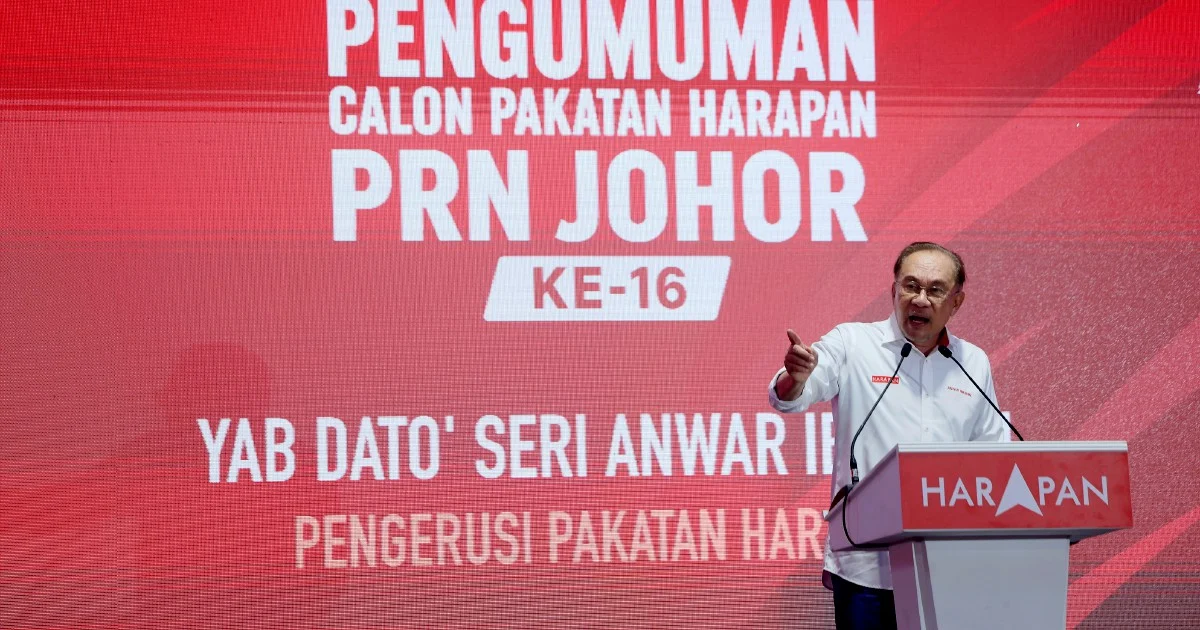
Prime Minister Datuk Seri Anwar Ibrahim has challenged Johor's executive councillors to press the previous Barisan Nasional and Perikatan Nasional-led federal administrations on revenue distribution matters, signalling a broader scrutiny of fiscal arrangements between Kuala Lumpur and Malaysia's southernmost state. Speaking in Tangkak, Anwar implicitly endorsed grievances that Johor may have been shortchanged in federal fund allocations during the tenure of these administrations, a sensitive issue that touches on intergovernmental resource management and regional equity.
The Prime Minister's remarks come amid ongoing tensions over how Malaysia's petroleum royalties, federal grants, and development funds are distributed among states—a question that has periodically generated friction between regional governments and the centre. Johor, as one of Malaysia's economic engines and the country's second-largest state by population, has long occupied an outsized position in national politics and fiscal negotiations. The state's concerns about revenue fairness reflect deeper anxieties across Malaysia's federated structure, where less developed states often feel marginalised and resource-rich regions claim they shoulder unfair tax burdens.
Anwar's intervention suggests the federal government under Pakatan Harapan is prepared to reexamine historical fiscal arrangements, positioning the current administration as more sympathetic to state-level grievances than its predecessors. By encouraging Johor exco members to formally interrogate former governments, the Prime Minister appears to be using the state as a platform for broader criticism of Barisan Nasional's long stewardship and Perikatan Nasional's brief tenure. This rhetorical strategy serves multiple purposes: it appeals to Johor's political leadership and voters, deflects responsibility for ongoing economic challenges, and frames the current government as correcting historical wrongs.
The timing of these remarks is politically significant. Johor remains a crucial battleground in Malaysian electoral politics, with its 26 parliamentary seats representing roughly eight per cent of the Dewan Rakyat. The state government, presently led by a Barisan Nasional administration, has navigated a complex relationship with the federal Pakatan Harapan government. Revenue disputes offer both an opportunity and a test case for how Anwar's administration might address state-federal tensions more broadly, particularly in regions where opposition parties retain control of state assemblies.
The historical context here is substantial. During Barisan Nasional's 61-year tenure, questions about fiscal equity between states were rarely aired publicly, with the ruling coalition's dominance at both federal and most state levels muting inter-governmental disputes. The Perikatan Nasional government's arrival in 2020 brought a degree of uncertainty to federal-state relations, particularly given the coalition's regional focus and its initial concentration of power in a handful of states. Now, under Pakatan Harapan's stewardship, examining these arrangements presents an opportunity to claim moral high ground while addressing legitimate questions about whether smaller or economically weaker states received proportionate federal support.
For Johor specifically, revenue concerns touch on petrochemical revenues, land sales, and infrastructure investment allocation. The state has historically viewed itself as a net contributor to federal coffers, given its industrial base, port activities, and agricultural sector. If Johor leadership takes up Anwar's implicit invitation to scrutinise previous federal administrations, the resulting public discourse could illuminate how resource allocation decisions were made—information that might prove uncomfortable for Barisan Nasional figures who managed these portfolios during the party's long rule.
Anwar's approach also reflects a broader political calculation. By positioning the Pakatan Harapan government as willing to address systemic inequities, the Prime Minister aims to build support in state administrations that might otherwise view the federal government with suspicion. This is particularly relevant in Johor, where the state exco operates under a Barisan Nasional chief minister but must liaise with a federal government led by a different coalition. Creating common cause around fiscal grievances could help smooth these relationship tensions.
However, the Prime Minister's statements also carry an implicit challenge to Johor's current leadership. By suggesting that state excos should question previous governments, Anwar is essentially asking whether the current state administration will robustly defend Johor's interests against federal structures it nominally helped to construct. This puts Johor's Barisan Nasional leadership in a delicate position: appearing too critical of the current federal government risks undermining coalition unity, while remaining silent on revenue concerns risks disappointing state voters and appearing passive about Johor's interests.
The broader implications for Malaysian federalism are noteworthy. Anwar's remarks contribute to an expanding conversation about how federal arrangements should be reformed and whether revenue-sharing formulae adequately reflect contemporary economic realities and regional development needs. This conversation is particularly pressing as Malaysia confronts fiscal pressures, climate-related infrastructure demands, and the need to develop secondary economic centres beyond the Klang Valley and Penang.
For Malaysian business communities and investors, these discussions about state-federal fiscal arrangements matter considerably. Transparent, equitable revenue distribution mechanisms can enhance investor confidence by reducing uncertainty and inter-regional tension. Conversely, unresolved disputes about funding could complicate economic planning, particularly for projects requiring multi-level government coordination.
Moving forward, whether Johor's executive councillors formally pursue Anwar's suggested line of inquiry remains to be seen. If they do, the resulting investigations could establish valuable precedent for how the current administration addresses historical grievances. If they do not, Anwar's remarks may be dismissed as political rhetoric without substantive follow-through. Either way, his comments underscore that Malaysian federalism remains in flux, with fundamental questions about resource distribution and state-federal relations remaining contested terrain.

