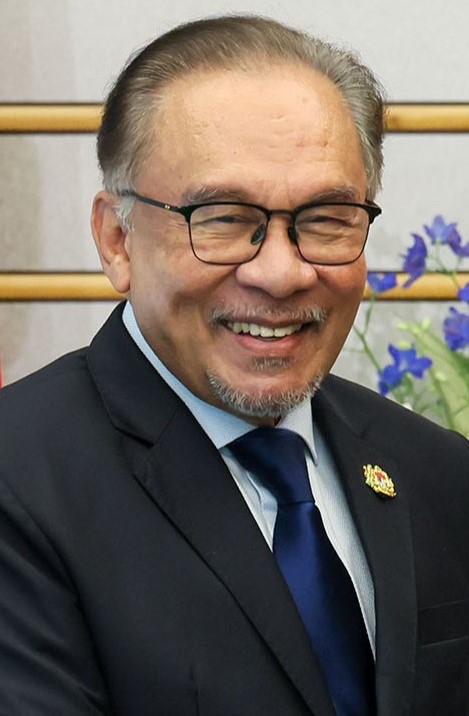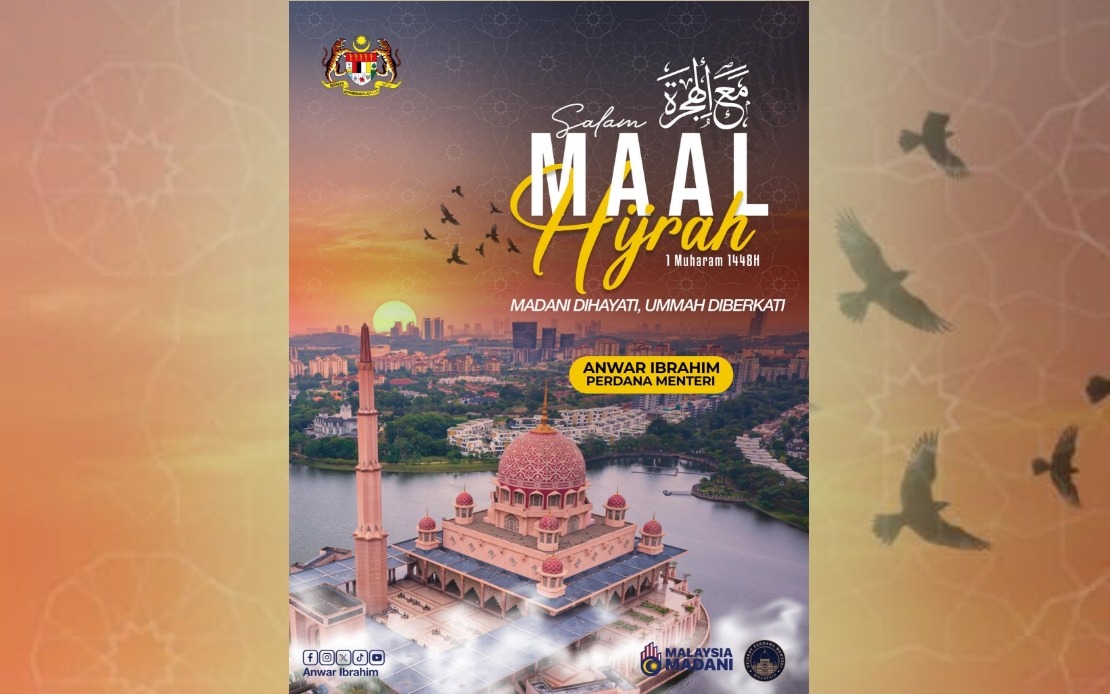
Prime Minister Datuk Seri Anwar Ibrahim has positioned the Islamic principle of Hijrah as a transformative framework for Malaysia's ongoing governance and reform agenda, arguing that success depends fundamentally on collective action rather than isolated endeavours. Speaking on the occasion of Maal Hijrah 1448H, Anwar drew parallels between the Prophet Muhammad SAW's historic migration to Madinah and the contemporary challenge of building a reformed, inclusive society capable of delivering justice, truth, prosperity and security to all citizens.
The Hijrah narrative, as articulated by the Prime Minister, carries profound lessons about institutional change and social cohesion. Anwar emphasised that the establishment of the Islamic state of Madinah was not the work of a single individual but emerged through disciplined teamwork grounded in shared faith and purpose. This framing suggests that Malaysia's modernisation journey requires similar levels of coordination across government agencies, political parties, civil society organisations and diverse ethnic and religious communities. The implicit message is that competing interests and sectoral goals must be subordinated to a larger national purpose.
Anwar specifically highlighted the multifaceted nature of the original Hijrah movement, noting the instrumental roles played by younger generation leaders such as Saidina Ali Abi Talib, the contributions of women including Asma Abu Bakar, and the coordinated participation of numerous companions. By invoking these historical examples, Anwar appears to be signalling that contemporary reform efforts must similarly engage all segments of society—youth, women, professionals and community leaders—in structured, organised processes. This inclusive framing addresses Malaysia's persistent challenge of ensuring that disadvantaged groups have meaningful voice in policymaking.
The Prime Minister acknowledged that transplanting Hijrah principles into modern governance presents considerable difficulties. The diversity of Malaysia's population, its complex constitutional framework, competing economic interests and varying interpretations of national identity all complicate efforts to build the consensus necessary for transformative change. Anwar's explicit recognition of these obstacles suggests a pragmatic awareness that rhetorical appeals alone cannot overcome institutional inertia or entrenched resistance to reform. The emphasis on patience alongside persistence indicates an understanding that significant change unfolds over extended periods.
Crucially, Anwar positioned reform as a non-partisan endeavour, stating that change cannot be achieved by any single political party acting unilaterally. This statement carries particular weight in Malaysia's context, where the federal government comprises a coalition of multiple parties with sometimes competing agendas. By framing reform as a collective national responsibility transcending party lines, Anwar attempts to create political space for cross-party cooperation on specific policy priorities while potentially sideling partisan scoring. However, the practical realisation of such cooperation remains uncertain given Malaysia's fractious political landscape.
The Prime Minister's invocation of Quranic verse 100 from Surah An-Nisa reinforces the spiritual and moral dimensions of his reform message. The verse addresses the rewards for those who make sacrifices in service of divine purpose, lending religious legitimacy to the reform agenda while framing it as both sacrifice and struggle. This religious grounding resonates particularly with Malaysia's Muslim-majority population and may strengthen public receptivity to difficult reform measures that could disrupt established patterns or require short-term adjustment costs.
Anwar's characterisation of Hijrah as encompassing sacrifice, struggle, brotherhood and unity distils the concept into dimensions directly applicable to governance challenges. Sacrifice invokes the willingness of officials and citizens to prioritise collective welfare over individual or sectional gain. Struggle acknowledges that meaningful reform encounters resistance and requires sustained effort. Brotherhood and unity address the relational and cooperative dimensions essential to overcoming fragmentation. Together, these framings construct a comprehensive vision of how transformation becomes possible in complex, diverse societies.
The Department of Islamic Development Malaysia (Jakim) has complemented the Prime Minister's message by selecting "MADANI Dihayati, Ummah Diberkati" (MADANI Embraced, The Ummah Blessed) as the theme for this year's National Maal Hijrah Celebration. The deliberate linkage between Jakim's chosen theme and the government's existing MADANI framework demonstrates intentional alignment between religious observance and policy messaging. The theme's emphasis on the ummah—the broader Islamic community—suggests that reform initiatives are framed as benefiting not merely Malaysia but contributing to broader Muslim world interests.
For Malaysian readers, particularly those concerned with governance quality and institutional effectiveness, Anwar's emphasis on consensus and unity carries both inspiring and cautionary implications. Historically, consensus-building in Malaysian politics has sometimes meant avoiding difficult decisions or diluting reform measures to accommodate diverse interests. The question remains whether the government can translate the Hijrah principle into concrete institutional changes that demonstrably improve service delivery, reduce corruption, enhance judicial independence and expand economic opportunity. Rhetoric alone, even when grounded in Islamic principles, cannot substitute for structural reforms in public administration, financial management and regulatory enforcement.
The timing of Anwar's Maal Hijrah message also reflects political calculation. As the government pursues unpopular measures including tax increases, subsidy rationalisation and civil service reforms, appealing to higher spiritual and moral purposes may help sustain public patience and political support. The emphasis on collective sacrifice and long-term struggle acknowledges that reform will impose costs on various constituencies. Whether citizens remain willing to bear those costs depends significantly on visible progress toward stated objectives and equitable distribution of burdens across social classes.
Regionally, Malaysia's articulation of reform grounded in Islamic principles and consensus-building offers a model relevant to other Muslim-majority nations facing similar governance challenges. Singapore and other ASEAN neighbours, while constitutionally secular, might nonetheless appreciate Malaysia's attempt to integrate religious values into pragmatic policymaking. However, Malaysia's particular challenge involves ensuring that Islamic frameworks for governance do not marginalise non-Muslim citizens or undermine secular constitutional protections. The success of Anwar's Hijrah-inspired reform agenda ultimately depends on demonstrating that religious principles and modern governance standards can reinforce rather than contradict each other.
Looking forward, the substantive test of Anwar's Hijrah vision will involve examining whether government actions align with stated principles. Concrete indicators would include the speed and scope of anti-corruption enforcement, the transparency of budget allocation and procurement processes, the effectiveness of public service delivery improvements, and the government's success in building cross-party cooperation on critical issues such as education quality, healthcare access and infrastructure development. Citizens and observers will scrutinise whether the invocation of Hijrah principles translates into measurable improvements in governance or remains primarily symbolic.