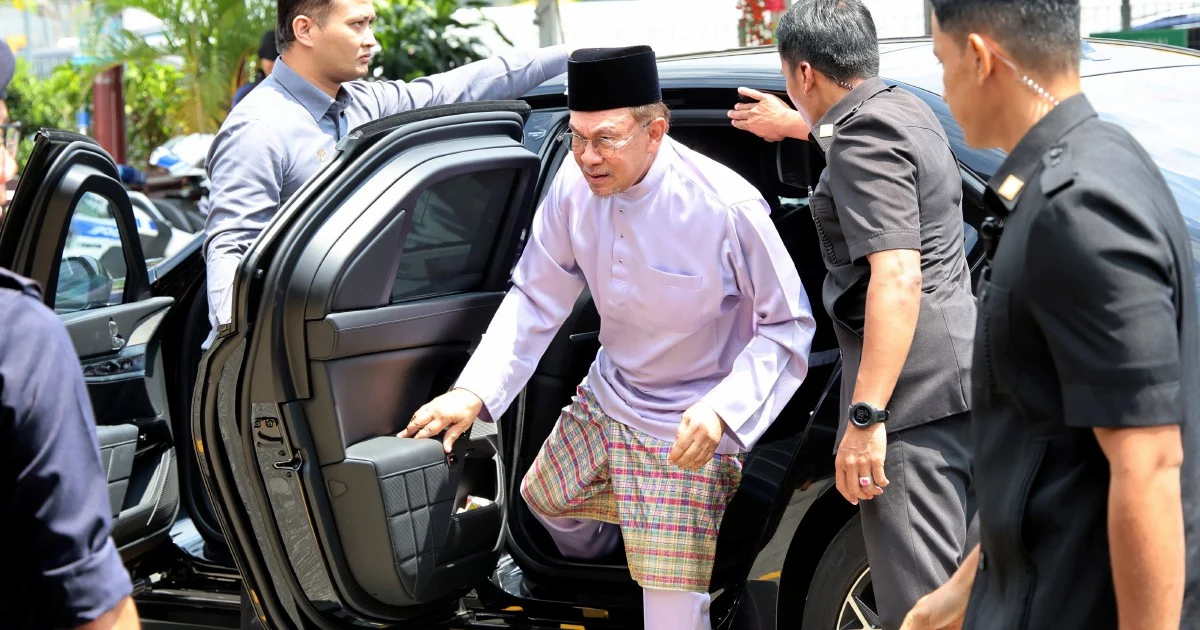
Prime Minister Datuk Seri Anwar Ibrahim has issued a firm reminder to all political parties contesting the upcoming Johor election to maintain respectful conduct throughout their campaigning, emphasising the importance of upholding strong ethical standards rather than resorting to overconfident or dismissive behaviour toward opponents.
Speaking in Dengkil, the premier stressed that the electoral process depends fundamentally on the willingness of competing parties to engage with voters and each other in a manner that reflects Malaysia's democratic traditions and shared values. This message signals the government's commitment to ensuring that state-level elections proceed without the escalation of political tensions or the adoption of divisive campaign tactics that have occasionally marred past electoral contests.
The timing of Anwar's intervention reflects broader concerns within the political establishment about maintaining electoral integrity and public confidence in the democratic process. State elections in Malaysia carry significance beyond local governance; they often serve as bellwethers for national sentiment and can influence the trajectory of federal-level politics. Johor, as one of the nation's largest and most politically significant states, holds particular importance in this regard.
Anwar's appeal addresses a recurring challenge in Malaysian politics: the tendency for some political actors to adopt aggressive or contemptuous stances toward rivals, particularly when internal polling suggests an advantage. Such approaches risk alienating swing voters who increasingly favour candidates and parties demonstrating restraint and substantive policy engagement over theatrical posturing. The premier appears to be signalling that this more mature approach to campaigning would serve the interests of all contenders, not merely those advocating for it.
The emphasis on respect in electoral conduct carries practical implications for how parties mobilise their supporters and frame their messaging. Campaigns grounded in attacking opponents' character rather than addressing policy differences often generate polarisation that extends beyond the election period itself, affecting governance capacity in the victorious administration. Anwar's intervention suggests the government recognises that post-election cooperation between state and federal authorities requires a foundation of mutual regard established during the campaign itself.
For voters in Johor, this pronouncement offers reassurance that the state's leadership and the federal government remain committed to preventing elections from becoming vehicles for personal vendettas or displays of political dominance. The reminder proves particularly relevant given the state's demographic diversity and the complex inter-community dynamics that require sensitive handling during periods of heightened political competition. Campaigns conducted with arrogance risk inflaming these sensitivities and creating grievances that persist long after ballots are counted.
The statement also implicitly establishes accountability expectations for the ruling coalition and its allies contesting Johor seats. When a prime minister publicly advocates for respectful campaigning, those associated with his administration face heightened scrutiny regarding whether their own campaign practices align with these stated values. This creates pressure for internal discipline within government-aligned parties and their candidate selection processes.
From a Southeast Asian perspective, Malaysia's continued emphasis on electoral civility and democratic norms distinguishes it within a region where political competition sometimes escalates into confrontation. Anwar's message reinforces Malaysia's positioning as a democracy where institutional checks and accepted rules of engagement remain meaningful constraints on political behaviour, even amid intense partisan competition.
The premier's reminder gains additional weight from recent global trends demonstrating the consequences of erosion in democratic norms. Nations where political actors progressively abandon conventions regarding respectful opposition often experience declining institutional trust and increased social fragmentation. Malaysia's political leaders appear determined to prevent such drift by explicitly reaffirming the values that underpin legitimate electoral competition.
For parties competing in Johor, translating Anwar's exhortation into campaign strategy requires conscious decisions about messaging, candidate conduct, and supporter mobilisation. Parties that successfully balance vigorous advocacy for their policy platforms with genuine respect for opponents may find themselves rewarded with voter appreciation, particularly among constituencies fatigued by acrimonious political rhetoric. This represents a potential shift toward performance-based differentiation rather than character-assassination strategies.
The call for dignified campaigning extends implicitly to civil society actors, journalists, and social media participants who shape electoral discourse. When national leadership emphasises respect and ethical conduct, it creates cultural permission for broader society to hold all political actors—including media commentators and online voices—to elevated standards of integrity during campaigning. This effect, while difficult to measure, potentially influences the overall tenor of public discourse surrounding the election.
Looking forward, the success of Anwar's appeal will depend partly on whether competing parties and their supporters voluntarily embrace these standards or whether electoral logic encourages some actors to test the boundaries of acceptability. The premier's intervention establishes a baseline expectation, but ultimate accountability rests with voters who will judge whether parties honoured their implicit commitment to respectful engagement. In this sense, electoral integrity becomes a shared responsibility extending far beyond formal regulatory mechanisms or leadership statements.

