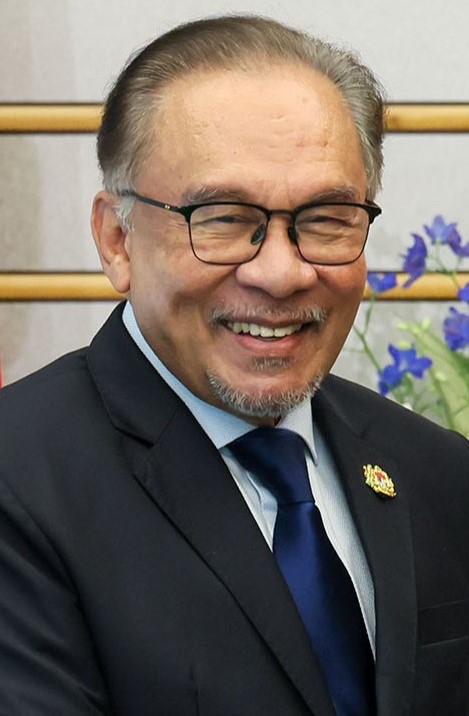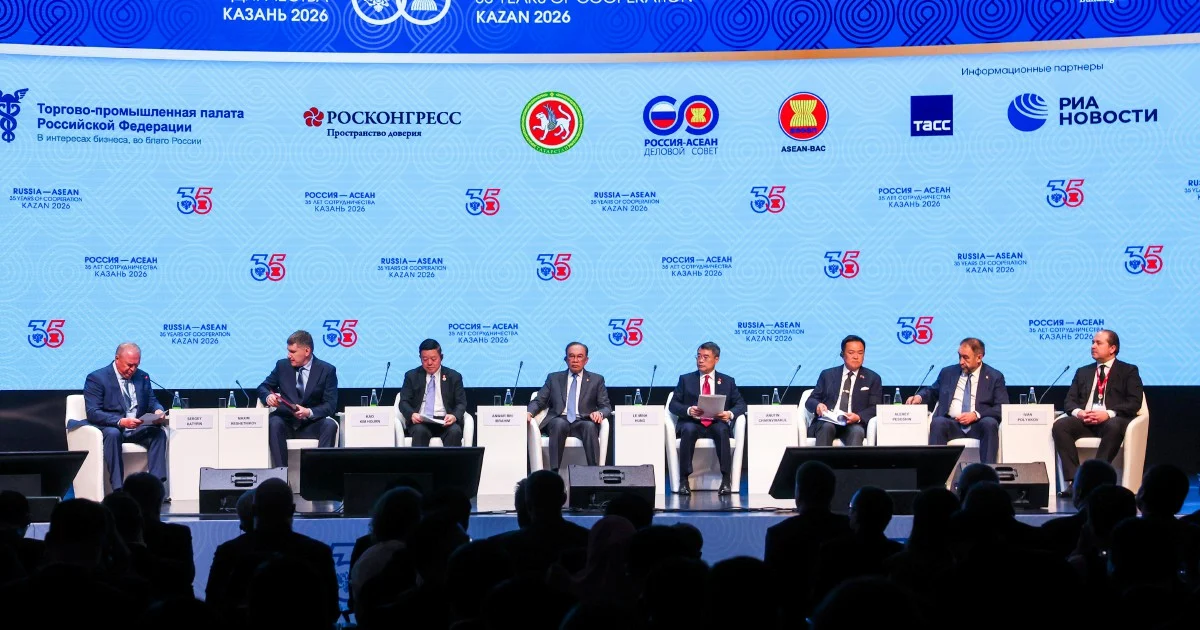
Prime Minister Datuk Seri Anwar Ibrahim has called for Asean and Russia to substantially broaden their cooperation framework, emphasising that joint engagement across multiple economic and technological domains would benefit both regions. Speaking in Kazan, Anwar stressed the importance of transitioning from traditional bilateral relations to deeper multilateral collaboration that addresses contemporary challenges facing both communities.
The Malaysian premier's appeal reflects growing recognition in Southeast Asia that Russia, despite international isolation in some quarters, remains a significant player in global supply chains and technological development. For Asean nations, particularly those seeking to diversify trade partnerships and reduce dependency on single economic powers, renewed engagement with Moscow offers strategic opportunity. Russia's position as a major energy exporter and agricultural producer makes it a natural counterpart for a region increasingly concerned with food price volatility and energy security.
Food security emerged as a paramount concern in Anwar's remarks, underscoring a vulnerability exposed across Asean following global supply chain disruptions. With several Southeast Asian nations reliant on imports for critical staples, and competing with other regions for available supplies, establishing reliable trading relationships with major producers like Russia could provide insulation against price shocks. Joint ventures in agricultural technology, processing capabilities, and distribution networks could create mutual benefits while stabilising regional food prices that directly affect consumer welfare across the bloc.
The energy dimension of the proposed partnership holds particular significance as Asean transitions toward climate objectives while managing rising electricity demand. Although Russia is not a neighbour to Southeast Asia, its hydrocarbon reserves and expertise in energy extraction remain relevant. Beyond fossil fuels, cooperation could extend to nuclear technology, renewable energy manufacturing, and grid modernisation—domains where Russian institutions possess technical capability. For Malaysia specifically, which remains dependent on fossil fuel revenues despite diversification efforts, balanced engagement with energy-rich partners supports economic stability.
Advanced manufacturing presents another avenue where both regions possess complementary strengths. Asean's growing industrial base, combined with its demographic advantages and lower labour costs, could attract Russian investment in joint production facilities. Simultaneously, Asean manufacturers could access Russian markets and technical expertise. This sector-specific collaboration could catalyse industrial upgrading across the region, creating higher-value employment opportunities and reducing reliance on commodity exports that render economies vulnerable to price fluctuations.
The digital technology component of Anwar's proposal aligns with broader regional ambitions to position Asean as a digital economy hub. Russian capabilities in software development, cybersecurity, and artificial intelligence could be channelled through partnerships with Southeast Asian tech ecosystems. Knowledge transfer and talent exchange programmes would accelerate innovation cycles in both regions while reducing the technological gap between Asean and more developed economies. For Malaysia's ambitions to become a regional tech centre, such cooperation could introduce fresh perspectives and accelerate capability building.
Educational collaboration constitutes the foundational pillar of this proposed partnership framework. Expanded student exchange programmes, joint research initiatives, and faculty partnerships would nurture deeper understanding and people-to-people connections between Asean and Russia. Higher education institutions across Southeast Asia could benefit from Russian academic strengths in engineering, mathematics, and physical sciences, while Russian universities gain exposure to Asean's emerging economic dynamism and research contributions.
The timing of Anwar's overture carries diplomatic nuance. Asean has historically pursued strategic autonomy through balanced engagement with major powers, maintaining relationships without aligning with any single bloc. The call for expanded Asean-Russia cooperation demonstrates this principle in practice—engaging Moscow on practical grounds while neither capitulating to nor isolating the country. This posture reflects Asean's pragmatic approach to international relations, where economic interest and diplomatic flexibility take precedence over ideological positioning.
Implementing such ambitious cooperation requires institutional architecture and sustained political will. Existing mechanisms like the Asean Regional Forum and East Asia Summit provide platforms for engagement, yet specific sector-based partnerships demand dedicated bilateral arrangements and clear investment frameworks. Singapore's sophisticated financial markets, Vietnam's manufacturing prowess, Indonesia's size and Indonesia's strategic location, and Thailand's logistics capabilities each offer distinct advantages for cooperation with Russia in different domains.
Sceptics might question whether expanding ties with Russia aligns with Western-leaning security partnerships that many Asean members maintain. Yet pragmatic economic engagement need not conflict with security alliances. Many Asean nations already conduct meaningful trade with countries across geopolitical divides, viewing commerce as distinct from military or security alignment. Russia's economic weight, though diminished by sanctions and structural challenges, retains relevance for commodity-dependent economies and nations seeking alternative sources for critical technologies and resources.
For Malaysia specifically, Anwar's diplomatic initiative reflects his government's broader strategy of positioning the nation as a bridge between competing powers and civilisations. By championing Asean-Russia cooperation on practical issues divorced from geopolitical confrontation, Malaysia demonstrates how Southeast Asian countries can benefit from strategic autonomy. The emphasis on food security and energy security reflects genuine vulnerabilities that Malaysian policymakers confront when formulating long-term economic strategy.
Successful implementation would require moving beyond rhetoric toward concrete projects with measurable outcomes. Joint task forces examining specific sectors, feasibility studies for infrastructure projects, and preliminary investment commitments would signal serious intent from both sides. Asean's expanding middle class and growing consumer base presents compelling market opportunities for Russian entrepreneurs, while Southeast Asia's manufacturing capabilities and geographic positioning create openings for Russian firms seeking supply chain diversification away from Western-centric networks.
The broader significance of Anwar's appeal lies in its implicit message about Asean's future orientation. Rather than accepting constraints imposed by great power competition, the Malaysian premier suggests his region can shape its own destiny through strategic partnerships calibrated to national interests. Whether Asean collectively embraces deepened Russian engagement will largely depend on how individual members balance their distinct strategic priorities against bloc-wide coordination—a perennial challenge for the diverse and consensus-driven organisation.