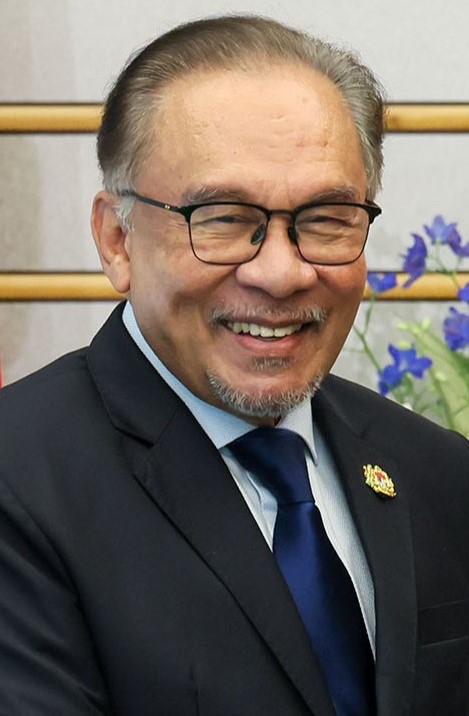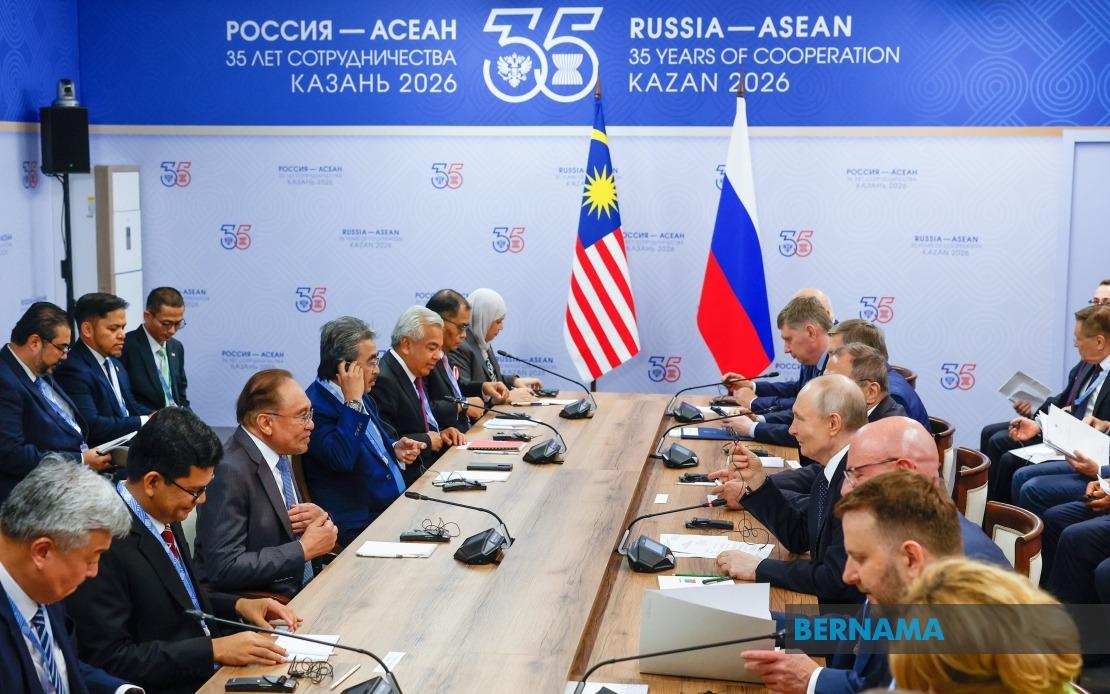
Prime Minister Datuk Seri Anwar Ibrahim has publicly lauded Russian President Vladimir Putin and Chinese President Xi Jinping for championing peaceful resolution and condemning violations against civilians across Gaza, Iran and Lebanon. The Malaysian leader made these remarks during an exclusive television interview with Russian broadcaster RT while attending the Commemorative Summit in Kazan marking 35 years of diplomatic ties between ASEAN and Russia. His comments underscore Malaysia's distinctive approach to navigating complex geopolitical tensions in the Middle East whilst maintaining principled stances on humanitarian concerns.
Anwar emphasised that Malaysia has consistently adopted a resolute position opposing operations by the Israeli government, while deliberately staying independent from superpower influence and strategic interests. He highlighted that Parliament had taken a bipartisan decision responding to what he characterised as initial aggression backed by United States support, demonstrating that Malaysia's foreign policy reflects broad domestic consensus rather than executive direction alone. This parliamentary approach reflects the government's intent to frame Middle East positions as expressions of national will rather than partisan diplomatic manoeuvring.
The Prime Minister outlined his extensive engagement with regional stakeholders including Gulf monarchies, Pakistan, Türkiye and Iran, positioning Malaysia as an active mediator seeking equitable pathways toward conflict resolution. These diplomatic outreach efforts reveal Malaysia's ambition to shape discussions rather than remain a passive observer, leveraging its seat within ASEAN and its historical relationships across Islamic and non-aligned movements. Anwar's personal involvement suggests the government views Middle Eastern diplomacy as sufficiently consequential to warrant executive-level attention.
Crucially, Anwar distinguished Malaysia's foreign policy framework from neutrality by invoking the concept of centrality—a positioning that permits strong moral stances on human rights without subordination to any particular ideological bloc. He explained that centrality allows ASEAN nations to condemn atrocities and violations without appearing beholden to Beijing, Moscow or Washington, offering diplomatic language that appeals to non-aligned movements whilst maintaining pragmatic relationships with major powers. This terminology reflects evolving Southeast Asian attempts to reconcile values-based foreign policy with strategic flexibility.
The Prime Minister directed sharp criticism toward what he characterised as Western duplicity regarding Israeli conduct and American backing for military operations. He questioned the logical consistency of a global order that permits one nation to attack others whilst maintaining democratic and humanitarian credentials, framing this as a fundamental breach of principle rather than merely a strategic disagreement. His rhetorical approach converts the Middle East conflict into a broader philosophical challenge to Western-led international norms.
Anwar specifically addressed the asymmetry in international responses to Iranian actions versus Israeli operations, noting that criticism of Tehran's responses should not warrant silence regarding external aggression against Iran itself. He argued that legitimate concerns about Iranian conduct do not obviate responsibility to acknowledge provocations it faces, presenting this as a matter of logical consistency rather than ideological sympathy. This distinction permits Malaysia to maintain critical distance from Iran whilst rejecting what it views as selective condemnation.
The Prime Minister articulated frustration with what he termed hypocrisy persisting in contemporary international relations, suggesting that contradiction between stated principles and actual practice undermines global credibility and stability. He framed addressing this duplicity as an urgent necessity for maintaining a functioning international order, positioning Malaysia's advocacy as defensive rather than aggressive—protecting established norms rather than challenging them. This rhetorical strategy allows Malaysia to present itself as defending rules-based systems whilst criticising current implementation.
Anwar's public commendation of Putin and Xi represents notable diplomatic signalling, distinguishing Russia and China from Western powers on this particular issue whilst avoiding blanket alignment with either nation. The gesture acknowledges Moscow and Beijing's stated positions without requiring comprehensive agreement across all policy domains, reflecting Malaysia's capacity to compartmentalise relationships and identify selective areas of convergence. This approach permits cooperation on Middle East matters whilst maintaining distinct positions elsewhere.
For Malaysian and broader Southeast Asian audiences, these statements reinforce the government's commitment to independent foreign policy formulation despite regional economic integration with Western economies and security partnerships with allied nations. The emphasis on parliamentary consensus-building and engagement across multiple regional actors positions Malaysia as thoughtfully navigating rather than reflexively responding to international crises. This messaging appeals to domestic constituencies valuing national autonomy while reassuring neighbouring countries that Malaysia respects ASEAN consensus-building principles.
The timing of these remarks during an official visit to Russia carries additional significance, suggesting the government views deepening ties with Moscow as compatible with ASEAN neutrality and non-alignment principles. By delivering pro-peace messaging during Russian engagement rather than solely through Malaysian channels, Anwar signals that Malaysia actively supports Russian diplomatic initiatives in areas of convergence. This approach distinguishes practical cooperation on specific issues from broader geopolitical alignment.
Anwar's framework of centrality rather than neutrality offers conceptual tools for other regional governments attempting to justify active positions on humanitarian issues whilst avoiding superpower clientelism. The articulation may influence how ASEAN collectively characterises its diplomatic stance, potentially reshaping institutional language and enabling more forthright human rights advocacy without accusations of abandoning non-alignment. Malaysia's prominent articulation of this distinction provides philosophical scaffolding for other nations seeking similar positioning.
The Prime Minister's intervention occurs amid broader regional conversations about how middle powers should respond to major power competition and humanitarian crises simultaneously. By emphasizing principle-based reasoning over strategic calculation, Anwar presents Malaysia as intellectually coherent whilst practically engaged. This positioning appeals to younger constituencies and civil society advocates demanding ethical foreign policy alongside economic pragmatism, potentially reshaping expectations for governmental conduct.