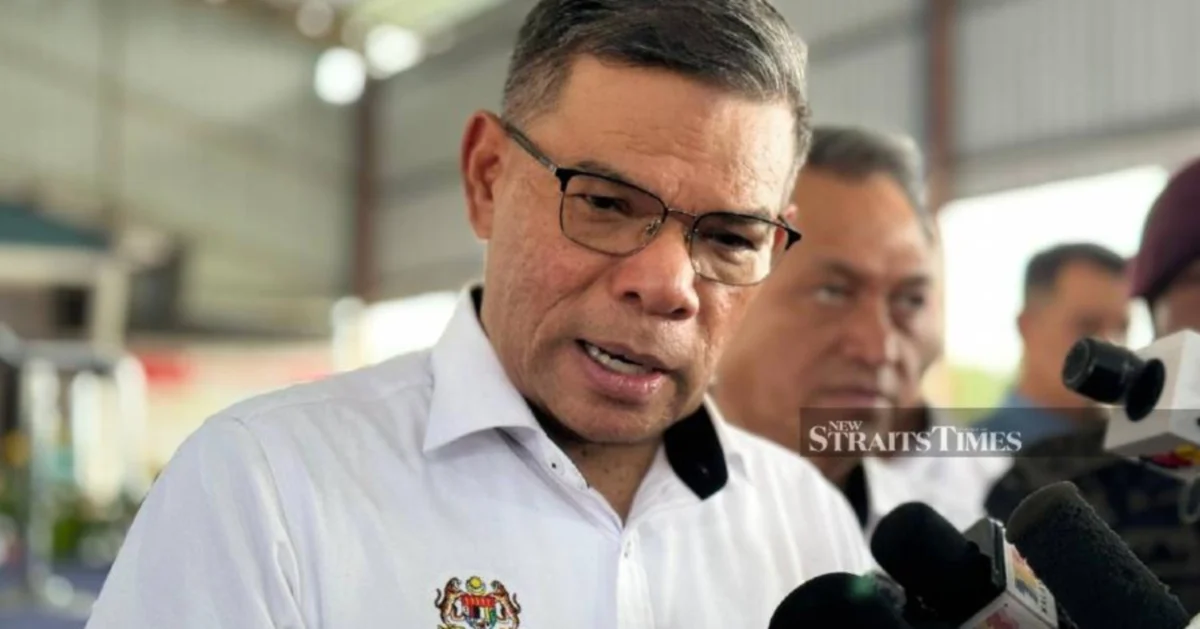
Prime Minister Datuk Seri Anwar Ibrahim has given the green light to a significant capital expenditure of RM22 million aimed at strengthening the operational capacity of the Malaysian Border Control and Protection Agency. The decision signals the government's commitment to reinforcing border security infrastructure across the country's increasingly complex frontier regions. Minister of Home Affairs Datuk Seri Saifuddin Nasution announced the allocation, which represents a tangible increase in resources directed toward one of Malaysia's frontline law enforcement entities.
The Malaysian Border Control and Protection Agency operates within a challenging operational environment, tasked with securing Malaysia's extensive maritime and terrestrial boundaries. These borders encompass the Strait of Malacca, the Sulu and Celebes Seas, and overland frontiers with Thailand, Brunei, and Indonesia. Personnel working within this framework face persistent threats ranging from maritime trafficking to irregular border crossings, making adequate equipment provision a critical operational necessity. The current funding injection addresses long-standing equipment gaps that have constrained the agency's effectiveness in executing its core mandate.
Firearms acquisition forms the centrepiece of this expenditure plan, reflecting the government's assessment that personnel protection and defensive capability require immediate modernisation. Border control operations frequently occur in remote, high-risk environments where proper armament directly impacts officer safety and operational success rates. The specific specifications and procurement methodology for these weapons remain subject to established defence procurement protocols, though the allocation suggests consideration of contemporary standards used by comparable regional border agencies.
Beyond firearms, the RM22 million allocation encompasses a broader spectrum of operational equipment essential to modern border protection work. This encompasses protective gear including body armour and ballistic protection systems, communication infrastructure allowing real-time coordination across dispersed patrol units, surveillance technology for detecting unauthorised border activity, and transport equipment facilitating rapid response deployment. The holistic approach recognises that effective border security demands integrated technical and human resource capabilities rather than isolated equipment acquisitions.
Such investment acquisitions must navigate Malaysia's established military and law enforcement procurement frameworks, which emphasise transparency, value-for-money assessments, and local industrial participation where feasible. The government has increasingly prioritised supporting domestic defence contractors and manufacturing enterprises, meaning portions of this expenditure may flow toward developing Malaysia's indigenous security equipment sector. This creates multiplier economic effects within the defence industry while reducing long-term operational dependency on foreign supplier relationships.
Regionally, Malaysia's border security capabilities carry implications extending beyond national boundaries. As a key Southeast Asian nation occupying critical maritime chokepoints and maintaining porous land frontiers, Malaysia's effectiveness in managing border permeability influences trafficking patterns, irregular migration flows, and transnational crime dynamics affecting neighbouring countries. Strengthened border control equipment consequently generates positive spillovers for broader regional security cooperation, particularly with Indonesia and Thailand where coordinated responses to cross-border challenges are essential.
The timing of this allocation reflects heightened governmental focus on internal security matters following various incidents highlighting vulnerability points within Malaysia's border management systems. Recent years have witnessed increased smuggling activities, unauthorised maritime incursions, and irregular migration pressures necessitating proportionate resource responses. The funding decision demonstrates executive recognition that adequately equipped personnel constitute an irreplaceable foundation for effective border management, complementing legislative frameworks and intelligence capabilities.
Operationalising this RM22 million investment will require coordinated action across multiple government agencies and contractors. Procurement cycles must balance swift deployment with rigorous quality assurance protocols ensuring equipment meets operational requirements and international standards. Personnel training programmes accompanying equipment introduction are equally critical, as sophisticated security equipment yields limited returns without properly trained operators understanding technical capabilities and tactical applications. Integration planning should commence immediately to enable phased deployment minimising operational disruption.
Financially, this allocation forms part of broader internal security spending within Malaysia's annual budget. Defence and security outlays have experienced measured growth reflecting government recognition that sustained regional stability and domestic order require adequate resourcing. The RM22 million commitment, while substantial, represents a proportionate investment relative to Malaysia's overall defence expenditure and the geographic scale of borders requiring supervision. Cost-effectiveness analysis should demonstrate that equipment-enhanced personnel productivity justifies the capital outlay through improved detection rates, successful interdiction operations, and personnel safety improvements.
Looking forward, the RM22 million investment should catalyse broader modernisation initiatives within Malaysia's border security apparatus. Equipment upgrades typically necessitate accompanying policy refinements, standard operating procedure updates, and personnel retraining programmes. Opportunities exist for technological integration enabling data-driven border management approaches where real-time information guides resource deployment. Sustained political commitment to border security modernisation, demonstrated through this allocation, encourages organisational planning extending beyond immediate procurement toward comprehensive capability development frameworks.
The announcement reflects Prime Minister Anwar Ibrahim's administration maintaining continuity in security priority emphasis while signalling receptiveness to departmental resource requests addressing identified operational gaps. Such funding decisions, when communicated transparently, reinforce public confidence in government commitment toward protecting national territorial integrity and maintaining internal order. For Malaysian Border Control and Protection Agency personnel operating in demanding frontier environments, the resource injection provides tangible recognition of their challenging responsibilities and validates organisational requirements articulated through established budget request processes.

