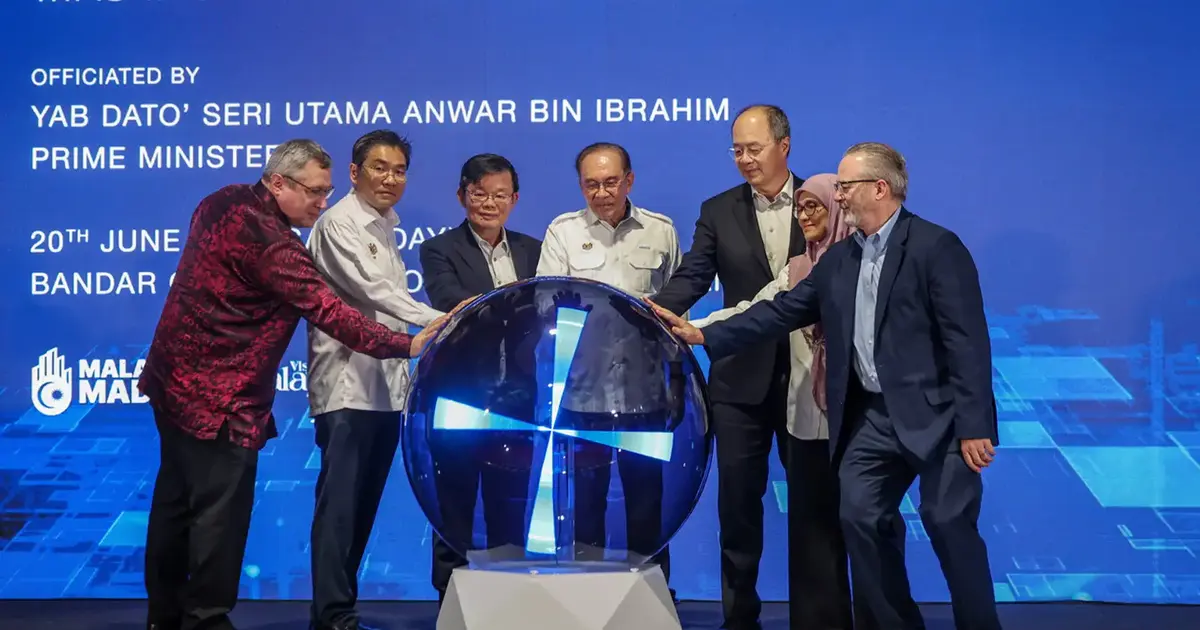
Prime Minister Anwar Ibrahim has moved to strengthen Malaysia's position in the global semiconductor industry by appointing a dedicated adviser tasked with building stronger partnerships between the country's research universities and commercial semiconductor enterprises. The appointment represents a strategic effort to harness academic expertise and innovation capacity in service of an industry that has become increasingly vital to Malaysia's technology ambitions and economic competitiveness in Southeast Asia.
The decision underscores the government's recognition that sustained growth in the semiconductor sector—a field where Malaysia already commands significant manufacturing presence—depends on continuous knowledge transfer between academic research and industrial application. Universities across the country conduct substantial work in microelectronics, materials science, and related fields, yet translating these discoveries into commercially viable products and processes has historically posed challenges. By appointing a dedicated liaison figure, the administration aims to create institutional bridges that facilitate this crucial interaction.
Significantly, Anwar emphasised that the appointment carries no additional financial burden for the national treasury. This approach reflects the government's pragmatic approach to capacity-building, leveraging existing human resources and institutional frameworks rather than creating new bureaucratic structures. The adviser will operate within current budgetary allocations, making the initiative fiscally conservative while potentially generating substantial returns through improved industry-university linkages.
Malaysia's semiconductor industry has long represented one of the country's most valuable manufacturing sectors, contributing substantially to exports and employment. However, the landscape has grown increasingly competitive, with rivals across Asia investing heavily in research and development. The appointment signals that Malaysian policymakers view closer academic-industry collaboration not as peripheral but as foundational to maintaining and expanding the nation's competitive edge in precision manufacturing and advanced technology.
The adviser's mandate likely encompasses identifying complementary strengths between academic departments and industrial needs, facilitating joint research projects, establishing internship and talent-pipeline programmes, and removing administrative obstacles that may hinder collaboration. Universities possess deep expertise in theoretical physics, mathematical modelling, and advanced materials analysis—domains directly applicable to next-generation semiconductor design and production. Conversely, industry partners understand market demands and commercial timelines that can guide research priorities.
This appointment arrives amid global semiconductor supply-chain disruptions and a broader geopolitical competition to secure dominance in chip design and manufacturing. Several countries have implemented substantial government support programmes to attract semiconductor investment and build domestic capacity. Malaysia's approach, emphasising collaboration rather than direct subsidies, reflects both budgetary constraints and the government's preference for market-driven mechanisms reinforced by institutional facilitation.
The timing also aligns with Malaysia's broader transformation agenda, which prioritises technology sectors as engines of future economic growth. The semiconductor industry employs tens of thousands of workers and supports downstream manufacturing across consumer electronics, automotive, and telecommunications sectors. Strengthening this ecosystem through better knowledge flows positions Malaysia to capture high-value activities within global supply chains, moving beyond simple assembly toward design, process optimisation, and specialised production.
Regionally, the move carries implications for Southeast Asia's technological development trajectory. Countries across the region seek to participate more meaningfully in semiconductor manufacturing and design, viewing such capabilities as essential to technological sovereignty and economic resilience. Malaysia's appointment of a dedicated adviser may inspire similar initiatives elsewhere in the region, contributing to a broader Southeast Asian strategy of deepening technical capabilities through institutional collaboration.
The adviser will likely face significant practical challenges, including convincing academic researchers to prioritise industry-relevant problems, helping companies understand the longer timeframes required for fundamental research, and navigating intellectual property arrangements that satisfy both universities and businesses. Success depends on developing genuine partnerships rather than superficial arrangements, requiring sustained commitment from both sectors and consistent political backing.
Longer term, this initiative could reshape how Malaysian universities approach their research missions, encouraging greater emphasis on applied investigations alongside fundamental science. It may also encourage semiconductor companies to invest in local research capabilities rather than concentrating all development work abroad, creating a virtuous cycle of innovation, employment, and technological advancement.
For Malaysia's broader innovation ecosystem, the appointment signals that government views institutional facilitation as a legitimate and effective policy tool. Rather than attempting to pick technological winners or subsidise specific companies, this approach trusts that better information flows and reduced friction between knowledge creation and application will organically strengthen competitiveness. Whether this adviser-based model proves more sustainable and efficient than more interventionist approaches remains to be seen, but the appointment reflects thoughtful policymaking aimed at nurturing genuine long-term competitive advantage in a sector where Malaysia already possesses considerable foundations to build upon.

