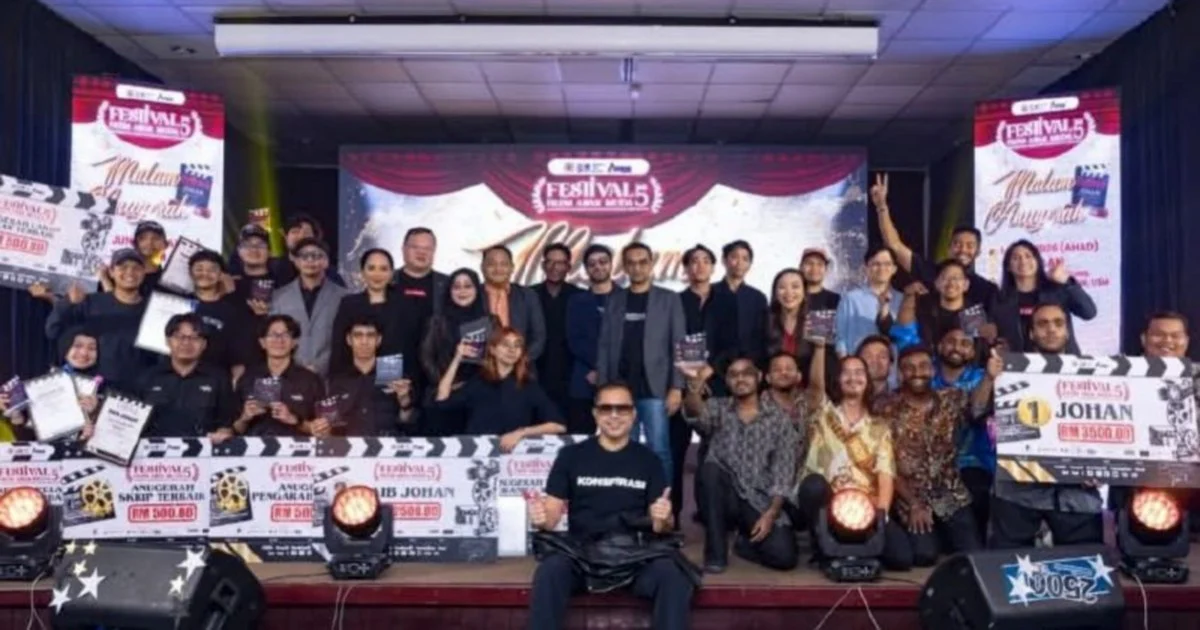
The Malaysian Anti-Corruption Commission has embarked on a fresh initiative to deepen public understanding of integrity and combating corruption by joining forces with organisers of the 5th Youth Film Festival at Universiti Sains Malaysia in Penang. Rather than relying solely on conventional education and enforcement channels, MACC recognises that creative storytelling through cinema offers a potent vehicle for shaping ethical values among Malaysia's youth, a demographic increasingly sceptical of top-down messaging but responsive to narratives they encounter in entertainment and artistic mediums.
This collaboration signals an evolution in how Malaysia's premier anti-graft agency approaches prevention and public consciousness-raising. Film festivals, particularly those targeting student and young professional audiences, provide platforms where complex issues like corruption, institutional reform, and ethical dilemmas can be explored through character-driven narratives rather than abstract policy discourse. By positioning itself as a supporter of creative expression rather than purely an enforcement body, MACC is attempting to soften its institutional image and build grassroots buy-in for anti-corruption principles among viewers who will shape Malaysia's political and corporate landscape in coming decades.
The participation of MACC in the youth festival reflects broader recognition within Malaysian governance circles that awareness campaigns must adapt to generational preferences. Traditional approaches—public service announcements, school seminars, and printed materials—continue to have value but reach diminishing audiences among young adults who consume content primarily through digital platforms and entertainment channels. A film festival provides both concentration of engaged viewers and credibility that comes from association with educational institutions and cultural programming rather than heavy-handed government promotion.
Universiti Sains Malaysia's hosting of the event in Penang creates a particular resonance within the academic community, where discussions of governance, justice, and social responsibility are woven into curricula. Students attending screenings and discussions at the festival are likely to be among the more civically conscious segments of their age group, multiplying the potential impact of anti-corruption messaging. Moreover, the campus setting allows for follow-up engagement through student organisations, faculty partnerships, and institutional networks that can sustain interest beyond the festival itself.
The strategic dimensions of MACC's involvement extend beyond simple messaging. By connecting with filmmakers and creative practitioners, the commission gains insight into how young people perceive corruption, what narrative elements resonate emotionally, and which institutional failures capture imagination. Films often expose gaps between official rhetoric and lived experience, providing MACC with valuable feedback about public perception. This two-way dialogue is crucial for organisations seeking to remain relevant and credible with audiences increasingly attuned to authenticity.
Corruption-themed films have demonstrated global appeal and critical engagement. When done thoughtfully, such productions neither exonerate institutions nor present hopelessness, but instead explore individual agency, systemic pressures, and pathways toward reform. Young audiences are particularly receptive to narratives that acknowledge complexity while asserting that ethical choices remain possible even within compromised systems. This nuance—absent from many government communications—is precisely what cinema can deliver.
The festival's focus on youth filmmakers and audiences also democratises the anti-corruption conversation. Rather than positioning MACC as the sole authority on integrity standards, the collaborative model invites filmmakers and viewers to investigate these themes independently, fostering critical thinking rather than passive reception of official messages. This approach aligns with contemporary best practices in behavioural change and public awareness, which emphasise empowerment over directives.
For Malaysia's broader anti-corruption architecture, partnerships like this represent low-cost, high-engagement opportunities to maintain public focus on integrity during periods when major scandals may fade from headlines. The entertainment and cultural sectors offer platforms that political messaging struggles to access, precisely because audiences do not perceive them as overtly promotional. A compelling film examined in a university auditorium carries different weight than an institutional advertisement.
Regional context matters as well. Southeast Asian countries increasingly recognise that anti-corruption work requires sustained cultural engagement alongside legal enforcement. Neighbours including Indonesia, the Philippines, and Thailand have similarly experimented with creative and community-based approaches to supplement traditional anti-corruption frameworks. Malaysia's participation in this trend positions it within an emerging international conversation about holistic governance reform.
The 5th iteration of the Youth Film Festival suggests this is an established event with growing reach and credibility. MACC's entry into partnership with an already-functioning festival, rather than creating its own platform, demonstrates pragmatic recognition that institutional resources are better deployed through existing channels with demonstrated audiences than through separate, government-branded initiatives that may struggle for attention.
Moving forward, success of this collaboration will depend partly on whether MACC allows filmmakers genuine creative freedom or attempts to shape narratives toward predetermined conclusions. Young audiences possess finely-tuned sensors for propaganda; a festival perceived as a vehicle for sanitised institutional messaging will alienate precisely the engaged, thoughtful demographic MACC seeks to reach. Authentic partnership requires tolerance for critical perspectives and uncomfortable questions about institutional shortcomings.
The initiative also opens possibilities for longitudinal engagement. Filmmakers and audience members connected through the festival might become ambassadors for integrity within their professional networks, media organisations, and social circles, multiplying impact far beyond the physical event. As Malaysia continues wrestling with public trust in institutions, such organic connections forged through shared creative experience may prove more durable than formally mandated campaigns.