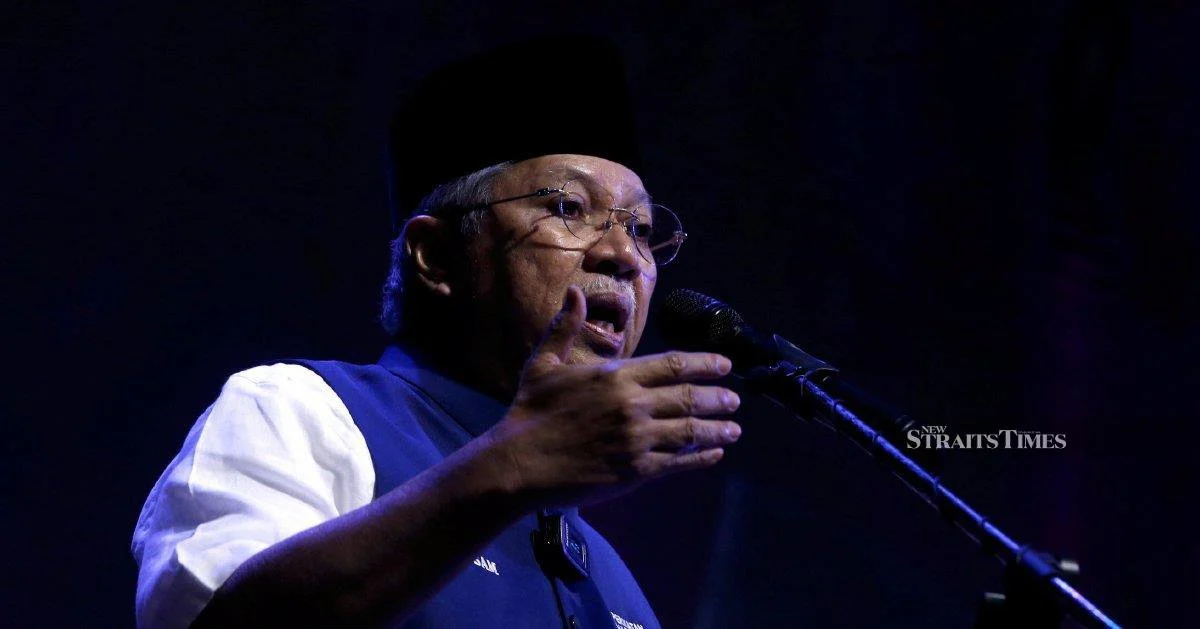
The largest component party of Perikatan Nasional has received a warning to maintain composure as the opposition coalition confronts escalating friction among its members. Annuar, speaking to party officials and observers tracking coalition dynamics, emphasised the importance of measured responses rather than immediate public declarations whenever challenges surface within the broader PN framework.
The appeal comes at a moment when Perikatan Nasional—which encompasses Bersatu, PAS, and several other registered parties—has shown visible signs of strain. Coalition partners have increasingly found themselves at odds over strategic direction, resource allocation, and public positioning on various national issues. Rather than allow disagreements to spill into damaging public disputes, Annuar's intervention suggests a preference for behind-the-scenes negotiation and damage control.
Bersatu, which was founded by former prime minister Mahathir Mohamad but later repositioned itself under new leadership, occupies a crucial position within the PN architecture. The party carries historical baggage from its formation as a breakaway group, and its members span various ideological positions—from conservative to reform-minded figures. This internal diversity, while potentially enriching, has sometimes complicated the party's ability to speak with a single voice on coalition matters.
The timing of Annuar's statement reflects deeper anxieties about PN's cohesion as Malaysia approaches what observers see as a critical period for opposition politics. Since the 2022 elections, when Perikatan Nasional significantly expanded its parliamentary presence, the coalition has struggled to maintain unity while contending with government policies, internal party rivalries, and differing visions for the country's future. Each public disagreement, no matter how minor, carries potential consequences for the bloc's negotiating power and electoral prospects.
For Malaysian political observers, such calls for restraint typically signal that underlying disputes may be more substantial than initially apparent. When senior figures invoke appeals to calm and discourage premature statements, it usually indicates that serious discussions are ongoing—possibly involving fundamental questions about coalition membership, leadership roles, or strategic alliance recalibration. The fact that Annuar felt compelled to make such an intervention publicly suggests that at least some members of Bersatu have been tempted to air grievances openly.
Bersatu's position within PN merits particular scrutiny given the party's relatively recent formation and evolving internal politics. The party must balance its ambitions to emerge as a credible nationwide force with the reality of operating within a coalition framework where it shares space with PAS, which has substantially deeper organisational roots across Malaysia. This asymmetry has occasionally created friction over resource distribution and strategic priorities, with Bersatu sometimes feeling sidelined despite its significance.
The broader Southeast Asian context adds another dimension to these coalition tensions. Regional observers watch Malaysian opposition dynamics closely, as PN's performance influences discussions about multi-party coalitional politics across the region. Internal fractures within Perikatan Nasional could have ripple effects on how neighbouring countries perceive opposition strength and viability, potentially affecting regional political stability and cross-border cooperation on various fronts.
From a governance perspective, PN's internal coherence matters significantly for Malaysian voters considering their electoral options. A coalition that cannot maintain basic unity risks appearing chaotic or untrustworthy to fence-sitters who might otherwise be sympathetic to opposition politics. Conversely, demonstrating disciplined coalition management strengthens arguments that PN represents a credible alternative government in waiting. Annuar's push for restraint directly addresses this broader credibility challenge.
The appeal also reflects recognition that modern Malaysian politics operates under intense media scrutiny and rapid information dissemination. A comment made by a mid-ranking party official in a state assembly can now rapidly escalate into a national controversy if it contradicts coalition positioning or senior leadership statements. By urging Bersatu members to pause and consult before speaking publicly, Annuar essentially advocates for coordinated messaging and internal conflict resolution before disputes become public spectacles.
Historically, Malaysian political coalitions have struggled with longevity, often fracturing when member parties see personal or ideological interests diverging from collective coalition goals. Perikatan Nasional's current challenges suggest it may be approaching a critical juncture where sustained tension could either drive fundamental structural changes or lead to permanent rupture. Whether Annuar's appeal succeeds in fostering the internal discipline needed to navigate these tensions remains to be seen in coming weeks and months.