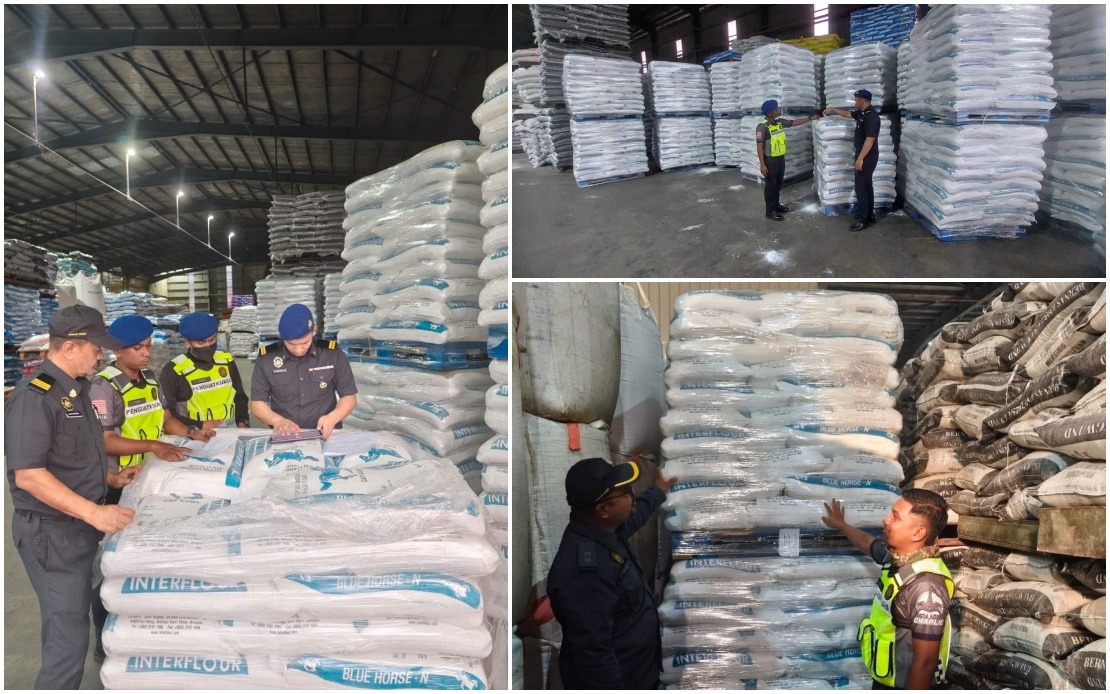
Malaysia's Ministry of Domestic Trade and Cost of Living conducted an enforcement operation at an animal feed processing facility in Kuala Ketil, Kedah, on suspicion that the factory was storing wheat flour without the required permits or regulatory approval. The raid, executed on June 16 by personnel from the Baling branch of the ministry's Kedah division, represents part of ongoing efforts to ensure compliance with national supply control regulations governing staple food commodities.
The operation uncovered substantial quantities of wheat flour being held at the premises in the Kuala Ketil Industrial Area. According to Kedah KPDN director Muhammad Nizam Jamaludin, four enforcement officers arrived at approximately 4.30 pm to inspect the facility. During their investigation, inspectors confirmed that the flour appeared to be integrated into the company's animal feed manufacturing process, raising questions about the legitimacy of the storage arrangement and whether proper supply chain documentation existed.
Authorities seized a total of 53,325 kilogrammes of flour from the location, with an estimated market value of RM100,251. The substantial quantity confiscated suggests the operation had been accumulating supplies beyond what would be typical for routine manufacturing operations, prompting investigators to examine whether the stockpile represented an attempt to circumvent supply controls or exploit price differentials in the commodities market. The seized goods remain under official custody pending further investigation and determination of appropriate penalties or remedies.
The 25-year-old factory manager, identified as a Malaysian national, could not furnish documentation demonstrating that the facility possessed valid authorisation from the Supply Controller to maintain flour stocks. Under Malaysian regulations, warehousing of controlled commodities requires explicit written approval from designated government authorities. The absence of such permits represents a fundamental breach of supply management protocols designed to maintain transparent oversight of critical food materials across the national supply chain.
The investigation proceeds under Section 21 of the Control of Supplies Act 1961, which provides the legal framework for regulating the storage, distribution, and use of essential commodities. This legislation empowers authorities to monitor and restrict the movement of controlled goods to prevent hoarding, black market activities, or diversion from their intended purposes. Violations can result in substantial penalties, including fines and potential imprisonment, depending on the severity and intent of the breach.
Ministry officials emphasised their commitment to maintaining strict oversight of subsidised goods and preventing their misuse or unlawful diversion. The government maintains price controls on essential commodities to ensure affordability for ordinary Malaysians, and these protections lose effectiveness when materials are diverted through unauthorised channels or stockpiled by entities seeking profit through artificial scarcity. The Kedah operation exemplifies the enforcement approach authorities employ to detect and disrupt such schemes.
The Kuala Ketil Industrial Area has experienced similar enforcement activities in recent years, reflecting the zone's status as a significant manufacturing hub requiring regular compliance monitoring. Industrial clusters of this nature often attract heightened regulatory attention because they concentrate multiple facilities handling controlled materials, creating both efficiency opportunities for authorities and opportunities for violators to obscure their activities amid legitimate commercial operations. The raid demonstrates that enforcement agencies maintain active surveillance of such areas.
For the animal feed manufacturing sector specifically, the regulatory framework distinguishes between legitimate industrial use of flour and unauthorised accumulation that suggests commercial speculation or supply chain manipulation. Feed manufacturers typically require flour as a raw material input, but they must obtain it through authorised suppliers and maintain transparent records of their acquisition and usage. The presence of 53,325 kilogrammes at a single facility without proper documentation raised immediate red flags during the inspection.
The enforcement action carries implications beyond the individual facility. It signals to other manufacturers and traders that regulatory agencies will actively pursue breaches of supply control regulations, potentially deterring similar violations across the sector. The substantial quantity seized and the estimated valuation indicate that financial incentives for non-compliance remain significant, necessitating continued vigilance and enforcement commitment from government bodies responsible for supply chain integrity.
Authorities have not disclosed whether they suspect the facility was operating as part of a larger network or acting independently in its breach of supply regulations. The investigation phase will determine whether the factory manager acted alone or in coordination with suppliers or downstream buyers. Such distinctions carry importance for prosecution strategy and for identifying systemic vulnerabilities in supply chain oversight that might require enhanced monitoring or procedural reforms.
The case also raises questions about oversight mechanisms along the supply chain. Wheat flour destined for animal feed manufacturing must originate from authorised mills and pass through documented distribution channels. The presence of substantial undocumented quantities suggests either significant gaps in tracking mechanisms or deliberate circumvention of record-keeping requirements. Investigators will likely scrutinise the facility's procurement records and supplier relationships to determine how the stockpile accumulated without triggering detection.
Moving forward, the resolution of this case will establish precedent regarding penalties for similar infractions and may prompt the ministry to review compliance monitoring procedures in industrial zones. If the facility is found to have engaged in deliberate circumvention of supply regulations, it could face substantial fines alongside potential closure or suspension of operating licences. Such consequences serve as both punishment and deterrent for other entities contemplating similar violations.