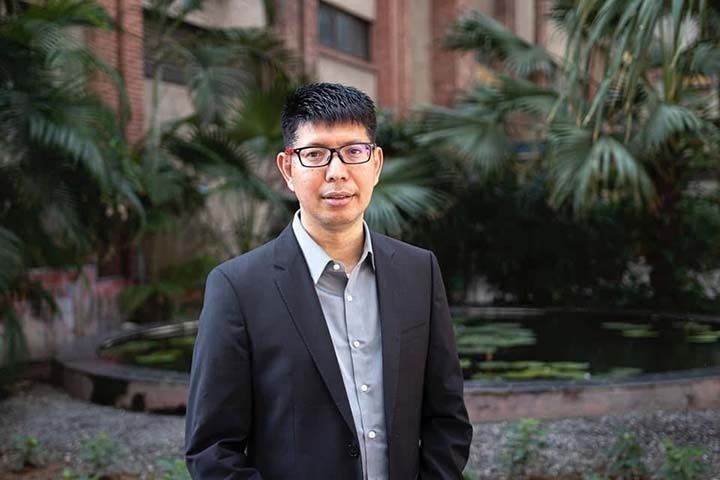
An American researcher studying Myanmar affairs detained by Chinese authorities in early June had travelled to Kunming solely to participate in an academic conference, according to the think tank he established, which on Wednesday demanded his unconditional release and disputed the charges against him.
Min Zin, who serves as executive director of the Institute for Strategy and Policy (ISP) - Myanmar, was taken into custody on June 3 following what China's foreign ministry confirmed as an arrest on suspicion of espionage and endangering national security. The timing of his detention proved particularly sensitive, occurring just weeks before Myanmar's military leader Min Aung Hlaing was scheduled to undertake a five-day state visit to Beijing, underscoring the complex dynamics between China and Myanmar's military government.
The think tank issued a forceful statement rejecting what it characterised as baseless allegations, emphasising that Min Zin's presence in the southwestern Chinese city was exclusively for professional academic purposes. The institute stressed the importance of protecting scholars and research organisations from intimidation and interference in their work, a concern that resonates across the region's academic and civil society communities grappling with increasingly restrictive operating environments.
American diplomatic officials have moved quickly to engage with Chinese counterparts on the matter. A United States State Department spokesperson confirmed that consular officers have visited Min Zin and that Washington is providing appropriate assistance whilst simultaneously rejecting the espionage accusations levelled against the scholar. This diplomatic response reflects broader American concerns about the treatment of its citizens abroad and the use of vague security charges against foreign academics and researchers.
China's foreign ministry has remained steadfast in its position, reiterating through official channels that Min Zin stands accused of engaging in espionage activities and insisting that the case will be handled according to Chinese law. The ministry's measured but firm response suggests Beijing intends to pursue the matter through its legal system whilst maintaining its security-based rationale for the detention.
Min Zin's background underscores his commitment to Myanmar's political trajectory and democratic aspirations. A veteran of the country's 1988 pro-democracy movement, he studied political science at the University of California, Berkeley before returning to contribute to Myanmar's intellectual landscape. His founding of ISP reflected efforts to create independent policy research capacity at a time when such work remained possible within the country's borders.
The institute's trajectory mirrors Myanmar's political upheaval over recent years. Initially headquartered in Yangon, ISP relocated its operations overseas following the military coup in February 2021 that deposed Aung San Suu Kyi's elected government. That intervention triggered massive public resistance, initially manifesting as peaceful demonstrations before evolving into a nationwide armed insurgency as newly established pro-democracy armed groups joined forces with long-established ethnic minority armies to confront the military establishment.
During its years of operation, ISP has established itself as a serious research institution examining Myanmar's multifaceted challenges. The think tank's analytical work has concentrated on understanding the ongoing armed conflict, assessing prospects for political transition, documenting the country's severe economic deterioration, and analysing Myanmar's complex bilateral relationship with China—perhaps its most consequential foreign partnership. This research agenda has proven increasingly difficult to pursue safely within Myanmar's borders under military rule.
China's centrality to Myanmar's strategic position cannot be overstated. Beijing stands as one of Myanmar's most critical foreign partners, with extensive economic, military, and political interests in the country. Chinese support has been instrumental in enabling the military to sustain its grip on power despite the armed insurgency and international criticism. The detention of a scholar investigating these very dynamics raises troubling questions about whether foreign researchers may face consequences for studying China's regional influence.
The incident also illuminates the precarious position of independent researchers and civil society organisations operating across Southeast Asia. The combination of military rule in Myanmar and Beijing's apparent sensitivity to foreign scrutiny of its involvement in Myanmar affairs creates a restrictive operating space for academics seeking to conduct rigorous, impartial analysis. For Malaysian scholars and institutions similarly tracking developments in Myanmar, the case serves as a cautionary reminder about the risks researchers may encounter when examining sensitive geopolitical relationships in the region.
Such detentions of foreign academics typically generate concern among international scholarly communities about academic freedom and the politicisation of research. Universities, think tanks, and professional associations across the region have reason to monitor how Min Zin's case develops, as the precedent could influence whether researchers feel safe conducting fieldwork or attending conferences in China and how institutions based in countries with closer ties to Beijing might feel pressure to self-censor work on sensitive topics.
The immediate question now centres on Min Zin's status and the likelihood of his release. ISP's call for immediate, unconditional freedom reflects the severity with which the institute and its international supporters view the detention, though prospects for rapid resolution remain uncertain given the formal charges Beijing has levied and the broader geopolitical context surrounding Myanmar.

