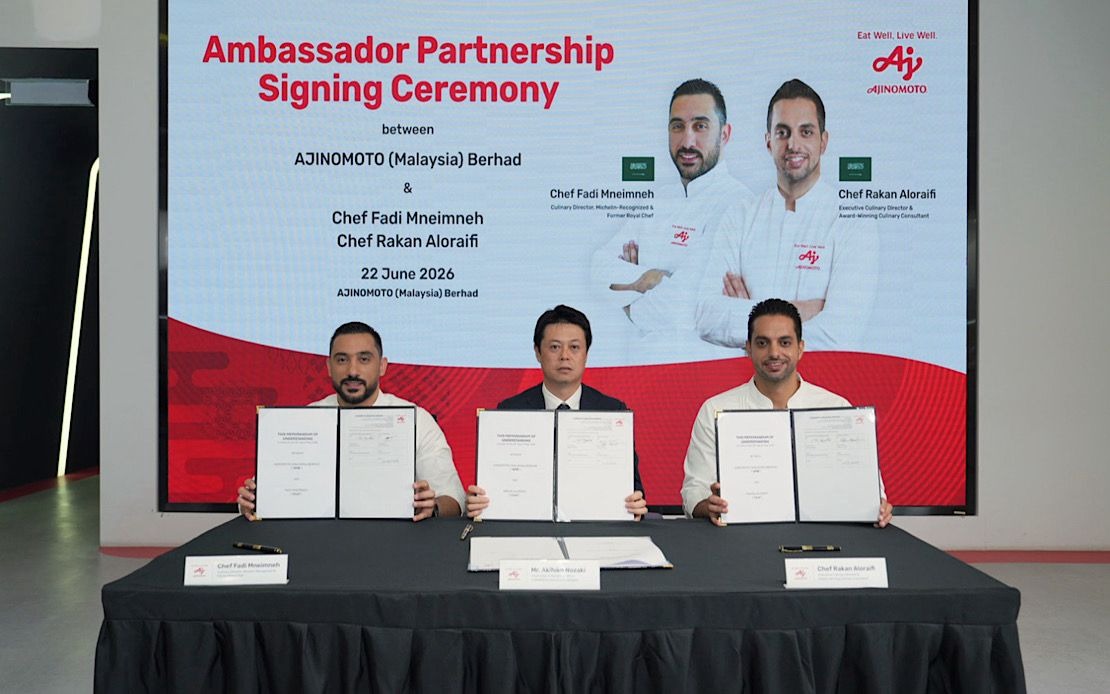
Ajinomoto (Malaysia) Berhad (AMB) is making a strategic push into the Middle Eastern food market by enlisting the support of two of Saudi Arabia's most respected culinary professionals. The collaboration with Chef Fadi Mneimneh, a Michelin-starred culinary director and former royal chef, and Chef Rakan Aloraifi, an award-winning executive director and culinary consultant, represents a calculated move to establish deeper market penetration in one of Asia's most lucrative food export regions. This partnership underscores a broader industry trend where Malaysian manufacturers are leveraging local halal credentials and culinary expertise to compete in premium food segments across the Gulf Cooperation Council nations.
The strategic alliance reflects AMB's recognition that market entry in the Middle East requires more than competitive pricing and product quality—it demands cultural credibility and endorsement from respected industry voices. By hosting both chefs at its manufacturing facility in Bandar Enstek, Negeri Sembilan, AMB created an opportunity for these influential figures to directly experience production standards and halal certification protocols. This transparency-focused approach aims to transform scepticism into advocacy, converting key opinion leaders into authentic brand ambassadors who can speak credibly about product integrity to their peers and clients across the region's hospitality sector.
The visit included live culinary demonstrations where Chef Fadi and Chef Rakan prepared traditional Middle Eastern cuisine incorporating Ajinomoto products, specifically highlighting how umami—the so-called fifth taste—can enhance authentic regional flavours without compromising cultural or religious authenticity. This educational component addresses a potential market barrier: the perception among traditional Middle Eastern chefs that adding umami-rich ingredients like monosodium glutamate might dilute or westernise their culinary heritage. By showcasing how Japanese food science principles can complement rather than conflict with Middle Eastern culinary traditions, AMB is positioned to reframe umami not as a foreign intrusion but as a complementary technique that deepens flavour complexity.
The halal aspect of this initiative carries particular significance for Malaysia's international business strategy. As a Muslim-majority nation with globally recognised halal certification standards, Malaysia has developed competitive advantages in the Middle Eastern food market. AMB's emphasis on its halal-certified portfolio directly addresses regulatory requirements and consumer preferences that dominate Gulf food purchasing decisions. For Malaysian readers and businesses, this partnership demonstrates how local halal excellence—often taken for granted domestically—represents a genuine and exploitable competitive advantage in export markets where certification carries both regulatory weight and consumer trust.
The programme also benefited from the participation of AMB's distributor representative in Brunei, which opened cross-regional networking opportunities. This dimension suggests AMB is thinking beyond bilateral Saudi-Malaysian relationships and building a networked ecosystem of food industry professionals across Southeast Asia and the Middle East. Such regional integration can create feedback loops where trends and consumer preferences circulate more efficiently, allowing Malaysian manufacturers to anticipate market shifts and adapt products proactively rather than reactively.
The halal food market across the Middle East represents substantial growth potential. Saudi Arabia, the United Arab Emirates, and other GCC nations combine high disposable incomes, growing restaurant and hotel sectors, and stringent halal requirements that favour certified suppliers. AMB's expansion strategy aligns with this opportunity by targeting the Hotel, Restaurant and Café (HORECA) sector—a segment where purchasing decisions are made by professional chefs, kitchen directors, and procurement specialists rather than individual consumers. By securing endorsement from prominent chefs at the HORECA event scheduled for October 2026 in Riyadh and Jeddah, AMB can influence institutional purchasing patterns that often establish long-term supply relationships.
The planned HORECA demonstrations represent a logical escalation of the partnership strategy. Rather than a one-off factory visit, AMB is investing in recurring visibility at major industry events, allowing Chef Fadi and Chef Rakan to conduct live sessions for procurement decision-makers and hospitality professionals. This approach leverages the chefs' credibility and reach within their professional networks, transforming them into ongoing advocates rather than temporary collaborators. For AMB, this creates a repeatable model: identify influential figures in target markets, facilitate genuine product experiences, and then activate their networks through strategic event participation.
The broader context for this expansion involves Malaysia's aspiration to strengthen its position as a halal food hub. While Malaysia has long been recognised for halal certification expertise, competition from other countries—including some Middle Eastern nations developing their own halal manufacturing capabilities—requires continuous innovation and market development. By demonstrating that Malaysian halal products can be integrated into sophisticated Middle Eastern cuisine, AMB helps reinforce Malaysia's brand identity as a source of premium halal solutions rather than merely commodity products. This positioning supports Malaysia's longer-term goal of moving up the food value chain and capturing higher-margin segments.
For regional observers, this partnership also illustrates how culinary influence intersects with business development in contemporary food markets. The choice of Michelin-starred and award-winning chefs—rather than, say, marketing consultants or business development specialists—signals that AMB believes authentic culinary expertise and peer respect carry more persuasive weight than traditional advertising approaches. This reflects evolving consumer preferences, particularly among younger and more affluent demographics, who increasingly trust chef recommendations and artisanal approaches over mass-marketing campaigns. By investing in chef partnerships rather than conventional advertising, AMB is positioning itself within this evolving consumer psychology.
The collaboration also highlights the potential for Southeast Asian manufacturers to leverage cultural and religious commonalities with Middle Eastern markets. Both regions prioritise halal compliance, share Islamic values regarding food preparation, and increasingly emphasise authentic and traditional culinary approaches. Malaysian companies like AMB can exploit these affinities by positioning themselves not as foreign vendors imposing external standards but as cultural partners sharing foundational values. This positioning becomes increasingly valuable as Middle Eastern consumers, particularly in Saudi Arabia following Vision 2030 economic diversification initiatives, develop more sophisticated and quality-conscious food preferences.
Looking ahead, the success of this partnership will likely be measured not just by immediate sales increases but by institutional integration—whether Ajinomoto products become standard offerings in premium Saudi Arabian hotels, restaurants, and catering operations. The October 2026 HORECA events in Riyadh and Jeddah represent critical proving grounds where AMB must demonstrate that chef endorsement translates into actual purchasing commitments from hospitality buyers. If successful, this model could expand to other influential chefs and other Middle Eastern markets, gradually building a network of professional advocates who normalise the use of AMB products within regional culinary practice.

