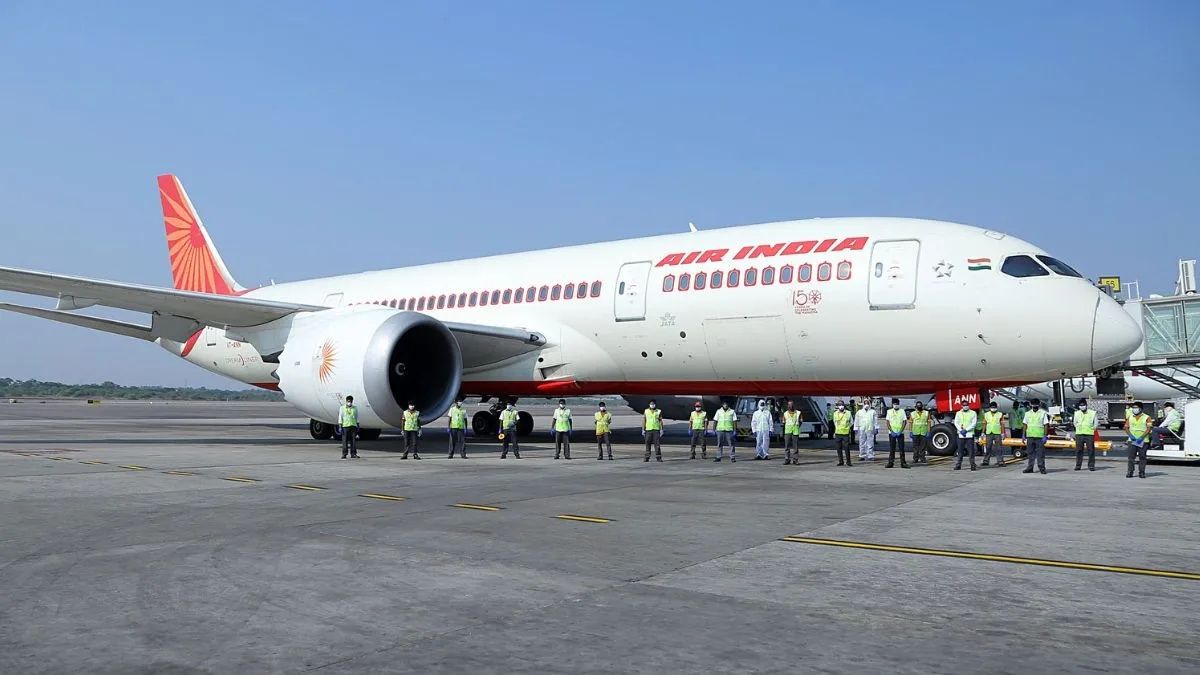
An Air India Airbus A321 operating between Delhi and Amritsar briefly crossed into Pakistani airspace on Monday evening following a technical malfunction in its navigation systems, authorities confirmed on Wednesday. The incident underscores the persistent technical and operational challenges facing India's domestic aviation sector, particularly on high-frequency regional routes where precision navigation is critical for maintaining airspace integrity along sensitive international borders.
The aircraft, identified as Flight AI-463, departed from Delhi's Indira Gandhi International Airport at 9:18pm on June 22. Within minutes of takeoff, the onboard navigation system experienced a technical anomaly that caused the flight's westward trajectory to deviate from its planned course toward Amritsar in Punjab. Rather than maintaining its assigned flight path, the aircraft began drifting across the International Border into Pakistani airspace—a breach that would ordinarily trigger immediate diplomatic and security concerns between the two nations.
Pakistani air traffic controllers at their ground facilities detected the airspace incursion and immediately alerted the aircraft crew to the deviation. Through coordinated radio communications, Pakistani ATC personnel worked with the pilots to make them aware of the unauthorized presence in their airspace. The flight crew responded swiftly by correcting the aircraft's course, guiding the Airbus A321 back across the border into Indian territory without further incident. The prompt detection and communication by Pakistani authorities, followed by decisive action from the pilots, prevented what could have escalated into a more serious situation.
However, the operational complications did not conclude with the navigation correction. As the aircraft approached Sri Guru Ram Dass Jee International Airport in Amritsar around 10:30pm, the airport's terminal airspace was experiencing significant congestion with multiple aircraft in holding patterns awaiting landing clearance. Indian air traffic controllers, faced with limited runway availability and mounting traffic, determined that an immediate landing slot could not be provided. Rather than holding the aircraft in a fuel-consuming holding pattern above an increasingly congested airport, ATC instructed the flight to divert back to Delhi—adding an unexpected leg to an already complicated journey.
The return flight to Delhi allowed airport maintenance personnel to conduct a comprehensive technical inspection of the aircraft's navigation and guidance systems. Following receipt of the necessary operational clearances and certification that the systems were functioning properly, the flight was released for departure again toward Amritsar. The aircraft finally touched down at its original destination at approximately 2:20am on Tuesday morning, nearly four hours behind its originally scheduled arrival time. While the delayed arrival inconvenienced passengers, the multiple interventions by air traffic control authorities in both countries and the professional response of the flight crew ensured the safety of all persons aboard throughout the incident.
Neither Air India nor India's Directorate General of Civil Aviation (DGCA) has yet released a detailed technical statement regarding the specific nature of the navigation system failure that precipitated the airspace breach. The absence of official clarification has left considerable ambiguity about whether the malfunction stemmed from equipment failure, software glitches, or other technical factors. Aviation authorities have initiated a routine investigative process to document the exact circumstances surrounding the route deviation and to determine whether systemic vulnerabilities exist in the aircraft's navigation infrastructure or in broader operational procedures.
This incident carries particular significance given the heightened sensitivities surrounding airspace management in South Asia, where India and Pakistan maintain one of the world's most heavily militarized borders. The relatively recent precedent of military engagement following alleged cross-border incursions makes any unauthorized entry into a neighboring country's airspace a matter requiring careful handling and transparent communication between aviation authorities. The professional coordination demonstrated during this incident—where both Pakistani and Indian air traffic controllers worked cooperatively to resolve a civilian aviation problem—contrasts with the historically fraught security environment that typically characterizes India-Pakistan relations.
The navigation system failure on Flight AI-463 also highlights persistent maintenance and technical reliability challenges within India's commercial aviation fleet. The Airbus A321, while a relatively modern narrow-body aircraft, carries sophisticated integrated avionics systems that should provide multiple redundancies to prevent the kind of navigational deviation that occurred. If a single system failure could cause such a significant course deviation, questions arise about the adequacy of backup systems, crew training protocols for handling navigation failures, and the frequency of comprehensive avionics maintenance checks across Air India's operational fleet.
This incident occurs within the broader context of mounting air traffic density across Indian airspace, particularly on popular regional routes like Delhi to Amritsar. As domestic aviation expands and low-cost carriers increase their flight frequencies, Indian airports and air traffic control infrastructure face mounting pressure during peak hours. The congestion at Amritsar that forced the diversion of Flight AI-463 reflects capacity constraints that have become increasingly common at secondary airports, where runway and terminal facilities have not expanded proportionally with traffic growth. This capacity mismatch forces controllers to make difficult operational decisions that can cascade into delays affecting multiple flights.
For Malaysian and Southeast Asian aviation stakeholders, this incident serves as a cautionary reminder of the technical and operational risks inherent in managing high-density air traffic in regions with geopolitical sensitivities. As ASEAN member states continue expanding their aviation networks and increasing flight frequencies across international borders, the coordination mechanisms demonstrated during this incident—rapid detection of deviations, professional communication between air traffic authorities, and procedural protocols for resolving incursions—provide valuable templates for regional aviation safety management. The ability of authorities in both countries to treat the incident as a technical problem requiring cooperative resolution rather than a security threat demonstrates the maturity that aviation professionals bring to cross-border challenges.
The occurrence also underscores the importance of investing in modern air traffic management infrastructure and maintaining rigorous technical standards for aircraft navigation systems. As India's aviation sector continues its rapid expansion, with projections suggesting continued growth in both domestic and international traffic, the reliability and redundancy of navigation systems becomes increasingly critical. Regular audits of avionics maintenance, comprehensive crew training on system failures, and periodic updates to navigation equipment specifications can help prevent similar incidents in the future. For regional carriers operating across South Asia, the incident reinforces the necessity of maintaining the highest professional standards in aircraft maintenance, crew training, and adherence to air traffic control instructions.

