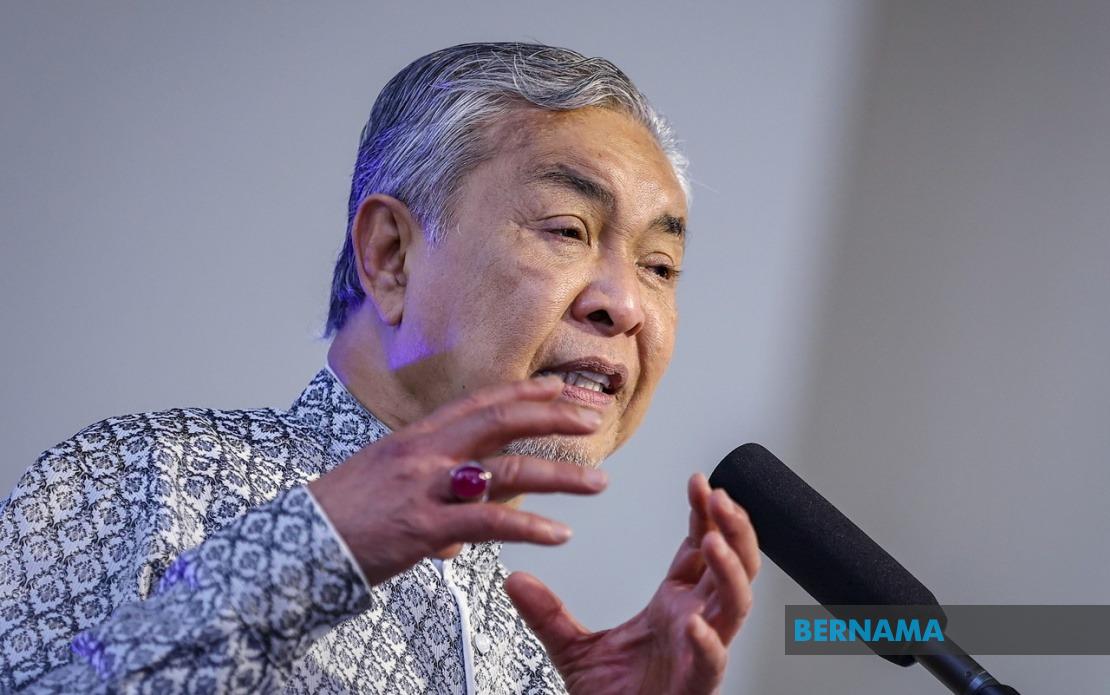
Barisan Nasional chairman Datuk Seri Dr Ahmad Zahid Hamidi has called on all contesting parties to refrain from dredging up longstanding, unrelated issues throughout the Johor state election campaign, emphasising the need for a more mature and dignified political environment. Speaking at a community engagement event in the Kempas constituency on July 3, the Deputy Prime Minister stressed that the campaign period should prioritise substantive debate around candidates' credentials and their concrete proposals for the electorate, rather than settling old scores.
The appeal reflects broader concerns within BN about the tone of political discourse, particularly given that several competing parties maintain working relationships with the coalition at the federal government level. Ahmad Zahid's remarks underscore an uncomfortable reality in Malaysian politics: rivals separated at state level often govern together in the national cabinet, creating potential friction between electoral competition and governmental cooperation. He expressed concern that dredging up contentious historical matters could create awkwardness during routine cabinet meetings and damage functional relationships that serve the nation's administration.
Ahmad Zahid specifically highlighted that BN views itself as the underdog in this contest, contrary to perceptions of overconfidence sometimes attributed to the ruling coalition. This positioning reflects significant changes in Johor's political landscape in recent years, where voter sentiment has proven volatile and traditional strongholds cannot be taken for granted. The party's performance in the previous state election—capturing 40 of the 56 available seats—no longer provides reliable assurance of victory, particularly as demographic shifts reshape the electorate.
The demographic transformation of Johor presents perhaps the most compelling challenge for BN's electoral strategy. More than half of current voters are young people, a generation with different priorities, expectations, and political sensibilities compared to older cohorts. This generational shift necessitates a fundamental recalibration of messaging and policy offerings, moving beyond traditional appeals that may have resonated with previous voter bases. Young Malaysians typically prioritise employment prospects, wage security, and skills development—immediate concerns tied directly to personal economic futures.
Menteri Besar Datuk Onn Hafiz Ghazi's campaign manifesto attempts to address these realities by placing youth employment and skills training at its centre. The manifesto emphasises access to Technical and Vocational Education and Training (TVET) programmes, recognising that traditional university degrees no longer guarantee economic security in an increasingly competitive labour market. This policy emphasis represents a substantive shift in BN's approach, acknowledging that young voters care far less about historical disputes than about concrete pathways to well-compensated employment.
Ahmad Zahid cited falling unemployment rates—currently at 2.9 per cent—as evidence of governmental competence in economic management. However, he astutely recognised that national unemployment statistics mask a more nuanced reality facing young job-seekers: the availability of work does not automatically translate into access to quality, premium-wage positions capable of supporting modern lifestyles. Many young workers languish in low-skill, low-wage sectors despite formal employment. Addressing this gap requires targeted investment in skills training that creates pathways to better-paying positions in growing industries.
The BN manifesto's emphasis on technical and vocational training reflects this understanding. Rather than promising vague economic development or relying on historical narratives of party loyalty, the coalition offers young voters something tangible: access to education that directly improves employment prospects. This represents a pivot from traditional patronage-based politics toward results-oriented governance that appeals to pragmatic young voters primarily concerned with self-improvement and economic advancement.
Ahmad Zahid's appeal to young voters contains an implicit recognition that BN cannot rely on generational voting patterns or inherited political loyalties. Young Johoreans were either children or not yet born during many disputes that older generations regard as defining political moments. Historical grievances, however significant to those who experienced them, carry minimal emotional weight for voters primarily concerned with securing mortgages, starting families, and building careers. This generational disconnect necessitates a campaign strategy fundamentally different from approaches that mobilised previous cohorts.
The contested nature of the upcoming election—with BN fielding candidates across all 56 seats—underscores the coalition's determination to maintain control despite acknowledged vulnerability. Polling will occur on July 11, following early voting on July 7, giving campaigners just over a week to convince undecided voters. The abbreviated campaign period places premium on coherent messaging and clear policy differentiation rather than lengthy historical recitations.
Ahmad Zahid's comments also reveal internal tensions within Malaysia's political ecosystem. Parties competing fiercely during state elections while cooperating at federal level creates inherent contradictions that often manifest as passive-aggressive campaigns featuring veiled criticisms and oblique references to past disputes. His explicit plea for other parties to avoid this behaviour, while diplomatically phrased, acknowledges that such tactics have occurred and may recur despite his request. The suggestion that leaders should not feel uncomfortable meeting Cabinet colleagues implies that previous campaigns have created precisely such awkwardness.
For Malaysian observers, the Johor election serves as a barometer of broader shifts in the nation's political trajectory. The declining relevance of historical grievances and the rising importance of youth-focused, results-oriented governance reflect generational transitions reshaping electoral dynamics nationwide. As BN attempts to hold Johor while navigating these shifting currents, its performance will signal whether traditional coalitions can adapt quickly enough to satisfy younger voters' fundamentally different political priorities and expectations.

