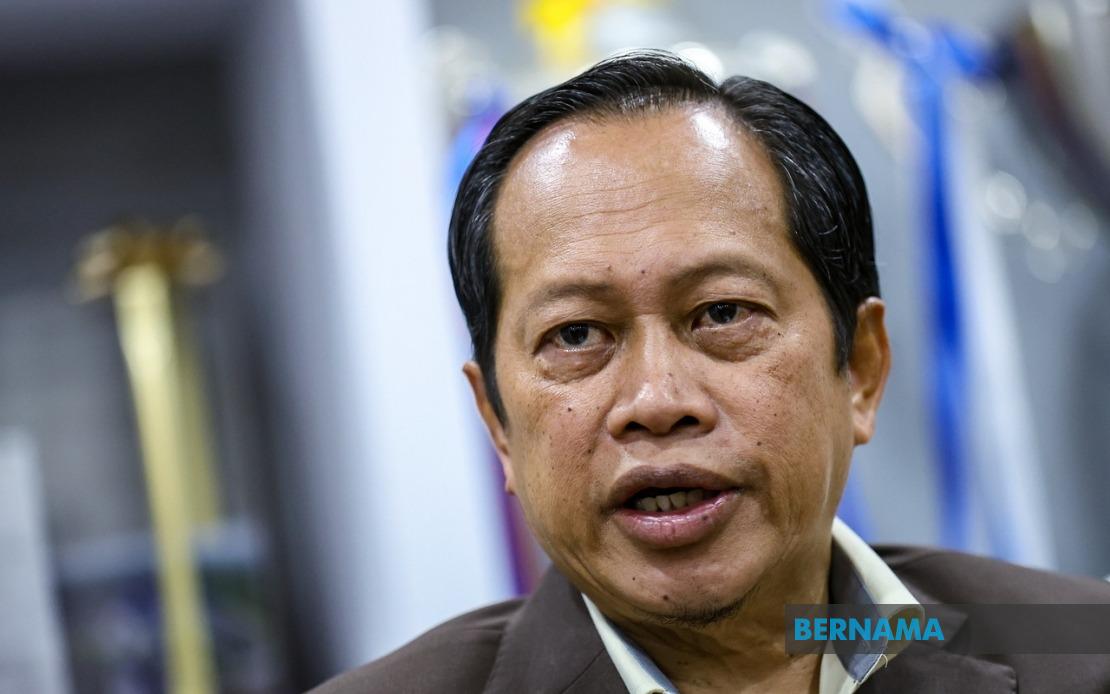
Johor's political landscape shifted slightly when Datuk Seri Dr Ahmad Maslan, the Barisan Nasional deputy chairman for the state, publicly announced he would not be seeking a seat in the upcoming state election. The confirmation came during a working visit to the Johor Public Works Department in Iskandar Puteri, where the politician addressed speculation that had circulated about his potential candidacy in various constituencies.
Maslan, who holds the position of Deputy Works Minister at the federal level, explicitly ruled out contesting in either the Benut or Pulai Sebatang state seats, both located within the Pontian parliamentary constituency. His decision represents a deliberate step aside to create space for fresh faces in the coalition's lineup. The politician explained that he had already communicated his intentions to party leadership and expressed confidence that alternative candidates deserved the platform to pursue these positions.
The Pontian MP's withdrawal signals a broader strategic repositioning within UMNO and BN ahead of what promises to be a closely watched state election. Rather than framing his decision as a retreat, Maslan emphasised his continued commitment to supporting the coalition's electoral prospects. He indicated that while he would not be wearing a candidate's badge, his involvement in campaign activities and grassroots mobilisation would remain substantial. This approach suggests party leaders may be preserving his political capital for other roles or future contests.
The timing of Maslan's announcement carries particular significance given the electoral schedule now set in motion. The Election Commission has designated July 11 as polling day for the 16th Johor state election, with nomination proceedings scheduled for June 27 and early voting taking place on July 7. These dates compress the campaign period considerably, leaving limited time for candidates to establish their presence in constituencies and build momentum among voters.
For Malaysian political observers, Maslan's decision exemplifies the delicate balancing act that senior politicians must perform when managing ambitions alongside party interests. As a deputy chairman with ministerial responsibilities, he occupies a position that naturally attracts scrutiny about his electoral intentions. The speculation about potential seats—Benut and Pulai Sebatang—indicated that observers viewed him as a plausible candidate for either location. His voluntary withdrawal arguably enhances his standing within party structures by demonstrating willingness to subordinate personal advancement to collective goals.
The decision also reflects broader dynamics within UMNO as the party navigates its recovery from previous electoral setbacks. Injecting new candidates into contested seats can energise volunteer networks and reach previously untapped voter segments. By stepping back, Maslan creates opportunities for younger politicians or individuals with stronger local connections to test their viability as potential leaders. This generational consideration increasingly influences how BN constructs its candidate slates across Malaysian states.
Johor holds particular strategic weight within Malaysia's political system. As the nation's second-largest state by population and economy, electoral outcomes there ripple across national political calculations. BN's performance in Johor typically correlates with broader assessments of the coalition's health and voter confidence. Given this backdrop, decisions about who represents the party carry consequences extending well beyond individual constituencies or even the state itself.
Maslan's federal role as Deputy Works Minister adds another dimension to understanding his decision. Ministers often maintain heightened public visibility and face greater pressure to contest elections, as sitting out can prompt questions about commitment or raise suspicions about political vulnerability. By confirming his non-participation proactively rather than allowing speculation to fester, he maintained transparency with both party colleagues and constituents. The decisive announcement also prevented opposition parties from weaponising uncertainty about his electoral status.
The Pontian MP's commitment to supporting BN through non-candidacy channels suggests that party leadership values his strategic expertise and organisational contributions beyond the immediate task of winning a single seat. Deputy chairmen typically mobilise resources, coordinate between federal and state operations, and provide advisory input on wider campaign strategy. By freeing him from the demands of a personal campaign, his enhanced availability might benefit multiple constituencies or the broader state-level effort.
Looking ahead, this decision establishes a template for how BN manages decisions about candidate selection as nomination day approaches. Other senior figures may face similar calculations about whether to contest or concentrate on supporting roles. The compression of the campaign timeline means that candidates announced late must rapidly establish credibility and campaign machinery. Choosing established contenders versus newcomers represents a risk assessment that shapes each party's overall electoral profile.
For voters in Benut and Pulai Sebatang, Maslan's withdrawal means they will encounter candidates without his combination of parliamentary experience, ministerial position, and state-level party seniority. This could work in either direction—some voters may prefer representatives focused exclusively on state-level concerns, while others might view the absence of a senior federal politician as a net loss of advocacy capacity. Whoever ultimately emerges as BN's chosen candidates will inherit constituencies now cleared of one significant contender.
The broader implications for Malaysian politics extend to how coalitions manage talent and ambition during electoral cycles. Maslan's example demonstrates that even senior politicians occasionally prioritise party cohesion and strategic flexibility over personal electoral ambitions. As Johor voters prepare for July's polls, the constellation of candidates taking shape will reflect hundreds of such individual calculations, each contributing to the ultimate composition of the state assembly.