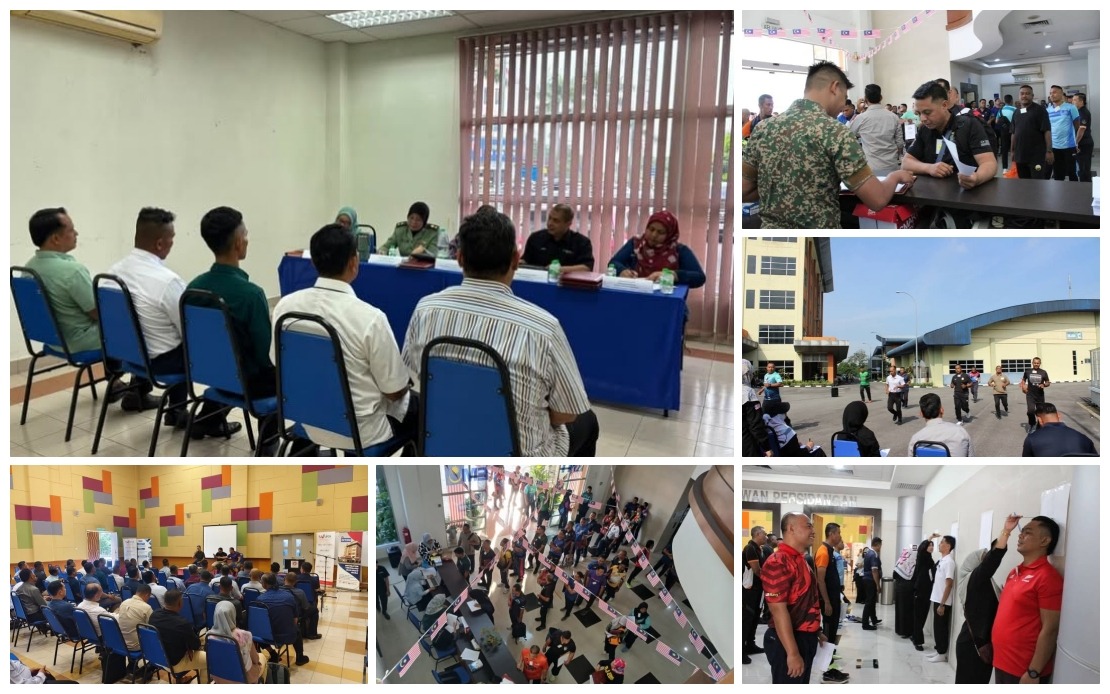
MARA has progressed with its recruitment of Full-Time External Wardens for its MARA Junior Science Colleges (MRSM) network, with 147 former military candidates completing physical interview sessions at the MARA Food Technology Incubator in Kepong during mid-June. According to MARA Chairman Datuk Dr Asyraf Wajdi Dusuki, these candidates represent a carefully filtered pool, having already cleared two preliminary rounds of online screening before advancing to the in-person assessment stage.
The selection process itself was rigorous and multifaceted, requiring each candidate to demonstrate fitness and suitability across three distinct evaluation components. Applicants underwent Body Mass Index screening to establish baseline health standards, completed the Bleep Test to assess cardiovascular endurance and physical capability, and participated in structured face-to-face interviews designed to evaluate their merit and overall qualification for the demanding role. This comprehensive approach reflects MARA's commitment to appointing wardens who meet both physical and professional expectations.
The timing carries significance, with successful candidates scheduled to commence their duties on July 1, marking the beginning of the new academic intake cycle. This deadline ensures that MRSM residential facilities will have properly appointed and fully trained supervisory staff in place from the start of operations, allowing for seamless integration with the student population and institutional routines.
Datuk Dr Asyraf Wajdi articulated a broader vision for the warden position that extends well beyond conventional disciplinary enforcement. Rather than simply maintaining order and supervising premises, these appointments are intended to fulfil a mentorship and developmental function, positioning wardens as role models who embody and transmit MARA's overarching educational philosophy to students in their care. The characterization of wardens as "second mothers and fathers" underscores this holistic approach to student welfare and character formation.
The emphasis on role-modelling and educational values reflects a strategic recalibration of residential supervision in Malaysian boarding institutions. By recruiting from former military personnel, MARA taps into individuals accustomed to structured environments, hierarchical organization, and the cultivation of discipline through positive example rather than punitive measures alone. These candidates typically possess established records of responsibility, leadership experience, and commitment to institutional values—qualities directly transferable to educational settings.
Beyond individual student welfare, the recruitment initiative is positioned as part of a broader institutional reform agenda. MARA leadership has identified boarding school culture as an area requiring intervention, particularly concerning bullying, disciplinary infractions, and broader social challenges that can emerge in residential environments when supervision lacks depth or clarity of purpose. By strengthening warden capabilities and commitment, the organisation aims to create residential spaces characterised by safety, conducive learning environments, and positive peer dynamics.
The gender dimension of the recruitment process merits attention, with 162 female candidates from military backgrounds scheduled for their own physical interview sessions in the following week. This parallel recruitment track suggests MARA's recognition that residential student populations require diverse supervisory perspectives and that female wardens fulfill essential roles in supporting female students and contributing to inclusive campus culture. The nearly equivalent numbers indicate institutional commitment to gender balance in pastoral care roles.
The distinction between external and full-time wardens signals a shift in staffing philosophy at MRSM colleges. Full-time external appointments suggest these individuals will be dedicated exclusively to warden responsibilities rather than combining supervisory duties with academic teaching roles. This specialization permits deeper engagement with residential life, more consistent presence in student spaces, and the opportunity to develop expertise specifically in adolescent welfare, conflict resolution, and residential management.
Military backgrounds carry both practical and symbolic implications for MRSM environments. Candidates bring familiarity with hierarchical structures, emergency response protocols, and the discipline of routine—all relevant to managing large residential populations safely. Simultaneously, the military association may enhance institutional credibility and authority, potentially commanding greater respect from students already accustomed to structured academic environments. However, MARA's emphasis on mentorship and embodiment of values rather than mere enforcement suggests the intention is not to militarize school culture but to leverage military discipline's positive dimensions.
From a broader Malaysian educational perspective, this initiative reflects evolving approaches to pastoral care in boarding settings. Rather than treating residential supervision as an ancillary administrative function, MARA is investing resources into recruitment, assessment, and presumably training of personnel who will significantly influence student experience and character development. This represents recognition that what happens outside classrooms in residential colleges shapes educational outcomes as profoundly as formal instruction.
The phased interview schedule and large candidate pools indicate robust interest in these positions, suggesting that former military personnel perceive meaningful opportunity and purpose in educational roles focused on youth development. This convergence of supply and institutional demand potentially creates quality outcomes, as individuals self-selecting into warden roles demonstrate genuine commitment to mentoring roles beyond purely economic motivation.
For MRSM students and their families, these appointments carry concrete implications. Enhanced supervisory quality translates to safer residential environments, more responsive support systems for student challenges, and institutional capacity to address bullying and disciplinary issues proactively. The emphasis on values-based leadership suggests wardens will function as educators in the broadest sense, shaping not merely behaviour but character and ethical reasoning.
Looking forward, the success of this initiative will depend substantially on post-recruitment support. While rigorous selection filtering identifies capable individuals, training programs, ongoing professional development, and institutional support systems will determine whether newly appointed wardens can effectively translate military discipline into educational mentorship. MARA's commitment to this aspect of implementation will likely determine whether this recruitment cycle becomes a meaningful inflection point in Malaysian residential education quality.

